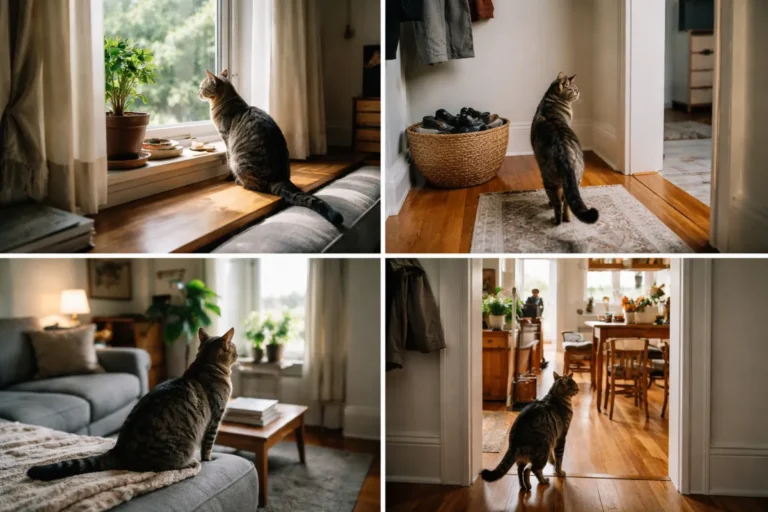
A cat that suddenly becomes very still can look almost statuesque. One moment it is moving through the room, sniffing, stretching, or circling a window. The next, it freezes in place and seems to listen to something that no one else can hear.
That stillness is not random. Cats use immobility in many situations, and the reason can be simple or more serious depending on what else is happening. Sometimes a cat is watching prey, assessing a new sound, or deciding whether a situation feels safe. Other times the stillness appears because the cat is startled, unwell, in pain, or trying to avoid being noticed.
What makes this behavior tricky is that it can look the same from the outside even when the cause is different. A relaxed cat, a worried cat, and a cat with a medical problem may all stop moving for a moment. The difference usually appears in the details: posture, breathing, ears, eyes, timing, and how the cat acts afterward.
What Sudden Stillness Looks Like in Daily Life
In an ordinary home, sudden stillness can show up in many small ways. A cat may freeze in the hallway after hearing a noise from another room. It may stop halfway to the kitchen and hold one paw slightly raised. It may sit very upright on the couch, staring toward the door or under a piece of furniture.
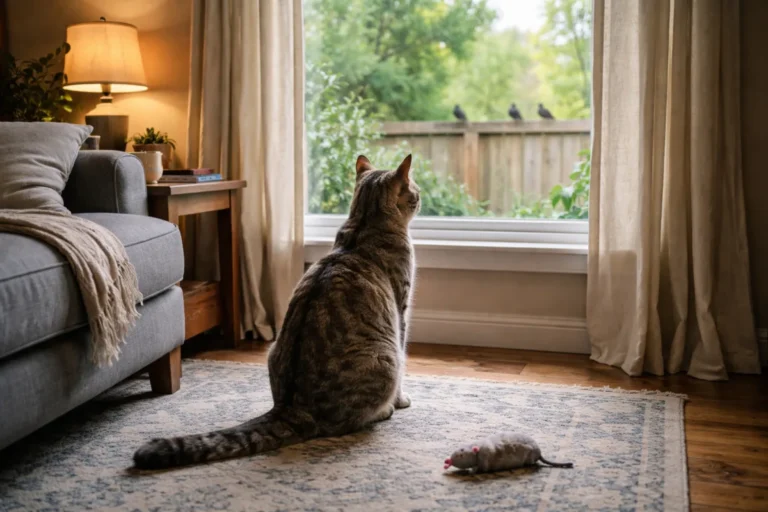
Some cats become still while watching birds outside. Others pause when a phone vibrates, the vacuum turns on, or another pet enters the room. A cat that is about to pounce may also go very quiet and motionless, almost shrinking into the moment before movement.
There are also still moments that happen without an obvious trigger. A cat may stop grooming, stop walking, or stop responding for a few seconds. If this happens once in a while and the cat returns to normal behavior, it may simply be a normal pause. If it happens often or seems out of character, it deserves closer attention.
Common ways stillness appears
- Frozen posture with eyes fixed on one spot
- A pause while walking, often with one paw lifted
- Sudden quietness during play or hunting behavior
- Standing or sitting still after a loud sound
- Brief immobility followed by hiding or leaving the area
Why Cats Freeze Instead of Moving
Stillness is deeply tied to how cats process the world. Cats are both predators and prey, so staying still can help them gather information or stay safe. A cat that freezes is often trying to decide what something means before taking the next step.
This behavior may be rooted in alertness. Cats pay close attention to movement, sound, and changes in their surroundings. When something catches their attention, the body may pause while the brain sorts through the signal. In a calm setting, that can look like focused observation. In a stressful setting, it can look like fear.
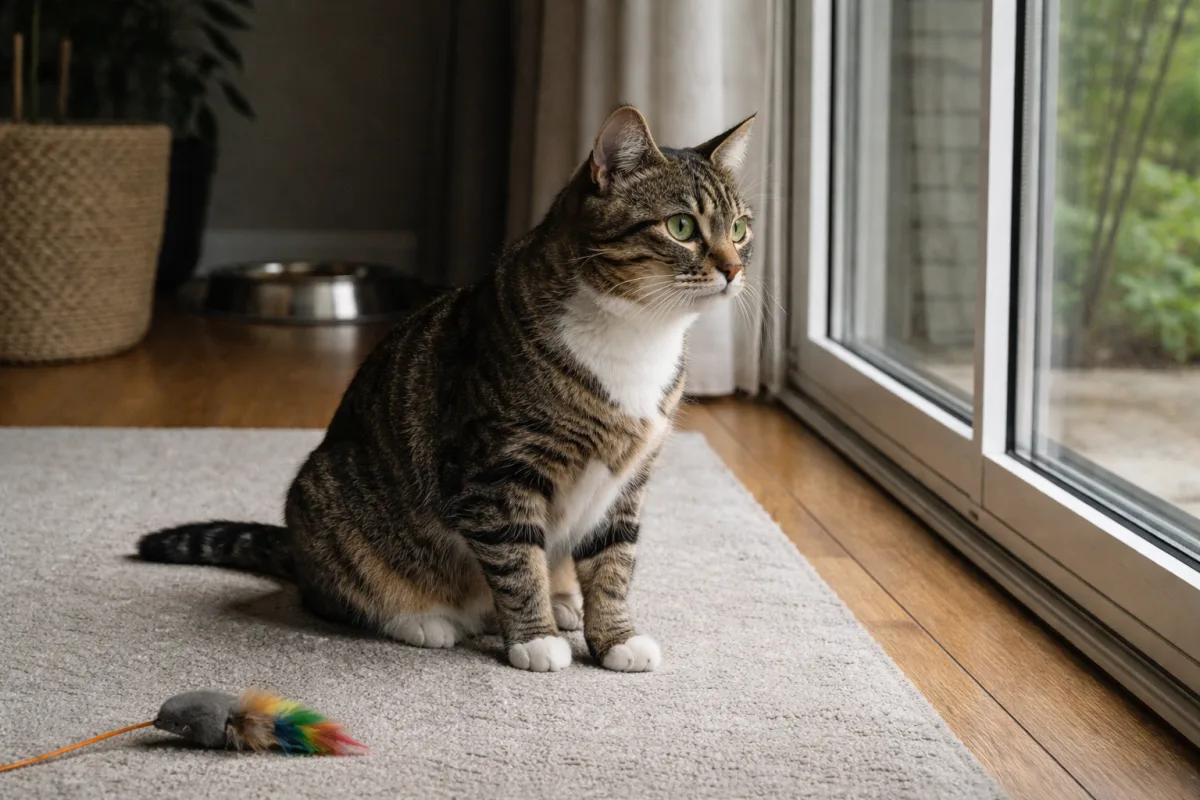
Stillness can also be part of hunting behavior. A cat stalking a toy, insect, or moving shadow often becomes very quiet before a quick burst of motion. In that case, the freeze is not a warning sign. It is a planned pause.
Sudden stillness is not a diagnosis by itself. The meaning depends on what the cat’s body looks like, what happened just before the pause, and what follows next.
When Stillness Is a Normal Part of Cat Behavior
Some cats are naturally more observant than others. They like to sit and watch before they act. This can happen when a cat enters a new room, meets a new person, or hears unfamiliar activity in the home. The pause gives the cat time to evaluate the situation.
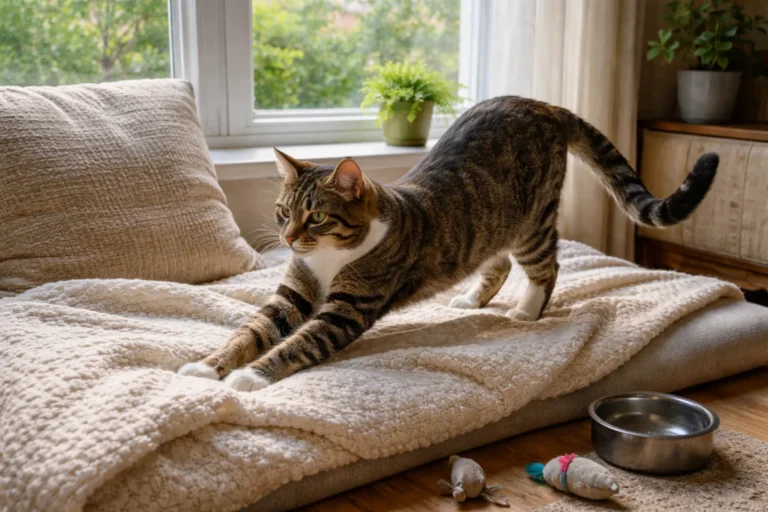
Stillness is also common during rest. A cat may be lying down quietly with eyes open, ears moving slightly, while it listens to the house. That kind of stillness is relaxed. The muscles are not rigid, the breathing is even, and the cat can shift or walk away without hesitation.
In multi-cat homes, stillness may appear during social tension. A cat may stop moving when another cat approaches, especially if the relationship is uncertain. That pause can be a polite way of avoiding conflict. It is less about fear and more about reading the room.
Normal stillness often has these signs
- Relaxed body rather than stiff muscles
- Even breathing
- Ears moving normally toward sounds
- Ability to resume activity easily
- No obvious signs of distress afterward
What Stress-Related Stillness Can Look Like
Not all freezing is peaceful. A cat that suddenly becomes still because it feels threatened often looks different once you notice the details. The body may become tense. The ears may flatten or rotate backward. The tail may tuck close to the body or stay very tight.
Stress-related stillness often appears in response to something specific: a stranger at the door, a loud appliance, a dog barking outside, a trip carrier being taken out, or a conflict with another pet. The cat may not run immediately. Instead, it may lock up and wait, as if hoping not to be noticed.
In these situations, the stillness can be a warning that the cat is overwhelmed. Some cats freeze before fleeing. Others freeze when they do not know what escape route to choose. A few stay motionless because they feel trapped.
Signs that stillness may be stress-related
- Wide eyes with a fixed stare
- Tight posture and low body position
- Tail tucked, still, or lashing in short movements
- Whiskers pulled back or held stiffly
- Refusal to eat, play, or approach after the event
How Pain or Illness Can Be Hidden in Stillness
A cat in pain often moves less. That can make sudden stillness easy to overlook. Owners may think the cat is just being quiet when the real reason is discomfort. Cats are good at hiding illness, and stillness can be one of the earliest clues that something is wrong.
Pain-related stillness may look like a cat choosing not to jump, not to climb, or not to shift position after resting. A cat may remain motionless after grooming, or sit in one spot for longer than usual. It may also freeze when touched in a certain area, then pull away or react sharply.
Illness can also cause a cat to become less responsive overall. The cat may not react to familiar sounds, may seem unusually withdrawn, or may stop participating in normal routines. If the stillness comes with appetite loss, vomiting, limping, hiding, breathing changes, or litter box problems, it should not be ignored.
If a cat becomes very still and also seems weak, painful, disoriented, or hard to wake, that is not typical behavior and may need prompt veterinary attention.
How the Body Language Changes the Meaning
The same pause can mean very different things depending on what the rest of the body is doing. A cat sitting still with soft eyes and a loose body is usually fine. A cat that is still but tense from nose to tail may be reacting to pressure, fear, or discomfort.
Eyes are especially useful. A soft, slow blink or relaxed gaze points toward calm. A fixed stare can suggest intense focus or alarm. Breathing matters too. Smooth, quiet breathing is reassuring. Rapid or shallow breathing changes the picture.
Even the position of the paws can help. A cat that tucks its paws neatly under its body may simply be resting. A cat that keeps a paw lifted or holds its weight unevenly may be wary or sore.
| What you see | Possible meaning |
|---|---|
| Loose body, slow breathing | Calm pause or rest |
| Fixed stare, stiff muscles | Alertness, fear, or intense focus |
| Low posture, ears back | Stress or uncertainty |
| Stillness with limping or guarding | Pain or physical discomfort |
| Freezing after a loud sound | Startle response |
How Environment Shapes the Reaction
A cat’s home environment has a strong influence on how often this behavior appears. Cats in quiet, predictable homes may still freeze sometimes, but the moments are usually brief. In busy homes with children, dogs, frequent visitors, or lots of noise, stillness may happen more often because the cat is constantly processing activity.
Recent changes can also make a difference. Furniture rearrangement, a new pet, moving to a different apartment, construction outside, or a change in routine can make a cat more cautious. The cat may pause in unfamiliar places or stop moving when it hears something that used to be normal but now feels different.
Outdoor access matters too. An indoor-only cat may freeze at the window when it sees wildlife. An outdoor cat may stop in open space when it senses another animal nearby. In both cases, stillness is part of the cat’s effort to stay aware of the environment.
Environmental triggers that often lead to stillness
- Sudden loud sounds
- New people or pets in the home
- Unfamiliar smells or objects
- Changes in routine or feeding time
- Confrontation with another animal
How Owners Often Misread the Behavior
People sometimes assume a cat is being stubborn, dramatic, or aloof when it suddenly stops moving. More often, the cat is responding to something specific. The pause may be a sign of thought, caution, or discomfort rather than refusal to cooperate.
A cat that freezes near the litter box may not be trying to make a point. It may be unsure whether it feels safe. A cat that stops in the middle of the floor may not be ignoring its owner. It may be listening to a sound that humans missed entirely. A cat that becomes still during petting may be tolerating too much touch or simply deciding whether it wants more.
Context matters. A short pause during birdwatching is not the same as a tense freeze after a fall. The more a cat’s normal patterns are understood, the easier it becomes to tell the difference between thoughtful stillness and concerning stillness.
What to Notice in the Moment
When a cat suddenly becomes very still, it helps to look at the whole picture before reacting. First, notice what happened right before the pause. Did a sound, movement, or touch trigger it? Did the cat change position slowly or abruptly? Was it in the middle of play, eating, grooming, or resting?
Then watch the body for a few seconds. Is the cat tense or relaxed? Is the breathing normal? Are the ears moving or pinned back? Does the cat resume normal activity, leave the area, or stay frozen?
If the cat seems calm, it may be enough to leave it alone. If the cat looks frightened, reduce noise and give it space. If the cat appears painful, weak, or unusually withdrawn, the stillness may need a veterinary check.
When in doubt, look for patterns. One strange pause may mean little. Repeated stillness in the same situation, or stillness with other warning signs, tells a clearer story.
Different Situations, Different Meanings
A cat freezing while watching a toy has a very different meaning from a cat freezing after stumbling off a chair. The first is usually focused and normal. The second may involve pain, shock, or disorientation. That is why the setting matters as much as the body language.
Stillness during sleep or deep rest also deserves a separate note. Cats can nap in very quiet positions for long periods and look almost motionless. That is not the same as a sudden freeze. It is usually slower, softer, and easier to interrupt gently.
Another common situation is the “listening pause.” A cat may stop walking because it heard a small sound in another room. This can look dramatic, but the cat may simply be checking whether the environment has changed. Many cats do this dozens of times a day.
When the Behavior Becomes More Noticeable
Some cats become more still as they age. Older cats may move more slowly, rest more often, and pause before jumping or turning. That kind of change can be normal, but a sudden increase in immobility still deserves attention, especially if the cat has become less social or less interested in food.
Stress can also make the behavior more obvious. A cat that is usually active may start freezing when the household gets louder or less predictable. A cat that used to walk through the room confidently may begin stopping at doorways or hiding behind furniture.
When stillness becomes frequent, the question is not only what the cat is doing, but whether the pattern has changed. A cat that has always been watchful may simply be acting like itself. A cat that has become unusually quiet overnight may be signaling something different.
What Persistent Stillness Can Mean
Repeated or prolonged stillness can point to a cat that feels insecure, overwhelmed, or unwell. If the cat is spending more time motionless than usual, it may be withdrawing from interaction. It may also be conserving energy because something is physically wrong.
Look for the surrounding changes. Is the cat eating normally? Using the litter box normally? Jumping onto furniture as usual? Seeking attention in familiar ways? The answers help separate a personality shift from a possible health issue.
Persistent stillness paired with hiding, reduced appetite, or a change in litter box habits should be taken seriously. Even if the cat still seems alert, the change in behavior can be an early clue that something deserves attention.
A Quiet Pause Can Mean Many Things
Sudden stillness in a cat is a behavior with layers. It can be a hunting pause, a moment of observation, a cautious reaction, a sign of stress, or a clue that something is physically wrong. The meaning is rarely found in the freeze alone.
What matters most is the full pattern around it. The trigger, the posture, the breathing, and the cat’s next move all help explain the moment. A cat that freezes once in a while is often just responding to life around it. A cat that freezes often, or freezes with signs of pain or fear, is saying something more specific in a very quiet way.
Paying attention to those small differences makes the behavior easier to read. And with cats, the quiet moments often tell the most useful part of the story.