A cat that suddenly stops in the middle of play, grooming, walking, or even eating can look puzzling. One moment everything seems normal, and the next the cat is still, as if it has pressed pause on the room around it.
These pauses are often brief. A cat may freeze for a second, stare into space, flick an ear, and then continue as if nothing happened. Other times the pause lasts longer and seems more deliberate, especially when the cat is interested in something nearby or deciding whether to move on.
In many cases, this behavior is ordinary. Cats notice a great deal, and they often interrupt their own activity to process sound, movement, scent, or internal sensations. A pause is not always a sign of trouble. It can be a sign of attention, caution, comfort, or simple mental recalibration.
What a mid-activity pause usually looks like
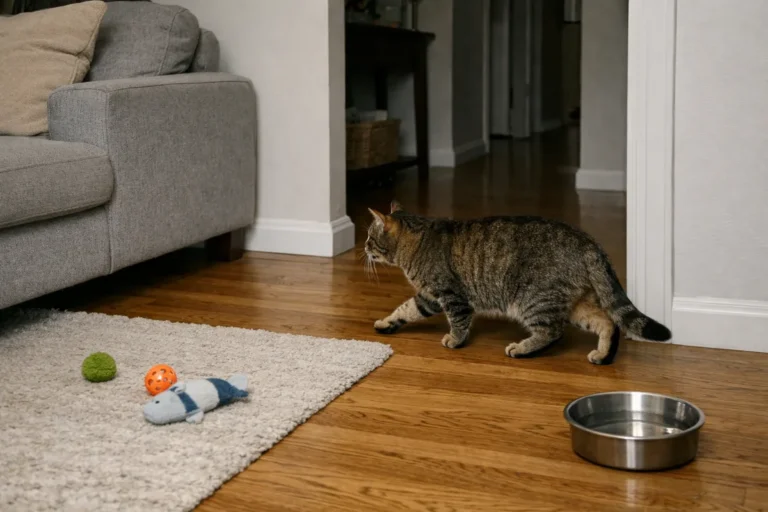
The behavior can appear in several everyday ways. A cat may be chasing a toy and suddenly stop with one paw lifted. A cat grooming its belly may freeze and look toward a hallway. A cat walking across the kitchen might halt halfway to the water bowl, then continue after a few seconds.
These pauses are easy to overlook because they are often subtle. Some cats stop with their bodies loose and relaxed. Others become very still, with only the ears, eyes, or tail moving. The difference in posture often gives the clearest clue about what kind of pause it is.
- Brief pause: usually lasts a few seconds and then activity resumes.
- Alert pause: the cat becomes quiet and focused on a sound, smell, or movement.
- Reflective pause: the cat seems to reconsider whether to keep playing, eating, or moving.
- Interrupted pause: the cat stops because something in the body or environment draws attention away from the task.
Context matters a lot. A pause during a playful sprint can mean excitement or caution. A pause during mealtime can mean the cat heard a sound or simply wants to eat more slowly. A pause in the middle of grooming may be nothing more than a quick check of the surroundings.
Why cats pause in general
Cats are built to divide attention. Even when they seem fully absorbed in one activity, part of their mind stays tuned to the environment. That habit comes from instincts that reward vigilance. In the wild, stopping for a moment can help a cat notice danger, track prey, or avoid wasting energy.
At home, those same instincts remain active. A cat may pause because a refrigerator hum changed pitch, a delivery truck passed outside, or another pet moved in a nearby room. The pause is not random. It often reflects a quick internal check: is this still safe, interesting, or worth continuing?
Some pauses also happen because cats think in short bursts. They do not always stay locked into one task the way humans often do. Instead, they move between action and observation. That rhythm is normal for many cats and can be especially visible in younger, curious animals.
Cats often stop mid-activity not because they are confused, but because they are processing their surroundings more actively than they appear to be.
Possible internal reasons behind the behavior
1. Attention shifting to a new stimulus
The most common reason is simple distraction. A cat may notice a sound, a scent, or movement that pulls attention away from whatever it was doing. This happens constantly in homes with people, other pets, and changing noises.
The pause may be very short. You might see the cat’s ears rotate first, then the head, then the body. That sequence often shows the cat is assessing something before deciding how to respond. If nothing seems important, the cat returns to the original activity.
2. Energy management
Cats are efficient with energy. They do not usually stay in full motion for long stretches unless something is highly exciting. Even during play, many cats take small breaks to reset. Those pauses help them avoid overexertion and keep the activity controlled.
In a household setting, a pause may happen when a cat goes from stalking to pouncing, or from eating to resting. It can look dramatic, but it is often just a natural rhythm. Cats tend to alternate between movement and stillness rather than moving continuously.
3. Mild uncertainty
Sometimes the cat is interested but not fully committed. A toy may look tempting, but the cat is not sure whether the game is worth continuing. A cat walking into a room may stop if another animal is nearby or if the space feels unfamiliar after a change in furniture or scent.
This kind of pause is often measured. The cat is not frightened, only cautious. The body may remain neutral, with no big signs of stress. In many cases, the cat simply needs an extra moment before deciding what to do next.
4. Sensory processing
Cats rely heavily on hearing and smell. A pause can give them time to sort through sensory information. A distant noise that humans ignore may stand out clearly to a cat. A new odor on the floor, a package from outside, or food scents from another room can interrupt the cat’s focus.
When this happens, the cat may not move at all for a moment. The stillness helps it gather information. This is one reason cats often seem to stop and stare at empty corners, doorways, or windows.
How context changes the meaning of a pause
The same behavior can mean very different things depending on what the cat was doing before it stopped. A pause in the middle of play is not the same as a pause during eating or a pause while walking through a familiar room. Looking at the situation around the pause makes interpretation much easier.
| Situation | Common meaning | What to notice |
|---|---|---|
| During play | Checking surroundings, resetting energy, or deciding whether to continue | Ears, tail movement, and whether the cat returns to the toy |
| During grooming | Brief distraction, comfort break, or response to a sensation | Whether the cat resumes grooming normally |
| While walking | Alertness to sound, smell, or movement | Head direction, posture, and eye focus |
| While eating | Slow pacing, interruption, or environmental awareness | Interest in the food afterward and any signs of discomfort |
A pause during a familiar routine often means the cat is simply responding to something in the environment. A pause that appears repeatedly in one specific setting may point to a location, sound, or routine that the cat notices every time. For example, some cats stop near a doorway because they hear activity beyond it. Others pause in the middle of a hallway where echoes or motion feel more noticeable.
Indoor environments make pauses easier to spot
Home life gives cats many reasons to interrupt themselves. Appliances turn on and off. People move around. Curtains sway. Other pets come and go. Even a small change, like a new chair or a different laundry scent, can catch a cat’s attention.
Because indoor cats live with repeated patterns, a pause may become part of their daily rhythm. A cat might stop every time the oven timer beeps or every time a person enters a certain room. These repeated pauses are often tied to learned expectations rather than nervousness.
Outdoor access can create sharper pauses
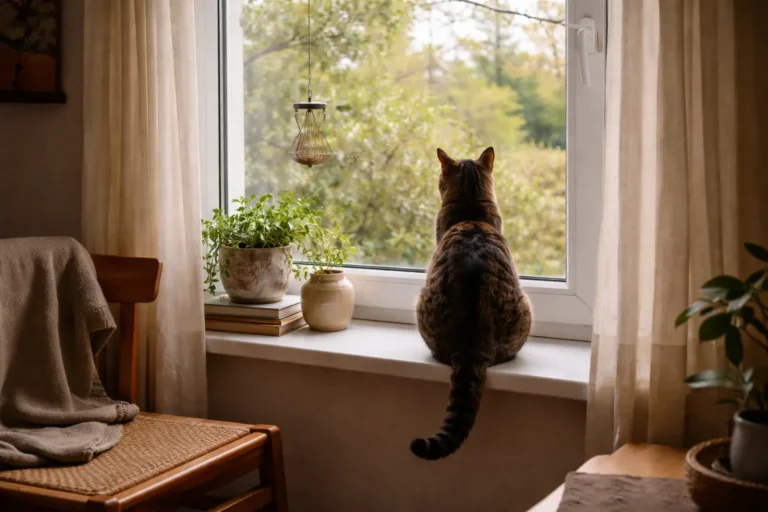
Cats with outdoor access or window access may pause more noticeably when they pick up movement outside. Birds, insects, passing animals, and unfamiliar sounds can interrupt activity in an instant. The cat may freeze, watch, and then decide whether to chase, ignore, or return to what it was doing.
Even a cat indoors can respond this way to outdoor stimulus. A shadow moving across a wall, leaves brushing the window, or a squirrel on the fence may stop a cat mid-step. The pause is part of how cats keep track of a changing world.
What body language can tell you during the pause
Body language helps separate an ordinary pause from one that deserves closer attention. A calm cat may stop with soft eyes, loose whiskers, and a relaxed tail. The body remains steady but not tense. After a short pause, the cat resumes activity in a normal way.
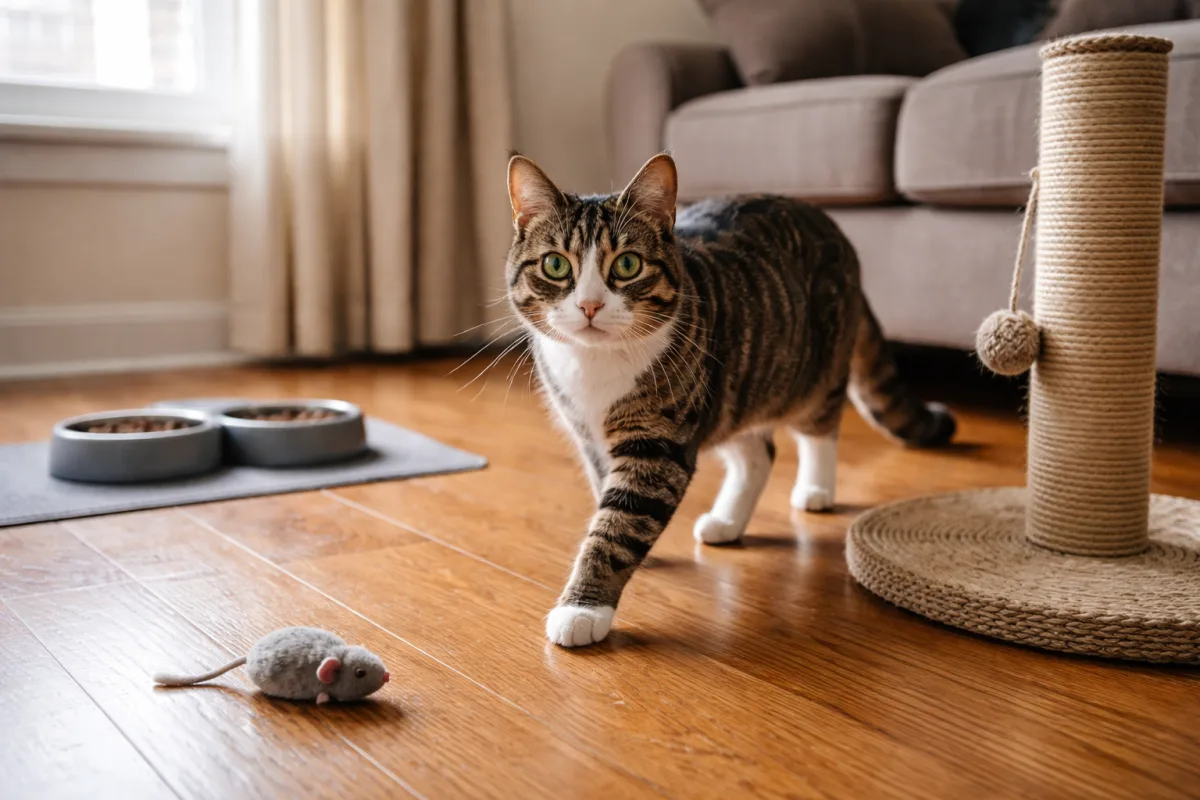
A more alert pause often includes a lifted head, forward ears, and a still body. The cat may point one ear toward the sound that caught its attention. This kind of pause is usually about awareness, not distress.
Stress-related pauses tend to look different. The cat may crouch low, tuck the tail, flatten the ears, or keep the muscles tight. Instead of resuming activity smoothly, the cat may hesitate, retreat, or stay frozen for longer than usual.
A calm pause usually ends with the cat returning to normal behavior. A tense pause often comes with other signals like crouching, hiding, or repeated startle responses.
Signs that the pause is probably harmless
- The cat resumes the activity without help.
- The body looks loose rather than tense.
- The cat remains interested in food, play, or grooming.
- The pause is brief and happens in response to ordinary sounds or movement.
Signs that the pause may need attention
- The cat freezes often and seems difficult to rouse.
- The cat pauses because of limping, stiffness, or hesitation to move.
- The cat stops eating repeatedly and does not return to the bowl.
- The cat looks distressed, crouched, or unusually withdrawn.
How daily routine affects the behavior
Cats are creatures of habit, so the timing of the pause can be just as revealing as the pause itself. Some cats stop more often before meals, before naps, or during parts of the day when the house is busiest. Others pause during transitions, such as when someone comes home or when a room becomes more active.
A predictable routine can make these pauses seem harmless and familiar. For example, a cat may stop in the middle of playing every evening when household noise increases. Another cat may pause on the way to the litter box whenever the hallway sounds different. In both cases, the pause may reflect awareness of a pattern rather than a problem.
Changes in routine can make the behavior more visible. A new pet, a moved couch, a different feeding schedule, or a noisy repair project may all increase the number of pauses. Cats often need time to update their sense of what is normal in the home.
Play pauses versus rest pauses
During play, a pause can mean the cat is planning the next move. Some cats use a freeze-and-pounce rhythm that looks almost theatrical. They stop, watch, and then launch again. That pattern is common and often healthy.
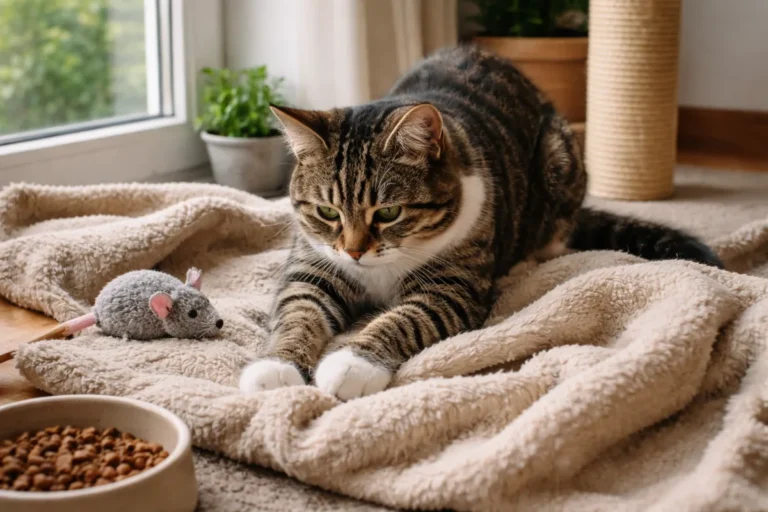
During rest-related activity, like grooming or stretching, a pause may simply reflect comfort. The cat may settle into a patch of sunlight, stop midway through licking a paw, and then continue after a moment. These pauses usually look soft and unhurried.
When the same cat pauses repeatedly across different activities, it can be worth considering whether the environment is too noisy, too busy, or too changeable. A cat that never seems able to settle may be reacting to household flow more than to any single event.
When the behavior becomes more noticeable
Some cats pause more as they age. Kittens often stop because everything is interesting and every sound is worth checking. Adult cats may pause with more purpose. Senior cats can pause because they need more time to process movement, adjust their balance, or gather energy before continuing.
A pause also becomes more noticeable when a cat’s activity level changes. A usually playful cat that starts stopping more often may be conserving energy, feeling unsure about the surroundings, or simply becoming less eager to rush. The shift matters more than the pause itself.
If the pause appears alongside changes in grooming, appetite, movement, or social behavior, it deserves more attention. A cat that stops mid-activity and also seems withdrawn, restless, or uncomfortable may be trying to communicate that something has changed.
Look at pattern, not one moment
One isolated pause rarely means much. The pattern across a day or two often tells a better story. Does the cat pause only when the dishwasher runs? Only when another cat walks by? Only when play becomes intense? Those details can reveal what is triggering the interruption.
It also helps to notice what happens afterward. A cat that pauses and then continues calmly is behaving differently from a cat that pauses, retreats, and avoids the area. The after-effect matters as much as the pause itself.
How owners often interpret it
People sometimes assume a cat is stubborn, distracted, or being dramatic when it stops in the middle of something. In reality, cats often pause because they are balancing interest with caution. They are rarely acting for effect. They are responding to information in the moment.
Another common misunderstanding is that every pause signals anxiety. That is not the case. Many pauses are perfectly normal, especially in cats that are observant, curious, or energetic. A cat that pauses before continuing often looks more thoughtful than worried.
It can also be easy to miss how small the trigger is. To a person, the room may seem quiet. To a cat, there may be a tiny shift in sound, smell, or motion that changes the whole situation. That difference in perception explains a lot of sudden stillness.
Owners usually get the clearest reading when they compare the pause with the cat’s usual habits, not with a human idea of “normal” behavior.
What the pause may say about the cat’s state
A pause in motion can reflect a cat’s emotional and physical state at the same time. A cat who is comfortable may pause because it feels safe enough to observe. A cat who is uneasy may pause because it wants more information before acting. A cat who is tired may pause because the body is asking for less movement.
That overlap makes the behavior worth noticing without overreading it. A pause is not a diagnosis. It is one small piece of a larger picture that includes posture, routine, environment, appetite, and follow-through.
When the cat resumes naturally, the pause is usually just part of ordinary feline life. When the cat seems stuck, tense, or repeatedly interrupted, the meaning becomes more layered. Either way, the pause is a useful glimpse into how cats make decisions in real time.
Natural reasons this behavior persists over time
Mid-activity pauses tend to stay part of a cat’s behavior because they serve a purpose. They help cats assess risk, conserve energy, and stay aware of their surroundings. Those needs do not disappear in a home, even when the setting is safe and familiar.
That is why the behavior often continues across different ages and households. A kitten may do it while exploring a new toy. An adult may do it while listening to activity in another room. An older cat may do it because slower movement and more frequent checking simply fit its pace.
The same pause can look different from one day to the next. A playful cat may stop to watch birds at the window in the morning and pause at the food bowl in the evening because the kitchen is busy. The behavior stays stable in function, but flexible in appearance.
What makes it meaningful is not the pause alone, but the way the cat uses it. Some cats pause as a quick reset. Others use it to monitor the room. Some are responding to instinct, some to mood, and some to both at once. That mix is part of what makes cats so observant and sometimes so hard to read in a single glance.