A cat that walks a few steps, stops, looks around, and then starts again is doing something many owners notice but do not always understand. It can happen in a hallway, on the way to the litter box, near the kitchen, or while following a person from room to room. The pattern may seem random at first, yet it often has a clear reason.
Sometimes the pause is nothing more than a cat thinking, listening, or checking the environment. In other moments, repeated stopping can point to curiosity, hesitation, discomfort, or a physical issue that makes movement less easy than it should be. The context matters. A cat that does this once in a while is different from a cat that seems to hesitate every time it moves.
Understanding the difference starts with watching the whole picture: posture, speed, tail position, ear movement, and the setting where it happens. Cats rarely move without purpose. Even when their behavior looks uncertain, there is usually some practical reason behind it.
What this behavior looks like in everyday life
Repeated stopping can take many forms. One cat may walk across a room, freeze for a second, and continue as if it remembered something. Another may move in short bursts, pausing after each few steps. Some cats stop because they heard a sound. Others stop because they want to observe a person, another pet, or an object that changed position.
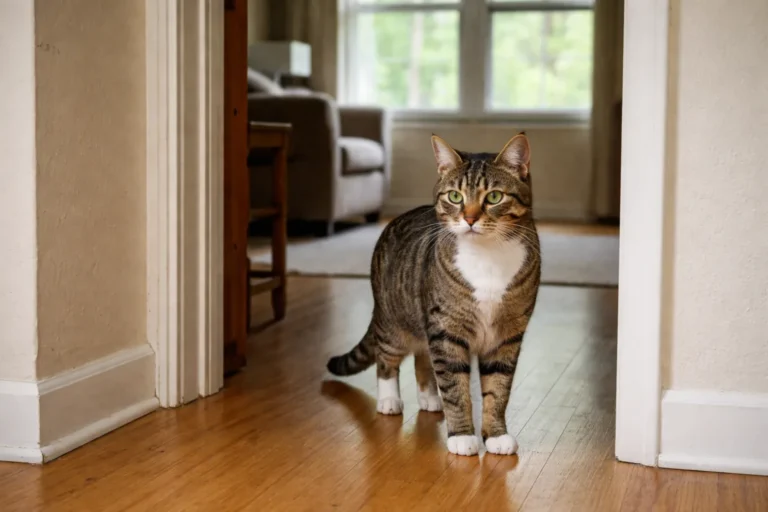
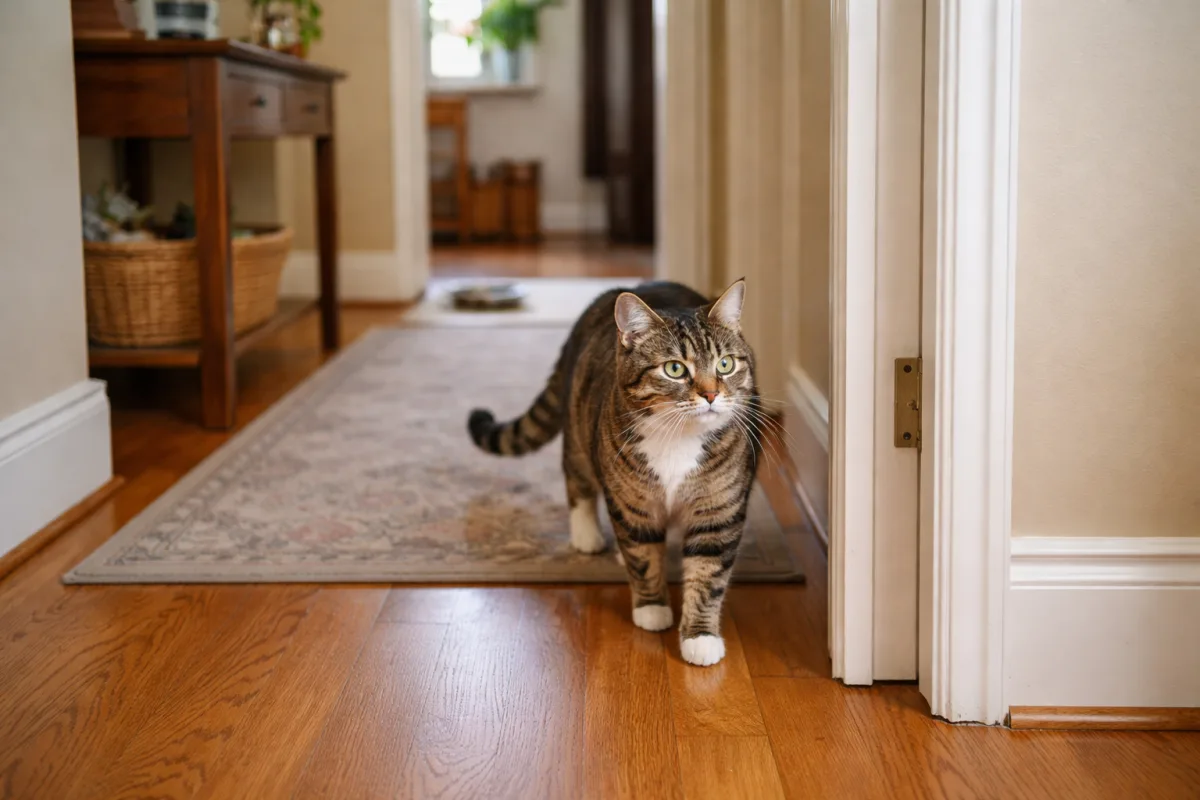
In a home setting, the behavior often shows up during routine movements. A cat may head toward the food bowl, stop halfway, then turn its head toward a window. It may walk toward the bedroom door, pause on the threshold, and then decide whether to enter. These pauses are not always identical. Some are quick and relaxed, while others look tense or uncertain.
When the pattern becomes frequent, the details matter more than the fact that the cat is stopping. A relaxed pause is usually different from a pause that comes with crouching, limping, vocalizing, or looking unsettled. What seems like the same behavior on the surface can have very different meanings.
Common everyday patterns
- Walking a few steps and stopping to inspect a sound
- Moving from one room to another with brief pauses at doorways
- Following a person but stopping to watch instead of continuing right away
- Walking slowly with frequent checks of the surroundings
- Stopping mid-step when something unexpected appears
Possible internal reasons behind the behavior
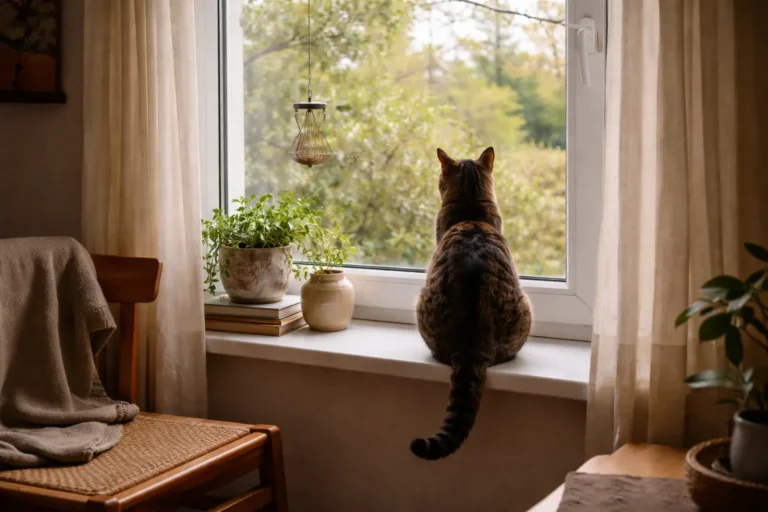
Cats are careful animals. They often pause because they want to process what they see, hear, or smell before moving on. That is normal. Their senses are highly tuned, and small changes in the environment can matter a great deal to them. A distant appliance, a new odor, or movement outside a window may be enough to interrupt their path.
Curiosity is another common reason. A cat may have intended to go somewhere, then notice something more interesting along the way. The stopping is not always hesitation; it can be a decision point. Cats often behave as if they are constantly choosing between several small priorities.
In some cases, repeated stopping reflects uncertainty. A cat may want to approach a place or person but not feel completely comfortable doing so. This can happen with shy cats, newly adopted cats, or cats that have had a negative experience in a certain area. The cat starts forward, then pulls back into caution.
A cat that pauses repeatedly is not automatically in trouble. The meaning depends on how the cat looks while it pauses, how often it happens, and whether other signs are present.
Internal states that may be involved
- Curiosity about sounds, smells, or movement
- Hesitation before entering an unfamiliar space
- Need to reassess the route or the situation
- Low-level stress or caution
- Discomfort that makes moving less smooth
How body language changes the meaning
The same pause can mean very different things depending on the cat’s body language. A relaxed cat may stop with a soft face, ears in a neutral position, and a tail that moves naturally. The pause may be brief, almost casual. In that case, the cat is likely simply observing or thinking.
A more guarded cat may flatten its ears slightly, lower its body, or keep its tail tucked closer to the body. The stopping then looks less like curiosity and more like caution. If the cat’s eyes are wide, its movements are stiff, or it seems ready to turn around at any second, the reason may be stress rather than interest.
Physical discomfort can also shape the way the behavior appears. A cat that stops because it feels sore may move more slowly than usual, shift weight carefully, or hesitate before jumping. The pause may happen right before climbing stairs, jumping onto furniture, or walking across a slick floor. In those cases, the stopping is not about attention or mood alone. It may be the cat adjusting to pain or weakness.
Signals to watch during the pause
- Ear position: forward, neutral, or flattened
- Tail movement: loose, still, puffed, or tucked
- Posture: relaxed, crouched, stiff, or uneven
- Eyes: soft, wide, blinking, or intensely fixed
- Feet and gait: smooth steps or careful placement
How the environment influences repeated stopping
Home environments are full of small triggers. A cat may stop repeatedly because the route includes slippery flooring, loud appliances, tight corners, or another pet blocking the path. Even furniture placement can affect movement. Cats often prefer predictable spaces, and changes in the home can make them more cautious for a while.
Noise is a major factor. A vacuum in another room, a dropping object, footsteps overhead, or a dog barking outside can interrupt a cat’s motion. Some cats respond to very minor sounds that people barely notice. Others are less reactive until a sound becomes sudden or repetitive.
Visual changes matter too. A new bag near the door, a box in the hallway, a visitor’s shoes, or sunlight reflecting on the floor may be enough to slow a cat down. Cats often stop to reassess something that seems ordinary to us but feels unusual to them.
If the behavior appears mostly in one location, the environment should be considered closely. Repeated stopping can be linked to a specific room, pathway, noise, surface, or object.
Environmental factors that can slow a cat down
- Slippery floors or unstable surfaces
- Noise from appliances, traffic, or other pets
- New objects, scents, or furniture placement
- Busy movement in hallways or doorways
- Heat, cold, or drafty areas
When the behavior may reflect stress or uncertainty
Not every pause means stress, but repeated stopping can be part of a cautious response when a cat feels unsure. A cat in a new home may move in short stages because it has not yet mapped the space in a confident way. A cat living with a new pet may stop often while deciding whether to continue or retreat.
Stress-related stopping often looks different from simple curiosity. The cat may seem torn between moving forward and backing away. It may pause in the middle of a hallway, scan the area, then continue only after several seconds. Some cats do this when they are trying to stay alert without fully committing to a path.
These pauses can become more noticeable during changes in routine. Guests, construction, travel, rearranged furniture, or a new feeding schedule may all make a cat more tentative. The behavior may fade once the environment feels familiar again, but if it keeps happening, the pattern deserves attention.
Signs the pause may be stress-related
- Frequent stopping in familiar areas that used to feel easy
- Body held low or tense during movement
- Looking behind or around repeatedly before continuing
- Avoiding certain rooms, doorways, or people
- Hesitation paired with hiding or reduced appetite
When repeated stopping may point to discomfort or pain
Physical discomfort is easy to overlook because cats tend to hide pain well. A cat that repeatedly stops while walking may be dealing with joint stiffness, soreness, paw sensitivity, or another issue that makes movement harder. The pattern may be subtle at first. The cat still walks, but it breaks the motion into smaller pieces.
Older cats can show this especially often. Stopping before jumping, pausing after a few steps, or taking longer to stand and move can reflect aging joints or muscle loss. Younger cats can have movement issues too, especially after an injury, a paw irritation, or an issue in the spine or abdomen.
If the cat seems fine one moment and then suddenly starts moving in a stop-start pattern more often, that change is worth noticing. Pain does not always create obvious limping. Sometimes the cat simply slows down, hesitates, or avoids smoother movement that used to come naturally.
Repeated stopping becomes more concerning when it is new, frequent, or paired with stiffness, limping, reduced jumping, or changes in appetite and energy.
Possible physical reasons behind the pattern
- Joint stiffness or arthritis
- Paw pain from a cut, object, or irritation
- Muscle soreness after activity
- Back or neck discomfort
- General weakness or reduced mobility
How routine and habit shape the behavior
Cats are creatures of repetition. They notice patterns in time, place, and sequence. A cat may stop repeatedly because it expects something to happen next. It may pause near the feeding area if mealtime is close, or slow down near the door if that is where a person usually appears.
Daily routines can make the behavior more visible. A cat that is used to a calm household may become extra watchful during busy periods. A cat that normally moves freely might start pausing more when the schedule changes, because it is waiting to confirm what comes next. The stopping is part caution, part habit.
Even positive routines can create pauses. A cat may stop several times on the way to a favorite perch because it is checking for attention, food, or a familiar cue. The behavior is not always a sign of worry. Sometimes it is simply a cat trying to predict the next part of the day.
Routine-related triggers
- Feeding times
- Arrival and departure of household members
- Cleaning schedules or vacuuming
- Doors opening and closing
- Changes in the usual quiet level of the home
How owners often misread the behavior
People sometimes assume repeated stopping means the cat is being stubborn or indecisive in a human sense. That is usually not the best way to read it. Cats are not pausing to be difficult. They are reacting to something internal or external, and the reason is often practical.
Another common mistake is to ignore the behavior completely because the cat is still moving. A cat does not need to stop fully to show discomfort or uncertainty. Small changes in pace can be meaningful, especially when they happen over and over again.
At the same time, not every pause should be treated as a warning sign. Some cats are naturally observant and move in a stop-and-go pattern even when they are healthy and relaxed. The key is to compare the behavior to what is normal for that individual cat.
What matters most is change. A cat’s usual style of movement is often more useful than a single moment of stopping.
What to observe before deciding what it means
Owners get the clearest picture when they watch the behavior in context. Where does it happen? Does it occur at certain times of day? Is the cat stopping in one spot or across many parts of the house? Does it happen before jumping, before eating, or only when another animal is nearby?
It helps to note whether the cat still seems eager, alert, tense, or tired. A cat that stops while exploring a new room may simply be taking it in. A cat that stops before every jump may be signaling a movement issue. A cat that pauses in response to sounds may be more sensitive than usual.
The more consistent the pattern, the more useful the observation becomes. One pause may not mean much. Several pauses in the same situation often reveal a real trigger.
| Observation | Possible meaning |
|---|---|
| Stops only near a noisy appliance | Sound sensitivity or caution |
| Stops before jumping or climbing | Possible stiffness or pain |
| Stops in unfamiliar rooms | Uncertainty or low confidence |
| Stops with relaxed posture and curiosity | Normal observation |
| Stops while scanning and crouching | Stress or defensive caution |
When the behavior is more likely to be harmless
Many cats walk and stop repeatedly as part of their normal rhythm. This is especially common in alert, curious cats that like to monitor their surroundings. If the cat is eating normally, using the litter box normally, and moving without stiffness, the pauses may simply reflect its personality.
Some cats are cautious by nature. They do not rush from one place to another. Instead, they move in small stages, checking each step. These cats may pause often even when they are comfortable and healthy. The behavior becomes less concerning when it matches the cat’s usual style and does not come with other changes.
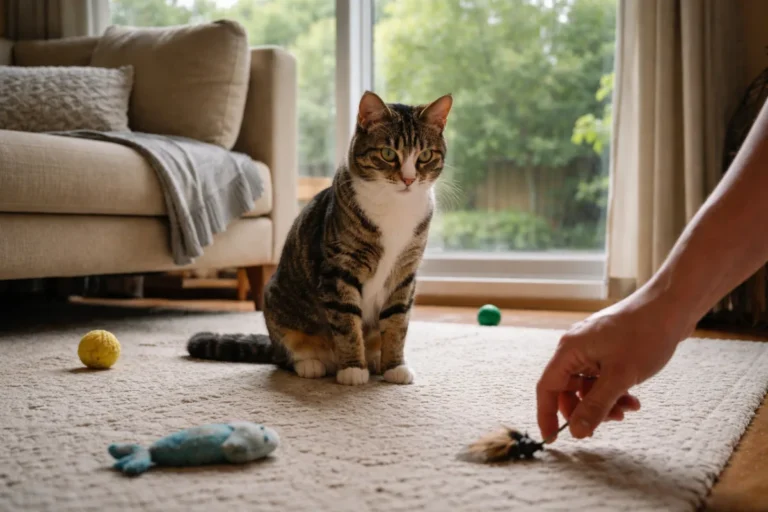
Playful cats can also show stop-start movement during exploration. They may chase a toy, stop to watch it, then continue in a new direction. In those moments, the pauses are part of the game. The body looks engaged, not guarded.
Patterns that deserve closer attention
Certain changes make the behavior more meaningful. If a cat that normally moves smoothly suddenly begins stopping often, that shift should not be dismissed. The same is true if the pauses are paired with limping, vocalizing, hiding, reduced jumping, or a change in appetite.
Repeated stopping can also matter more when it appears during basic tasks. A cat that hesitates on the way to food, water, or the litter box may be dealing with discomfort, fear, or something in the environment that is making movement difficult. These patterns are more important than occasional pauses during play or exploration.
Long-term consistency tells a story too. If the same stopping pattern happens every day in the same place, there may be a persistent trigger. If it appears suddenly and does not fade, it may be linked to a new physical or emotional issue.
Frequent stop-and-go walking becomes more significant when it is new, persistent, or paired with other changes in mood, appetite, posture, or mobility.
Living with a cat that moves this way
In many homes, the behavior remains a small part of daily life. A cat walks, pauses, listens, and continues. That rhythm can be perfectly normal. But when the pattern changes, the details can help identify whether the cat is simply observant or trying to cope with something more specific.
Careful observation makes the difference. Watching when it happens, how the cat carries itself, and what else is going on in the environment can reveal whether the stopping reflects curiosity, caution, stress, or physical discomfort. Cats communicate a great deal through motion, even when the message is subtle.
The goal is not to overread every pause. It is to notice when the pauses belong to the cat’s usual personality and when they seem to be asking for closer attention.
In a calm, familiar home, repeated stopping often blends into the cat’s natural way of moving through the world. In a changed or challenging setting, the same motion can become an early clue that something deserves a closer look.