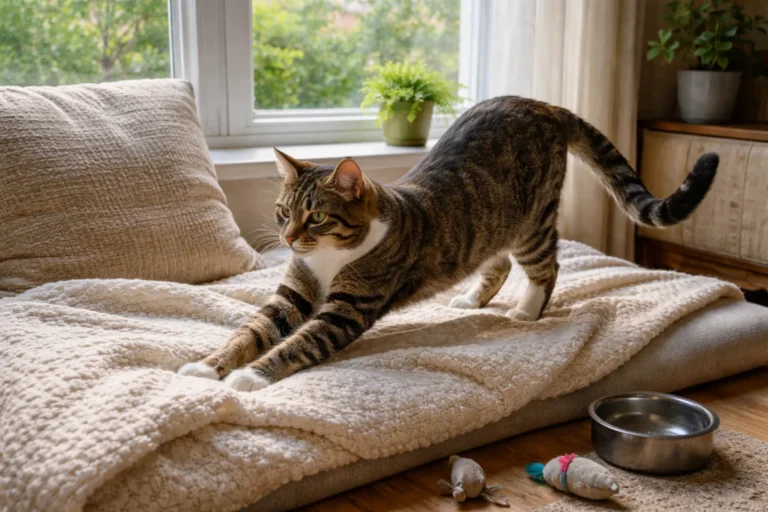
A cat can be stretched out in the middle of a quiet room and, in the next second, snap to attention as if something important has just happened. The shift can look dramatic. One moment there is slow blinking and loose paws, and the next there is a stiff body, wide eyes, and ears tuned toward an invisible point in the air.
This kind of sudden alertness often seems random to people because the trigger is not always obvious. A tiny sound, a shift in air movement, a smell, or even a memory of previous activity can be enough to change a cat’s state in an instant. To a cat, the world is full of details that humans barely notice.
Some cats do this often. Others only react that way when they are interested, uneasy, or half-asleep and easily startled. The pattern can reveal a lot about how a cat is taking in the home environment, what kind of cat they are, and whether their alertness is simply normal awareness or something that deserves closer attention.
What random alertness looks like in daily life
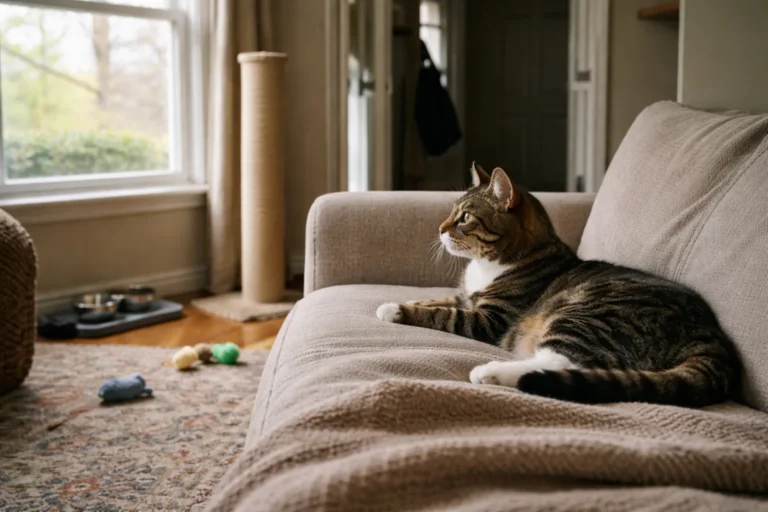
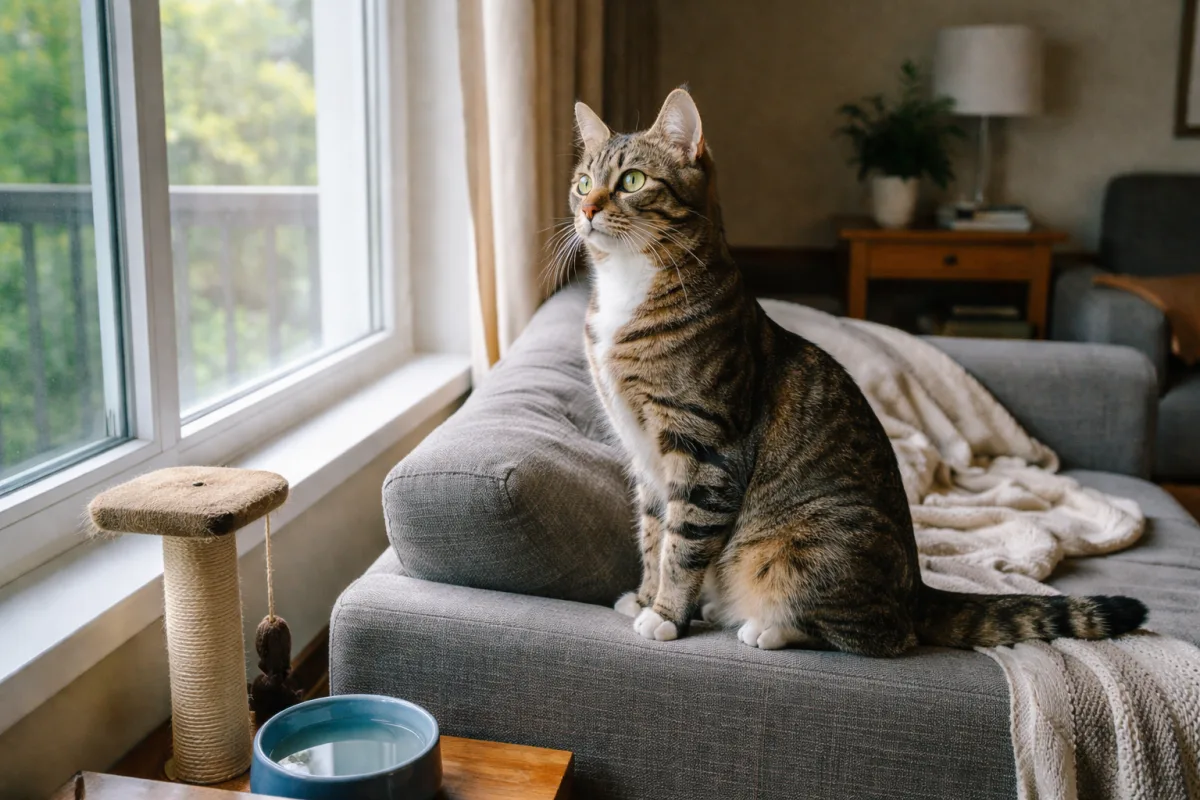
At home, this behavior usually appears as a quick change in posture. A cat may lift its head from a nap, freeze in place, turn its ears, or stare toward a hallway, door, appliance, or window. Sometimes the reaction is mild, and the cat just seems briefly more awake. At other times, the whole body becomes tense for a few seconds before settling again.
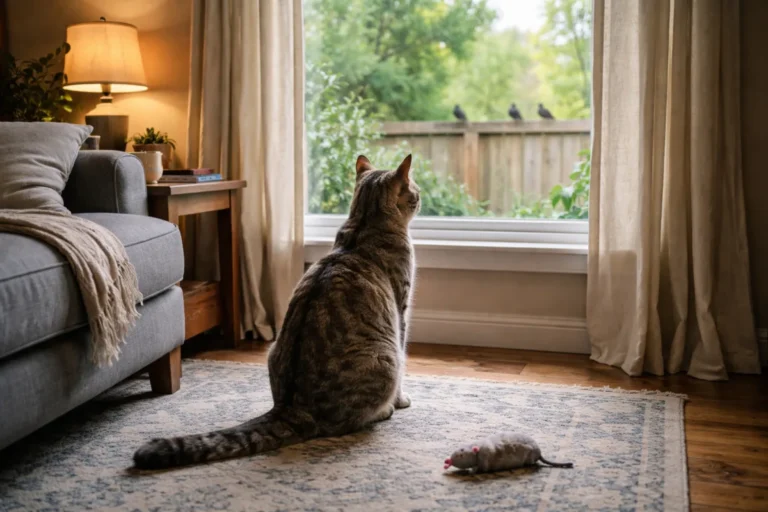
It may happen while the cat is resting, grooming, or simply sitting nearby. The trigger is often outside the obvious range of human perception. The vacuum in another room, a car door outside, footsteps in the building, the click of a heater, or a bird landing on a windowsill can be enough to make a cat go still.
In many homes, the reaction is so quick that owners only notice the aftermath: the cat has stopped what it was doing and is watching something intently. That pause is meaningful. Cats rarely react for no reason; they just respond to things in ways that can be hard for people to decode.
Common everyday signs
- Sudden head lift from sleep or rest
- Ears rotating toward a sound
- Eyes widening and pupils changing size
- A brief freeze before movement resumes
- Tail becoming still or flicking once or twice
- Walking to a new spot to watch, listen, or smell
These signs can happen alone or together. One cat may only lift an ear. Another may rise fully and move to the nearest high perch. The reaction does not have to look intense to be real.
Why cats become alert so quickly
Cats are built to notice small changes. Their hearing is sensitive, their sense of smell is sharp, and their reflexes are designed for fast response. In the wild, that kind of awareness helps them detect prey and avoid threats. In a home, the same instincts stay active even when the setting is safe and familiar.
That means a random alert moment is often not random at all. It may be a response to a sound that humans barely register, like a pipe ticking, a distant dog barking, or a very soft object moving. Cats can also detect vibrations through floors and furniture, which makes them sensitive to things that seem silent to people.
Sometimes the reaction has less to do with danger and more to do with interest. A cat may hear a treat bag from another room, catch the smell of food, or notice a routine cue such as the arrival of a family member. To us it looks like an unexplained jolt; to the cat it may be a meaningful signal.
Cats often appear “randomly” alert because they are reacting to details humans miss: faint sounds, subtle motion, smells, and vibration changes.
Internal reasons behind the behavior
Alertness can come from a few different internal states. One of the most common is simple curiosity. A cat notices something new or unusual and pauses to assess it. That pause is part of how cats make decisions. They often prefer to watch first and move later.
Another reason is partial arousal from rest. A cat that is sleeping lightly may wake quickly to any change around them. Older cats can do this too, though sometimes they take a moment longer to settle again. Kittens, on the other hand, can look constantly ready for action, especially when they are still learning which noises matter.
Stress or unease can also make a cat more jumpy. In that case, alertness may show up more often, last longer, or come with other signs like crouching, hiding, or a stiff body. The cat is not just paying attention; it may be bracing for something.
There is also a personality factor. Some cats are naturally watchful. They like to monitor the room, track movement, and keep an eye on entrances or windows. Others are more relaxed and only react when the trigger is especially strong. Both patterns can be normal.
What the internal state may be
- Curiosity about a sound, scent, or movement
- Light sleep interrupted by a small change
- Heightened vigilance due to stress or uncertainty
- Excitement linked to food, play, or human routine
- Breed or individual temperament that favors alertness
How body language changes during these moments
The body often tells the story before the cat moves. A relaxed cat that becomes alert usually shows a clean shift from loose to focused. The back may stay neutral, but the ears point forward. The eyes may open wider, and the whiskers can angle slightly ahead. The cat might stop licking, kneading, or blinking.
If the alertness is mild, the cat may simply track the source with the head and then return to resting. If it is stronger, the cat may stand, crouch, or move to a better viewing position. Some cats choose height because it gives them a better sense of the room. A windowsill, shelf, or couch arm can become a lookout post within seconds.
Not all alert behavior means tension. A cat that is engaged but comfortable often has a loose body, normal breathing, and no retreat behavior. A cat that is uneasy may look different: the body gets tight, the tail becomes low or tucked, and the cat may seem ready to flee or defend itself.
Loose alertness usually means interest. Tight alertness usually means caution.
How the home environment shapes the pattern
The same cat can seem more alert in one home than in another. Quiet homes can make faint sounds stand out, which may increase the number of times a cat perks up. Busy homes can do the same, but for a different reason: there are simply more sights, sounds, and movements to track.
Indoor cats often become especially attentive to routine noises. They learn the sound of a food container, a keyboard, a shower running, a car arriving, or a phone alarm. Over time, these cues become part of their internal map of the day. A cat may look random to us while actually following a very precise schedule.
Outdoor access can change the pattern as well. A cat that spends time outside may become alert to smells drifting in from the yard, other animals nearby, or changes at a door or screen. Indoor-only cats may focus more on windows, hallways, appliances, and human movement.
House layout matters too. Long corridors, echoing rooms, thin walls, and busy windows can all give a cat more information than a compact, quiet space. A cat living near a street or in an apartment building may react often to sounds that never reach human attention clearly.
Environmental triggers that often matter
- Footsteps in hallways or above the ceiling
- Appliances starting or stopping
- Birds, insects, or other animals outside windows
- Doors opening and closing
- Changes in household routine
- Unexpected smells from cooking, cleaning, or outdoor air
Why timing can make the alertness seem random
Timing is one of the biggest reasons people describe this behavior as random. A cat may react during the quietest part of the day, when nothing seems to be happening. But quiet moments often make tiny changes more noticeable. The absence of human noise can make a distant sound or movement stand out sharply to a cat.
Alertness also often clusters around transitions. Cats may become more watchful before meals, around the time people come home, when lights change, or when household activity shifts from busy to calm. Those moments can create anticipation, and anticipation itself can make a cat seem suddenly awake.
Some cats have strong pattern memory. They do not need a visible cue to expect something. The internal clock can be enough. If a cat often gets fed at a certain time, it may become alert before the bowl appears. That looks spontaneous, but it is often a learned response.
Sleep cycles matter too. Cats rest in short bursts and wake easily. A cat that appears to “jump” into alertness may have been close to wakefulness already. The final trigger only nudged the cat fully there.
When alertness is playful, neutral, or defensive
Not every alert reaction means the same thing. One useful way to read it is by looking at what happens next. A playful cat usually becomes alert and then moves toward the stimulus with bouncy energy, quick head turns, or a ready-to-pounce posture. The reaction is focused, but the mood stays light.
A neutral alert cat often watches, listens, and then chooses not to act. This can look like quiet intelligence more than excitement. The cat has noticed something, taken note of it, and decided it is not worth further effort.
A defensive alert cat is different. The reaction may be fast, sharp, and accompanied by signs of tension. The cat may flatten the ears, puff the tail, back away, or freeze low to the ground. In these cases, the alertness is tied to uncertainty or fear rather than curiosity.
| Type of alertness | Typical body language | Likely meaning |
|---|---|---|
| Playful | Forward ears, quick movement, pouncing or stalking | Interest, engagement, energy |
| Neutral | Head turn, brief stare, calm posture | Observation, simple awareness |
| Defensive | Tight body, low tail, retreat, flattened ears | Caution, stress, discomfort |
What repeated alertness may signal over time
When a cat becomes alert often, the pattern can point to a stable personality or a changing environment. A cat that has always been watchful is usually just showing its normal style. These cats are observant by nature and often like predictable routines with plenty to monitor.
If the behavior increases suddenly, the context matters. A new pet, recent move, visitors, construction noise, illness, or household changes can make a cat more vigilant. Cats often adjust their alertness before they adjust their behavior in obvious ways. The body becomes watchful first.
Physical discomfort can also change how a cat responds. A cat in pain may seem more reactive to touch, movement, or nearby sound. That reaction is not always dramatic, and it may not look like a clear medical sign at first. It can show up as being easily startled, tense, or unwilling to settle.
Long-term observation helps separate temperament from change. If a cat has always looked up at hallway noises and then calmly resumes napping, that may just be the cat’s nature. If the same cat starts reacting to everything, staying tense, or struggling to relax, the shift deserves attention.
A stable pattern usually reflects personality. A sudden change in alertness often reflects a change in surroundings, comfort, or health.
How owners often misread the behavior
It is easy to assume a cat is being dramatic, annoyed, or “hearing ghosts” when the reaction seems to come from nowhere. In reality, the cat may be following a sound or scent far more clearly than a person can. That is why the behavior can look exaggerated from the outside while being entirely reasonable from the cat’s point of view.
Another common misunderstanding is assuming all alertness equals fear. Some cats are simply efficient observers. They do not need to move much because they are already gathering information. A still cat is not necessarily a frightened one.
At the same time, people sometimes miss early stress signals because the cat does not hide or vocalize. A cat can look perfectly composed while being repeatedly startled. The difference is in frequency, recovery time, and body tension. A comfortable cat relaxes again quickly. An uneasy cat may stay on edge longer.
That distinction becomes easier to see when the same moment happens again and again. The cat may react to the same hallway noise every evening or become alert every time a certain appliance turns on. Once the pattern is clear, the reaction stops looking random and starts looking like a learned response.
Reading the whole moment, not just the pause
To understand this behavior well, it helps to watch the full sequence. What was the cat doing before the alert moment? What happened right after? Did the cat investigate, leave the area, remain relaxed, or stay tense? Those details matter more than the stare itself.
Subtle clues often answer the question better than the obvious ones. A cat that perks up when a bag crinkles and then comes running toward the kitchen is probably responding to a familiar positive cue. A cat that flinches at the same sound and hides under a chair is responding differently, even if the initial alert looks similar.
It can also help to note patterns in time of day, room, and household activity. Some cats are most alert in the early morning. Others are most reactive in the evening when the home gets louder or when outdoor sounds change. The environment creates a rhythm, and the cat learns it.
That is why random alert moments are often less random than they first appear. They reflect a cat that is constantly sampling the world, comparing what is happening now with what has happened before, and deciding whether to keep resting or pay closer attention.
In a calm home, many cats move through these shifts without much fuss. They listen, assess, and settle again. The alertness passes in seconds, leaving behind only a slight change in posture and a pair of attentive ears. When it happens often, it is usually less about mystery and more about a cat doing exactly what cats do: staying ready, even during quiet moments.