Cats rarely announce their reactions in obvious ways. A small pause before walking into a room, a shift in posture when a cabinet door opens, or a brief glance toward a sound that no one else noticed can say a lot. Sensitivity to subtle changes is part of what makes cats such attentive animals. They seem to notice the smallest differences in routine, scent, sound, and movement, then respond in ways that are easy to miss if you are not watching closely.
That sensitivity is not just about being “shy” or “fussy.” It often reflects how cats stay oriented in their world. A cat may adjust where it sleeps, how long it stays near certain people, or whether it chooses to eat right away after a change in the home. These reactions can look minor, but they often reveal how strongly a cat registers shifts that humans would barely notice.
Living with a cat means learning that subtle changes matter. A new piece of furniture, a different feeding time, a visitor who smells unusual, or even a rearranged blanket can feel significant to a cat. Some cats adapt quickly. Others need time. Many do both, depending on the kind of change and how safe the rest of the environment feels.
What Subtle Change Sensitivity Looks Like in Everyday Life
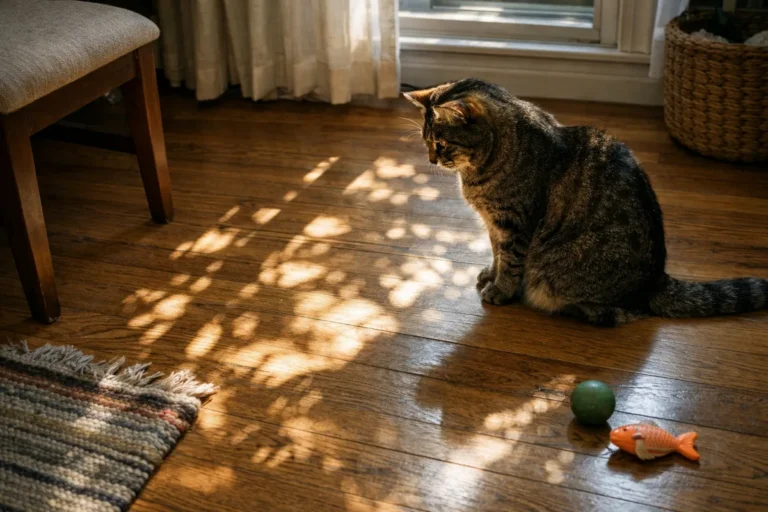
This kind of sensitivity shows up in ordinary routines. A cat may inspect a grocery bag more carefully than usual, avoid a hallway after someone moved a chair, or watch a family member who has returned home with a different scent from another location. The response is often quiet. There may be no vocalization, no dramatic retreat, just a slight delay, a narrowed focus, or a changed route through the room.
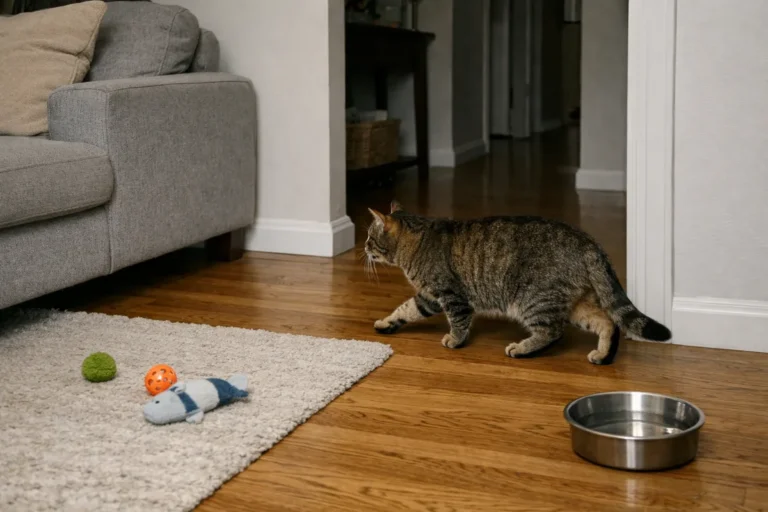
Some cats show this by becoming more observant. They linger at doorways and watch rather than enter immediately. Others become more selective about touch, accepting petting from one person but pulling away from another after a change in tone, scent, or schedule. In some homes, a cat’s sensitivity becomes most visible around mealtime, litter box use, or bedtime, because those routines create predictable anchors.
Common everyday signs
- Pausing before entering a room that has been rearranged
- Sniffing new objects for longer than usual
- Watching household members more closely after a routine change
- Eating, sleeping, or playing in a slightly different pattern
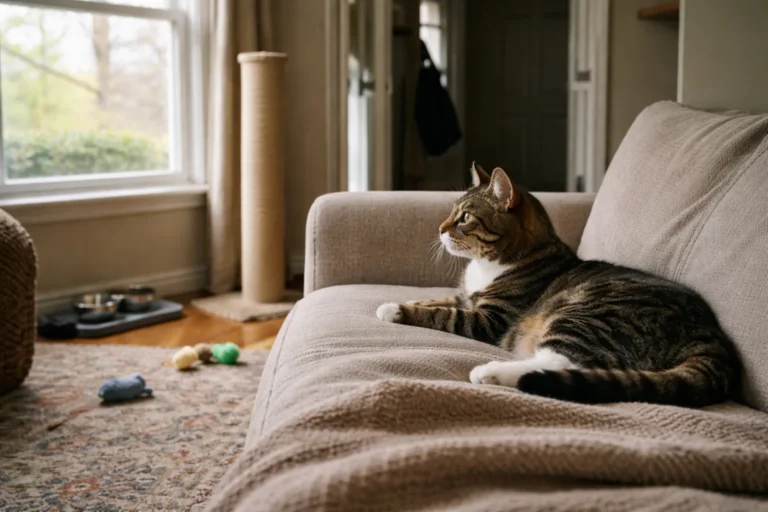
- Choosing higher or more hidden resting spots when the home feels unfamiliar
These behaviors are often subtle enough to miss in a busy home. Yet they can show a cat is mapping changes carefully before deciding how to respond. A cat that appears “fine” may still be tracking every small detail.
For many cats, a small change is not “small” at all. Their response may be quiet, but it is still meaningful.
Why Cats Notice Small Differences So Well
Cats evolved as both hunters and prey animals. That combination shaped a highly alert nervous system. They needed to detect movement, sound, scent, and shifts in the environment quickly. A rustle in the grass, a change in the wind, or a new presence nearby could mean safety or danger. Even in a home, that instinct remains active.
Another reason is that cats rely heavily on routine. Repetition helps them feel secure. When daily life is predictable, they can conserve energy and move through the day with confidence. When something changes, even slightly, they may slow down and assess before acting. This is not necessarily fear. Often it is caution, which is very normal for cats.
Cats also use the environment as a kind of map. They remember where things are, what smells belong where, and who usually occupies each space. If something on that map changes, they notice. A moved litter box, a new air freshener, or a different bag of food can all stand out because they alter the pattern the cat has already learned.
What May Be Happening Internally
When a cat reacts to subtle change, several internal processes may be involved. One is simple sensory alertness. A cat may smell something unfamiliar before anyone else does, especially if it is tied to another animal, cleaning product, or outdoor scent brought in on clothing. Another is emotional processing. The cat may be deciding whether the change affects access to food, shelter, attention, or safety.
Stress can also play a role, but not every reaction means stress. Some cats are naturally careful and thoughtful in the way they explore. Others are more intense in their reactions because they have a lower tolerance for uncertainty. Past experiences matter too. A cat that has lived through frequent moves, noisy homes, or inconsistent care may be slower to trust change, even if the current environment is stable.
Health can influence sensitivity as well. A cat that feels unwell may become less flexible with changes because it has less energy to adapt. Pain, gastrointestinal discomfort, or sensory issues can make small disruptions feel harder to manage. When a cat that is usually relaxed becomes unusually cautious, the change in behavior can reflect more than personality alone.
If a cat starts responding strongly to changes it once ignored, the cause may be emotional, environmental, or medical.
How the Home Environment Shapes the Response
The same cat can act very differently in different homes. A quiet, predictable household often allows a sensitive cat to settle more easily. A busy home with children, guests, pets, and shifting schedules may make every small change more noticeable. Even a healthy, confident cat can become more vigilant when the environment is loud or inconsistent.
Indoor cats may show this sensitivity more clearly because they experience the same environment day after day. They often notice when something shifts in a room, because the room itself is part of their stable territory. Outdoor cats, or cats with access to both indoors and outdoors, may spread their attention across more variables, but they still track changes closely where they sleep, eat, and bond with people.
Some changes affect cats less than owners expect. A new pillow on the sofa may be ignored after a few sniffing sessions. Other changes, like moving the litter box or changing the food brand, can cause a bigger response. The difference is often not the size of the change, but how directly it affects the cat’s most important routines.
Environmental changes cats often notice first
- Furniture moved in familiar pathways
- New smells from cleaning, cooking, or guests
- Different feeding times
- Changes in household noise levels
- Altered sleeping spots or blocked resting places
- Another pet’s scent on human clothing
When a cat seems unsettled after one of these changes, it is often trying to reestablish certainty. The cat may circle the area, observe from a distance, or return later once the environment feels more familiar.
Everyday Signals Owners Often Miss
Not all responses are obvious. Some cats do not hide or vocalize. Instead, they make tiny adjustments that are easy to overlook. A cat that usually greets you at the door may wait in the next room after you return from a trip. A cat that normally naps in the same corner may pick a shelf or chair with a better view. A cat that eats quickly may slow down when the usual rhythm of the household changes.
Facial and body language can shift too. The ears may turn more often toward sounds. The tail may stay lower. The body may look slightly compressed, with less loose, open resting posture. None of these signs alone means something is wrong. But together, they can show that the cat is paying extra attention to the environment.
Timing also matters. A cat may seem unaffected during the change itself and only react later, once the home quiets down. Another cat may react immediately and then settle within an hour. There is no single pattern. Sensitivity to subtle changes is often situational, not fixed.
How Cats Show Different Levels of Sensitivity
Some cats are mildly attentive. They notice differences, but they move on quickly. Others are highly reactive and can take a long time to settle after a shift. The difference may depend on temperament, age, history, and overall confidence. Understanding the level of sensitivity helps explain why one cat adapts to a move in a day while another needs several weeks.
| Level of sensitivity | Common behavior | What it may mean |
|---|---|---|
| Low | Brief sniffing, quick adjustment | The change is noted but not disruptive |
| Moderate | Watching, hesitating, altered routine | The cat is assessing before settling |
| High | Hiding, avoiding, reduced eating or play | The cat feels uncertain and needs more time |
A cat can also move between levels depending on the situation. It may handle a moved chair easily but react strongly to a new pet in the home. That is because cats often distinguish between a harmless visual change and a change that affects scent, territory, or social structure.
Playful, Neutral, and Defensive Responses
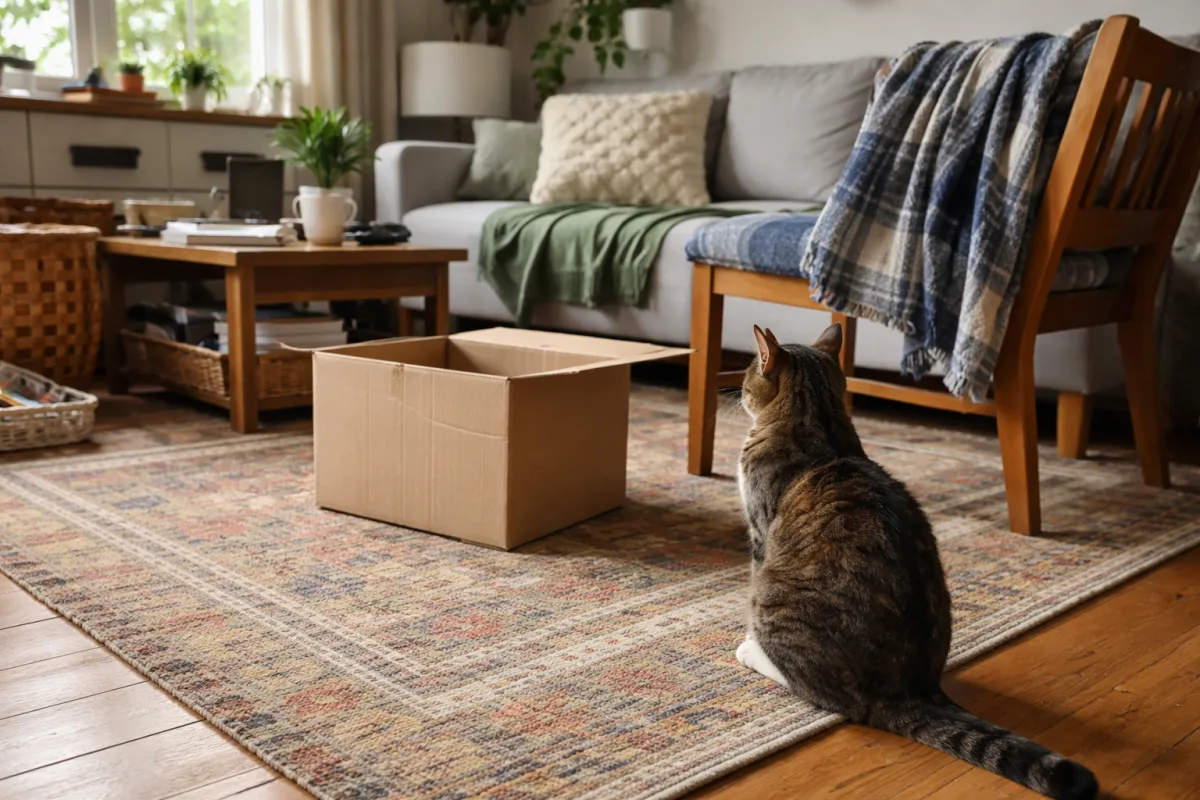
Not every reaction to change carries the same emotional tone. A cat may respond playfully to some differences, especially if the change includes a new box, tunnel, bag, or blanket that invites exploration. In those moments, curiosity is the leading force. The cat is testing the new item and deciding whether it fits into the environment.
A neutral response is also common. The cat notices the change, checks it, and continues with its day. This is often what happens with confident cats in familiar homes. The behavior is brief and matter-of-fact. The cat has enough background security to treat the change as information rather than a concern.
Defensive responses appear when the change feels intrusive or unpredictable. The cat may freeze, retreat, stare, or avoid an area completely. This does not always mean the cat is “acting out.” It may simply be protecting itself until it better understands what has changed.
Mixed signals that can appear together
- Approaching a new object, then stepping back
- Sniffing a visitor’s shoes but avoiding the person
- Watching a changed room from a distance before entering
- Eating normally but sleeping somewhere unusual
- Seeking attention while still appearing alert
These mixed signals are common. A cat may be curious and cautious at the same time. That combination is one of the clearest signs that the animal is evaluating its surroundings carefully rather than simply ignoring them.
How Routine Strengthens or Weakens Stability
Routine gives sensitive cats a framework. Predictable feeding, quiet resting spots, and familiar handling patterns help them interpret small changes without feeling overwhelmed. When the same daily sequence repeats often enough, the cat can tolerate minor disruptions more easily. The environment feels legible.
When routines shift often, sensitivity can become more visible. Late meals, irregular cleaning, rotating guests, and changing sleeping arrangements may make it harder for the cat to relax fully. Over time, the cat may become more watchful because it cannot rely on the same cues each day. This can create a cycle where the cat becomes more cautious, and the household misreads that caution as distance or aloofness.
That is why many cats respond best when big changes happen one at a time. A moved litter box, a new pet, and a schedule change all at once can be a lot. The cat may not object loudly, but the signs are still there in posture, movement, and choice of location.
Consistency does not have to mean rigidity. It means giving a cat enough familiar anchors to understand the day.
What Sensitivity Can Reveal About the Cat’s State
A cat’s response to subtle changes often says something about how secure it feels in the moment. A confident cat may investigate first and settle later. A cautious cat may wait and observe. A stressed cat may withdraw or become unusually clingy. These reactions are different, but they all point to the same truth: the cat is reading the world carefully.
Long-term patterns matter. If a cat has always been observant and slow to adapt, that may simply be its temperament. If the behavior changes suddenly, especially alongside appetite changes, litter box changes, or altered grooming, the issue may be larger than sensitivity alone. Context gives the behavior meaning.
Some cats are especially tied to human routines. They know when someone usually wakes up, when the kitchen becomes active, or when the house turns quiet in the evening. If one of those patterns changes, the cat may shift its own schedule to compensate. That adjustment can look subtle, but it is a strong sign of a cat that is tracking the household closely.
Living With a Cat That Notices Everything
There is something steadying about realizing how closely a cat watches the home. It can encourage a slower, more deliberate way of changing things. Instead of assuming the cat will automatically adapt, owners often start noticing how much the cat depends on repetition, scent, and small visual cues. That awareness tends to make daily life smoother for everyone.
A cat that reacts to subtle change is not necessarily difficult. It is responsive. It pays attention. It builds a map of the home with remarkable detail, then checks that map every time something feels different. Some cats do this quietly and gracefully. Others do it with more hesitation. Either way, the behavior is part of how cats stay oriented and comfortable in the spaces they share with people.
When those small reactions are observed closely, they become easier to interpret. A pause is not always avoidance. A sniff is not always suspicion. A change in where a cat sits or sleeps may be its way of adjusting to a world that has shifted just enough to deserve another look.