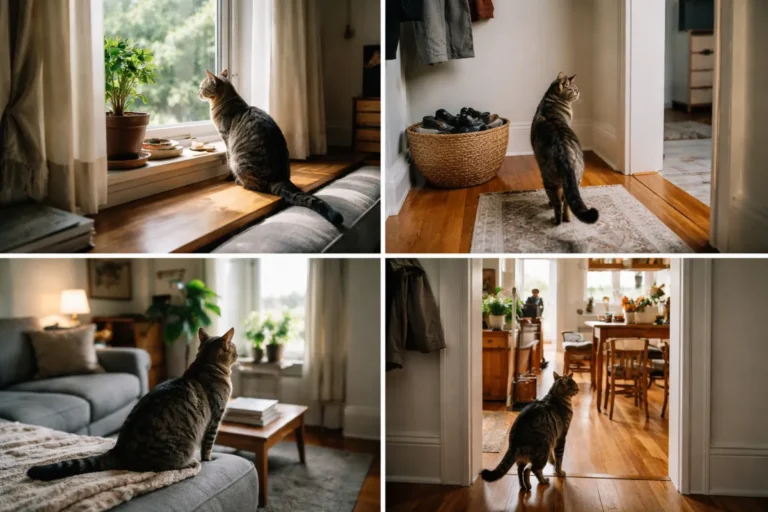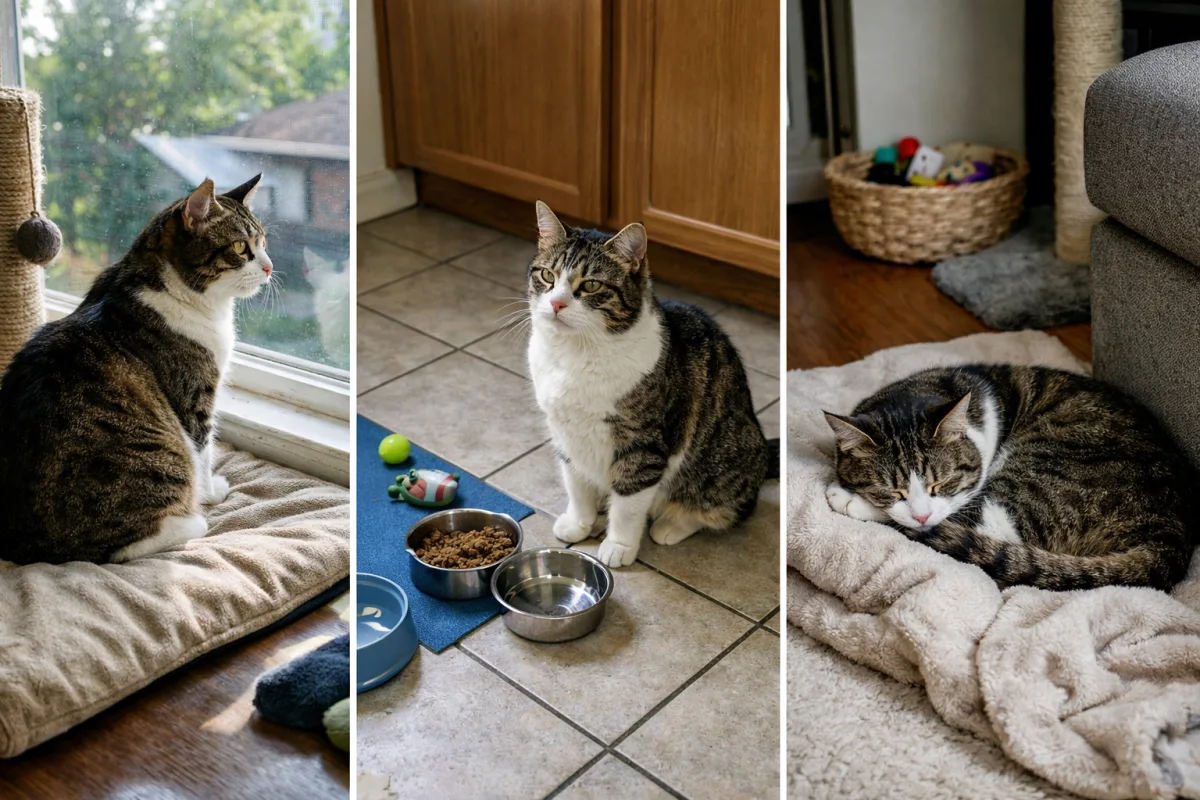
Many cat owners notice the same thing: a cat that seems calm at noon can become restless at dusk, clingy before breakfast, or suddenly energetic in the middle of the night. These shifts can feel random at first, but they usually follow patterns tied to instinct, routine, and the cat’s surroundings.
A cat is not behaving the same way every hour because its body and mind are responding to changing cues. Light, hunger, temperature, household noise, and the owner’s own schedule all play a part. Once you start looking at the clock alongside your cat’s actions, the pattern often becomes easier to read.
Some changes are subtle. Others are obvious enough to wake you up at 4 a.m. with zoomies across the hallway. Either way, timing matters more than many owners realize.
What Cat Behavior Changes Can Look Like in Daily Life
Time-based changes in cat behavior often show up in ordinary, repeated moments. A cat may be sleepy all morning, then suddenly become vocal when the kitchen starts stirring. Another cat might disappear during the busiest part of the afternoon and reappear at night looking for attention.
These patterns can include pacing, meowing, scratching, playing, grooming, hiding, or following a person from room to room. Some cats become more affectionate at predictable times, such as when the house gets quiet. Others are more active when everyone is busy and less available.
What stands out is not just the behavior itself, but when it happens. The same action can mean different things depending on the hour and the context.
- Early morning restlessness may point to hunger, energy buildup, or a learned routine.
- Evening bursts of activity often reflect a cat’s natural hunting rhythm.
- Late-night vocalizing may be linked to boredom, attention-seeking, or poor daytime enrichment.
- Midday sleepiness is often normal, especially in a comfortable indoor home.
Why Cats Often Act Different at Certain Times
Cats are naturally crepuscular, which means they are most active around dawn and dusk. That does not mean they are never awake at other times, but it does help explain why behavior changes are so noticeable at those hours. Their bodies are built to watch, wait, and act when light and movement shift.
In the wild, this timing made sense. Prey animals were often active at dawn and dusk, so cats adapted to those windows. Even indoor cats still carry that pattern, and the modern home often amplifies it rather than reducing it.
Routine also shapes behavior. If a cat learns that breakfast comes at 6:30 a.m., it may begin asking for food before the alarm goes off. If play happens after dinner, the cat may start anticipating that routine and become more energetic in the evening.
Timing is often a clue to what is driving the behavior. A cat that repeats the same action at the same hour is usually responding to a mix of instinct, habit, and environmental signals.
Morning Behavior: Why Some Cats Seem Active Before You Are
Morning is a common time for cats to become demanding. Some sit by the bedroom door. Others walk across the bed, vocalize, or paw at the face of their sleeping person. It can feel like a very direct message: the day has started whether you are ready or not.
Part of this comes from circadian rhythm and natural alertness near dawn. Part of it comes from learned expectation. Cats are quick to connect time, location, and outcome, so a cat that has been fed every morning at the same hour may begin asking earlier and earlier.
Morning behavior can also reflect pent-up energy. After several quiet hours, especially in a small indoor environment, a cat may be ready to move. That energy often appears as running, jumping, or persistent meowing.
Common morning patterns
- Standing near the food area before breakfast
- Vocalizing around the bedroom door
- Following movement from room to room
- Rubbing against legs as soon as someone wakes up
- Doing short bursts of running or play after sunrise
Not every morning burst is a problem. Sometimes it is simply a cat syncing itself to the household schedule. But when the pattern becomes intense, it can point to a routine that is too predictable around feeding or too quiet overnight.
Midday Behavior: Why Many Cats Go Quiet
Midday often brings a different version of the same cat. A kitten who was lively in the morning may collapse into sleep. An adult cat may find a sunny patch, change positions twice, and then remain still for hours. This calm period is easy to misread, especially for owners who expect constant interaction.
For many cats, midday is a natural rest period. The home may also be quieter, which lowers stimulation. Less movement, fewer sounds, and stable temperatures can all make the body settle.
Some cats use midday to observe rather than engage. They may sit on a shelf, watch birds, or track household movement with slow head turns. That quieter behavior still reflects attention. It just looks different from play or affection.
When midday quiet is normal
- The cat is eating normally at other times
- Body language looks loose and relaxed
- The cat wakes up easily when something interesting happens
- There are no signs of pain, distress, or loss of appetite
When a cat is only calm during the middle of the day, there is usually no issue. In many homes, midday is simply the most restful part of the day.
Evening Behavior: The Return of Energy
Evening is when many cats seem most alive. They may begin pacing as dinner approaches, chasing toys more enthusiastically, or waiting near windows and doorways. This timing often catches people off guard because the cat may have looked sleepy just an hour earlier.
As the day cools down and the home becomes quieter, many cats become more engaged. This can happen for a few reasons. The cat may be responding to the natural dusk pattern built into feline behavior. It may also be reacting to the owner’s return home, the start of a relaxed routine, or the expectation of food and attention.
Evening energy often looks playful, but it can also become demanding. Some cats become more vocal at this time, especially if they want dinner, a lap, or a game. Others start active exploration, checking every room before settling again.
Evening excitement is not always “extra energy” in a simple sense. It can be a cat’s response to a predictable window of stimulation, hunger, and social availability.
Nighttime Changes: Why Some Cats Wake Up the House
Nighttime behavior is one of the most common reasons owners start paying attention to the clock. A cat that sleeps through a TV show may suddenly sprint down the hall after midnight, meow at the bedroom door, or paw at objects on a shelf. These actions are often normal in a cat’s internal rhythm, even when they are inconvenient for people.
At night, many homes become quiet, dark, and still. For a cat, that can make small sounds and movements more noticeable. It can also bring out hunting-style activity, since a calm house can resemble the quiet conditions where cats would naturally track movement.
Night behavior sometimes grows stronger when daytime life is predictable and undemanding. A cat that sleeps through long stretches without enough play, climbing, or mental engagement may save its energy for the hours when the house finally feels active again.
Nighttime behaviors that often show up
- Zooming from room to room
- Knocking over objects
- Chirping or meowing in empty hallways
- Staring at shadows or small movements
- Seeking attention while the household is asleep
Some cats naturally do better with more structured evening play and a consistent bedtime routine. Others simply become more alert at night and need help redirecting that energy in ways that fit the home.
How Hunger, Feeding Time, and Routine Shape Behavior
Feeding time is one of the strongest drivers of time-based behavior changes. Cats quickly learn when meals happen and adjust their actions around that expectation. A cat that paces before breakfast is not necessarily being difficult; it may be responding to a deeply reliable pattern it has learned to trust.
Food can change behavior in smaller ways too. Cats may become more vocal near the kitchen, sit by a cabinet at certain hours, or act more focused right before a meal. If feeding times vary a lot from day to day, the cat may become more restless because there is no clear pattern to settle into.
Some owners notice that their cat becomes calmer after a meal and more active before one. That contrast is common. Hunger, anticipation, and habit can create a strong daily rhythm.
| Time of day | Common trigger | Possible behavior |
|---|---|---|
| Early morning | Breakfast expectation | Meowing, pacing, waking owners |
| Late afternoon | Rising activity before dinner | Restlessness, following, toy chasing |
| Late night | Leftover energy or delayed attention | Zoomies, vocalizing, exploration |
How Light, Noise, and Household Activity Affect Timing
A cat’s behavior can change simply because the environment changes across the day. Morning light, afternoon noise, and evening quiet all affect alertness. Even a cat that seems indifferent to the household is often reading those shifts carefully.
Sunlight matters more than many people expect. A bright room may encourage grooming, watching, or napping in one spot. As daylight fades, the same cat may become more active, not because anything changed in the cat itself, but because the room feels different.
Household noise plays a role too. Vacuuming, phones, visitors, cooking sounds, and doors opening and closing all affect how comfortable a cat feels moving around. Some cats become hidden during busy hours and more visible when the home settles down.
Environmental clues that change behavior by time
- Sun patches that move through the house
- Feeding sounds from the kitchen
- Children returning home
- Outdoor birds or neighborhood activity
- Evening quiet after the day’s noise fades
Because cats are observant, they often organize their behavior around these cues more than owners realize. The behavior may seem random until the day is watched as a full pattern rather than a series of isolated moments.
When Timing Can Point to Emotional State
Time-based changes are often normal, but they can also reveal how a cat feels. A cat that becomes clingy only when the house is very quiet may be seeking security. A cat that hides every afternoon when a specific person arrives may be reacting to stress linked with that time or event.
The emotional meaning usually depends on what else is happening. A playful cat at dusk, relaxed ears and loose movements, is different from a cat pacing at dusk with a tight body and wide eyes. The hour is the same, but the tone is not.
Small details matter: tail position, ear angle, appetite, and willingness to be touched. A cat that still eats, plays, and rests normally at other times is less likely to be struggling. A cat whose timing changes are joined by withdrawal or agitation may need closer attention.
Behavior at a certain time of day becomes more meaningful when it is paired with body language. The clock alone never tells the whole story.
What Owners Often Misread
Owners sometimes assume a cat is being stubborn, manipulative, or “acting out” because the behavior happens at an inconvenient hour. But most time-linked cat behavior has a practical explanation. The cat may be hungry, understimulated, anxious, or simply following a pattern that has worked before.
Another common misunderstanding is thinking that a cat should behave identically all day. That is not realistic. Cats adjust to light, activity, and household rhythm in ways that can look dramatic from the outside but are actually ordinary responses.
It also helps not to over-interpret every nightly burst or early morning meow. Some variation is normal. The question is whether the pattern is stable, escalating, or accompanied by other changes in health or behavior.
How to Read the Pattern Without Overreacting
Watching the timing of behavior can be more useful than reacting to the behavior itself. Instead of asking only what the cat is doing, notice when it happens, what comes before it, and what usually follows. Those three details often reveal the reason.
If the cat becomes active at the same time every day, try to identify the trigger. Is it meal time, sunlight, household activity, or a person returning home? Small observations make the pattern clearer.
Once the pattern is visible, the response can be practical. A cat that zooms every night before bed may need a play session earlier in the evening. A cat that wakes everyone before breakfast may do better with a later last meal or a more consistent feeding schedule. A cat that becomes restless after long quiet periods may need more daytime stimulation.
Useful things to track
- Exact time the behavior appears
- What happened immediately before it
- Whether food, noise, or movement was involved
- How long the behavior lasted
- Whether the cat returned to normal afterward
When the Pattern Becomes Worth a Closer Look
Some timing changes are simply part of living with a cat. Others become more important when they are new, intense, or tied to other signs. A cat that starts acting very differently at a certain time of day may be reacting to a change in its body or environment.
Examples include sudden nighttime agitation in an older cat, repeated morning vomiting before breakfast, or a once-relaxed cat that now hides every evening. In those cases, the time of day can be a clue that helps identify what has shifted.
Even then, the behavior should be considered in context. A pattern that appears only around feeding may be very different from one that appears with pain, fear, or declining appetite. Timing helps narrow the possibilities, but it is only one part of the picture.
Why the Same Cat Can Seem Different at Different Hours
It is easy to think of a cat as having one personality. In reality, many cats move through the day in distinct states. There is the sleepy cat, the watchful cat, the hungry cat, the playful cat, and the cat that simply wants quiet company on the couch.
These shifts are normal. They do not mean the cat is inconsistent. They mean the cat is responsive. A cat in a bright kitchen before dinner is not the same as a cat curled in a warm bed after a long play session.
That flexibility is part of what makes cat behavior so interesting to observe. The timing tells you which version of the cat is showing up, and the surrounding details explain why.
When cat behavior changes at certain times of day, it usually reflects a mix of instinct, habit, and immediate conditions. Morning excitement, midday rest, evening energy, and nighttime wandering all fit into that pattern. Once those rhythms are recognized, the cat’s day begins to make more sense, one hour at a time.