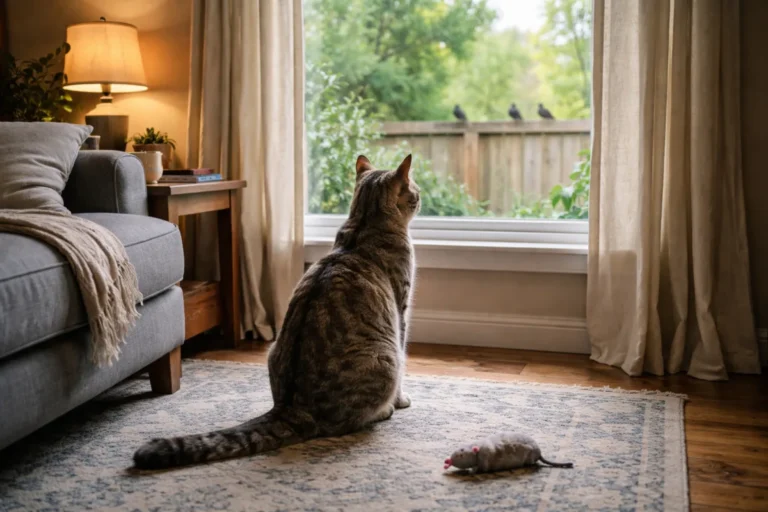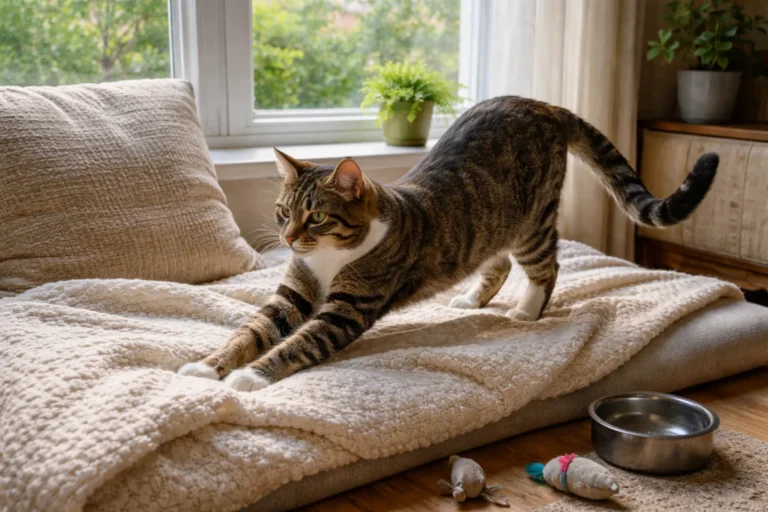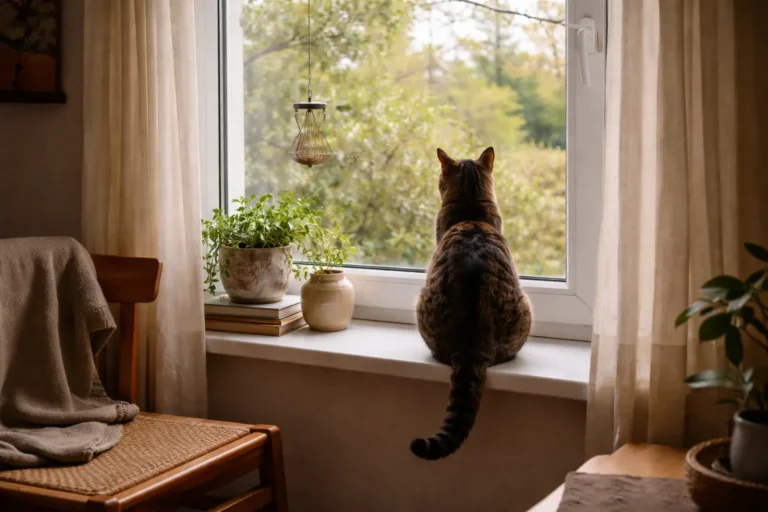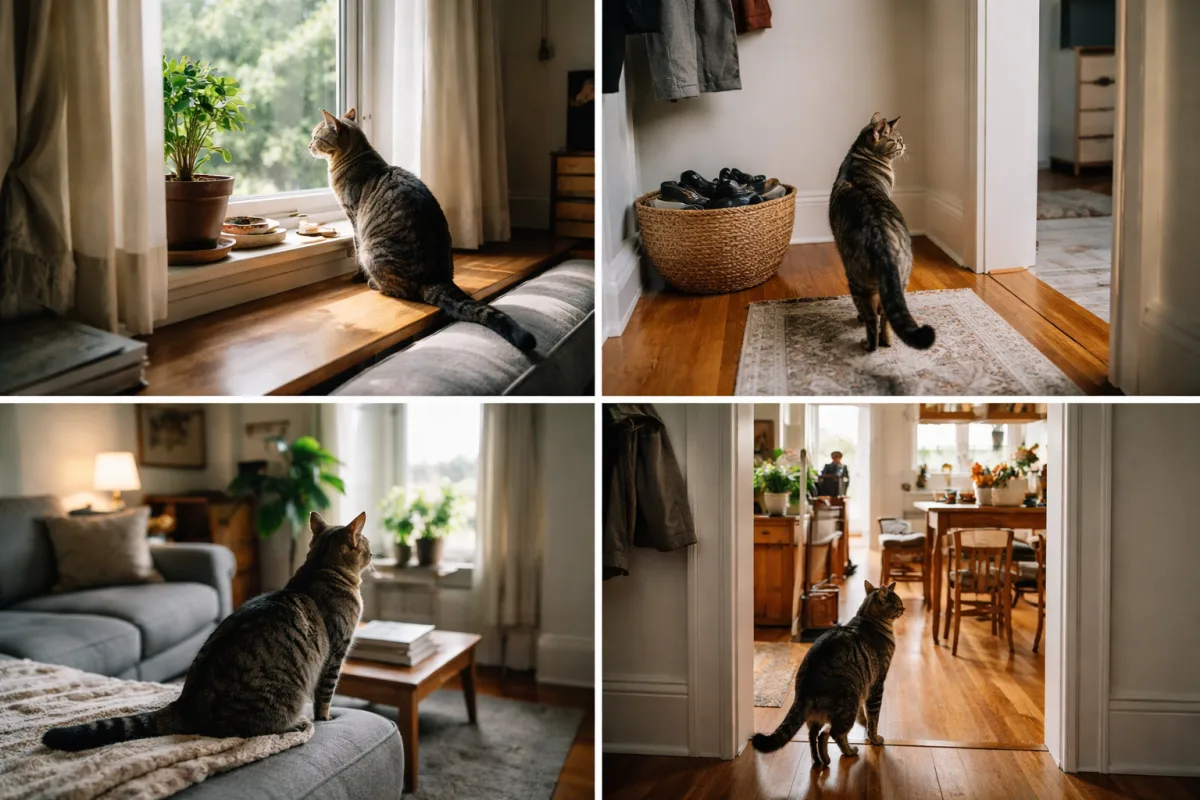
Cats often return to the same hallway corner, window ledge, bed, or stretch of carpet again and again. To people, it can look random. To the cat, it rarely is. Those repeated visits usually reflect a place that feels useful, safe, familiar, or simply worth checking one more time.
Sometimes the pattern is obvious. A cat may circle back to a sunny patch because the temperature feels perfect there. Another cat may revisit the same doorway because that spot gives a clear view of movement in the home. Even when the reason is subtle, the habit usually has logic behind it.
Repeated exploration is one of the most ordinary cat behaviors, but it says a lot about how cats experience their environment. They do not move through a home the way people do. They collect information in short visits, compare what has changed, and then return later to confirm it.
What Repeated Exploration Looks Like in Daily Life
In everyday homes, this behavior appears in small, familiar patterns. A cat may patrol the same route from kitchen to living room every afternoon. Another may keep visiting the same chair, then jump down, then come back ten minutes later. Some cats check a windowsill repeatedly even when nothing outside seems to be happening.
These visits can look purposeless at first, but they often follow a rhythm. The cat may be responding to sound, scent, timing, temperature, or routine. What seems like wandering is often a combination of curiosity and monitoring.
One common example is the cat who keeps returning to a doorway. That spot may carry odors from other rooms, footsteps from people passing by, or a view of the most active part of the home. Another cat may keep revisiting the same rug because it is a social checkpoint, a place where something interesting once happened, or just a surface that feels good under the paws.
Repeated exploration is often less about indecision and more about checking whether the environment still matches the cat’s expectations.
Why Cats Return to the Same Places
Cats are built to notice small changes. A slight shift in smell, a new sound, or a moved object can be enough to make them investigate. When they revisit the same area, they are often updating their mental map. They want to know what is familiar, what is different, and whether anything important has changed since the last visit.
There is also a comfort factor. Cats tend to prefer places that feel predictable. If a location has once offered warmth, quiet, a clear escape route, or a good view, the cat may treat it as a reliable destination and return often.
Another reason is memory. Cats remember places tied to positive experiences, even if those experiences were small. A spot where they found a toy, watched birds, received attention, or rested undisturbed can become part of a repeated pattern. The cat revisits because the place has earned value.
Common internal reasons behind the behavior
-
Curiosity about small environmental changes
-
Preference for safe, predictable spaces
-
Memory of past positive experiences
-
Interest in scent marks and social information
-
Need to monitor activity without being directly involved
These reasons often overlap. A cat may be curious, comforted, and cautious at the same time. That combination is very typical.
How Instinct Shapes the Habit
Repeated exploration is closely tied to a cat’s natural instincts. In the wild, staying aware of territory matters. Cats need to know where they can rest, where movement is happening, and what has changed since the last check. Revisiting areas is part of that process.
Even domestic cats carry this instinct into the home. They may not need to hunt for safety in the same way, but the underlying behavior remains. A cat that keeps circling the same zones may be assessing the home as a living territory rather than a fixed set of rooms.
This is why some cats seem to “tour” the house multiple times a day. They are not simply walking. They are gathering information. Their repeated route gives them a sense of control over their environment, which matters a great deal to a species that depends on awareness.
For many cats, returning to the same area is a form of reassurance: the place is still there, still familiar, and still under observation.
How Different Home Environments Influence It
The same behavior can look very different depending on the home. In a quiet apartment, a cat may revisit a few favorite zones because the environment is stable and limited. In a busy home, the same cat might check those areas more often because there is more movement, more sound, and more chance that something changed.
Indoor cats often develop strong location preferences. A corner by the window, the top of a cat tree, the back of a sofa, or a spot near a heating vent may become part of a daily circuit. Outdoor-access cats may also return to specific areas indoors because those locations help them transition between outside stimulation and indoor rest.
House layout matters too. Cats tend to favor places with good visibility and easy escape routes. They may revisit a hallway intersection, a stair landing, or a room threshold because these places let them watch several directions at once. A cat rarely chooses a spot by chance if it can choose a spot with strategic value.
| Environment | Why the cat may revisit it |
|---|---|
| Sunny window | Warmth, bird watching, visual stimulation |
| Doorway or hall | Traffic monitoring, scent changes, territorial awareness |
| Quiet bedroom corner | Security, low noise, reliable resting place |
| Near feeding area | Routine, anticipation, association with daily events |
Routine Makes Repeated Visits More Likely
Cats are creatures of habit, and daily rhythm strongly affects where they go. If something happens in the same place at the same time every day, the cat notices. Feeding, brushing, family arrivals, play sessions, and even the sound of a laptop opening can create a repeated pattern in one location.
Once a cat learns that a certain area predicts something useful, it may keep checking that spot. The cat is not being stubborn. It is following a pattern that has proven meaningful. The behavior often becomes stronger when routines are consistent.
For example, a cat may keep returning to the kitchen after dinner because that is where food appears, even if the meal is already over. Another may revisit a sofa arm before bedtime because that is where the household settles down and attention becomes more available. The location becomes part of the schedule.
When Exploration Is Playful
Not every repeated visit is serious. Some cats return to the same area because the place is fun. A box near the couch, a tunnel under a chair, or a pile of laundry can become a temporary play zone. The cat explores it, leaves, then comes back for another round.
Playful repetition usually looks loose and energetic. The cat may crouch, dart, bat at objects, or change direction quickly. The body tends to look relaxed and ready at the same time. Ears often stay neutral or forward, and the tail may move with interest rather than tension.
In these cases, the repeated exploration is part play, part testing. The cat keeps returning because the area continues to offer novelty. Even a familiar space can feel new if the angle, object, or sound changes enough.
Signs the behavior is playful
-
Quick movement followed by brief pauses
-
Soft body posture and flexible tail
-
Interest in toys, shadows, or objects in the area
-
Return visits that end in pouncing or batting
-
No obvious signs of stress or guarding
When Exploration Is Quiet and Neutral
Many return visits are neither playful nor concerning. The cat simply checks the spot, scans the room, and leaves. Then, later, the cat does it again. This neutral version is very common and usually reflects ordinary curiosity plus environmental monitoring.
These cats often move in a measured way. They may sniff, sit, look around, and rest nearby. The behavior can happen several times a day without any clear emotional spike. It is simply part of how the cat keeps track of the home.
Neutral exploration is easy to miss because it blends into daily life. Yet it is one of the most common forms of cat behavior. A cat that repeatedly visits a shelf or window may be saying, in effect, that the location is useful enough to keep checking.
When Repeated Visits May Reflect Stress or Uncertainty
Sometimes the pattern becomes more intense. A cat may keep returning to the same area with less relaxation and more vigilance. The cat might pace, hover, or check the spot again and again without settling. In those moments, the behavior can suggest unease rather than simple curiosity.
Stress-related exploration often has a different quality. The cat may seem unable to fully rest, may scan more often, or may return to a location because it feels uncertain about the rest of the home. This can happen after changes in the household, new animals, loud activity, visitors, moving furniture, or altered routines.
The area itself may not be the problem. Instead, the cat may be using that area as a base while trying to make sense of a larger shift. Repeated visits can become a way of checking whether the environment is safe enough to relax in.
Pay attention to the whole picture: repeated exploration means something different when it comes with tension, vigilance, or trouble settling.
Signals that add context
-
Body held low or stiff
-
Frequent scanning of the room
-
Inability to settle after checking the area
-
Hiding after each visit
-
Sudden changes in appetite, sleep, or social behavior
How Scent and Memory Keep Pulling Cats Back
Cats experience the world through scent in a way people often underestimate. A favorite spot can hold a layered record of the cat’s own presence, other pets, household movement, and routine events. Returning to the same place may simply mean revisiting a familiar scent story.
That story changes over time. A windowsill may smell different in the morning than it does at night. A chair may carry a person’s scent after work. A carpeted spot may keep a trace of another pet, even after the pet has moved on to a different room. Cats notice these details.
Memory adds another layer. If a cat once felt calm, playful, or rewarded in a location, the cat may keep checking it. The place becomes meaningful because the cat remembers what happened there, even if no obvious event is happening now.
Why Some Cats Are More Repetitive Than Others
Not all cats revisit places in the same way. Some are broad explorers who move through the whole home. Others prefer a small set of favorite locations and return to them often. Personality plays a big role.
More cautious cats may rely heavily on a few trusted spots. Highly observant cats may revisit areas as part of their scanning routine. Social cats may return to places where people gather. Independent cats may favor quiet corners where they can watch without interruption.
Age can matter too. Kittens often revisit places as part of playful learning, while older cats may be more consistent about the spaces they trust. A cat with sensory changes may also stick to familiar routes because those routes are easier to manage.
What the Behavior Usually Means in Practice
In most homes, repeated exploration means the cat has found a location worth checking more than once. That location may offer comfort, information, or stimulation. The cat may be following scent, routine, memory, or a changing environment that deserves attention.
The meaning becomes clearer when you look at timing and body language. A cat that revisits a sunny window every afternoon is probably responding to warmth and activity outside. A cat that keeps returning to the same hallway after a household change may be trying to regain a sense of stability. A cat that pops into the kitchen every evening may be tracking dinner time with impressive precision.
These patterns are not random, and they are usually not a problem on their own. They are part of how cats make a home feel known.
What Owners Often Miss
People sometimes assume a cat is bored, needy, or acting without purpose when the cat returns to the same area over and over. In reality, the behavior can be quite specific. It may be tied to temperature, sound, view, scent, or the rhythm of the house.
It also helps to notice what happens just before the cat goes back. Did someone enter the room? Did a noise come from outside? Did feeding time approach? Did the cat see another pet? The trigger is often small, but cats are very good at noticing small things.
If the behavior changes suddenly, that matters too. A cat who used to visit a place calmly but now seems restless or fixated may be responding to stress, discomfort, or a shift in the environment. The repeated location can become a clue to what the cat is trying to manage.
Long-Term Patterns and Stability
Some cats keep the same preferred areas for years. Others change their favorite spots as the household changes. A new piece of furniture, a different routine, or even a seasonal shift can alter where a cat likes to go. That flexibility is normal.
Stable patterns are especially common when the environment remains predictable. If the same room stays quiet, warm, and accessible, the cat may return there for a long time. If life changes, the cat may adjust and begin exploring a new set of repeated locations.
Long-term observation often reveals that repeated exploration is not one behavior but several. At times it is habit. At times it is comfort. At times it is cautious checking. The area remains the same, while the meaning behind the visits shifts with context.
Natural Repetition Is Part of How Cats Live
Cats do not move through space in a straight, human way. They sample, pause, return, and reassess. That repeated exploration is a normal part of how they understand their surroundings and keep themselves oriented.
When a cat keeps going back to the same area, the behavior usually reflects something practical or emotionally steady: a preferred lookout, a trusted resting place, a scent-rich zone, or a spot linked to daily routine. The repetition is often a sign that the cat has judged the area to be worth revisiting.
Watching those patterns closely can make a home feel easier to read. A cat’s favorite places rarely stay chosen by accident. They are usually chosen, again and again, because they continue to make sense to the cat.