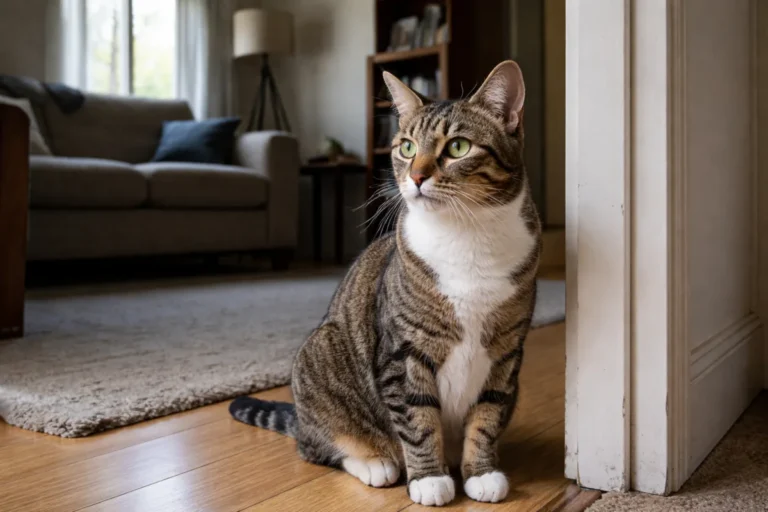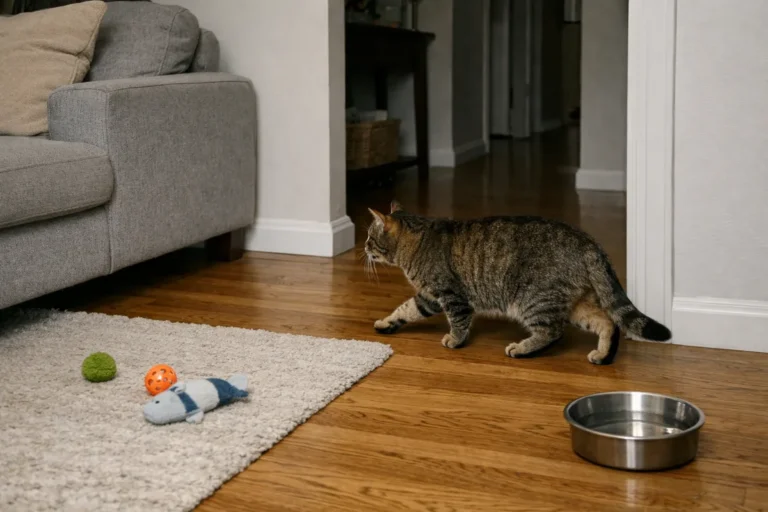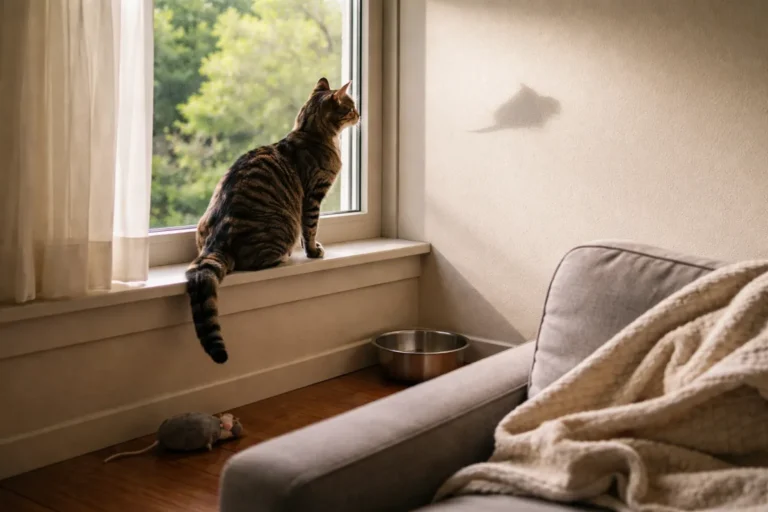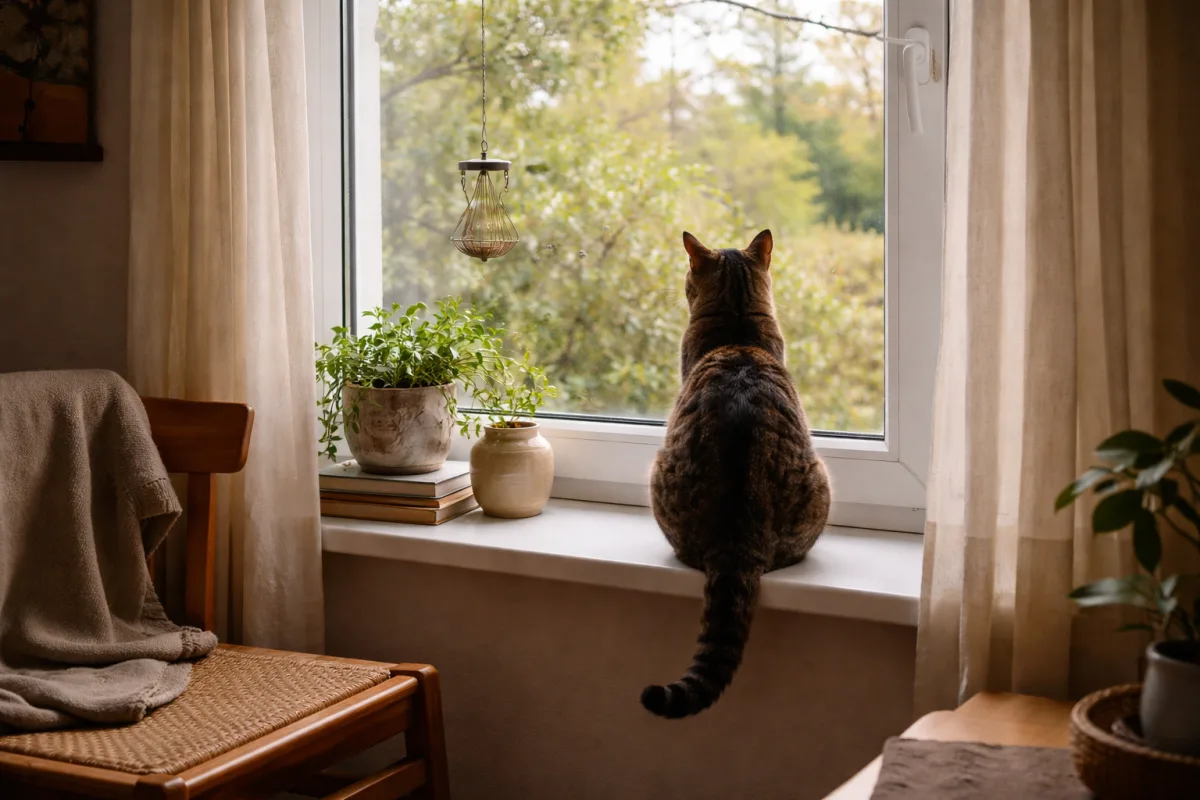
A cat can look almost frozen for a surprising amount of time. Sometimes it happens while they are sitting by a window. Sometimes it happens in the middle of a room, on a rug, or at the edge of a bed. Their body seems still, their eyes stay open, and nothing appears to be changing.
That kind of stillness can make people uneasy. It is easy to wonder whether the cat is sick, upset, scared, or simply deep in thought. In many cases, though, a cat sitting completely still is normal. Cats use stillness in several different ways, and not all of them mean the same thing.
What matters is the full picture. A relaxed cat and a tense cat may both be motionless, but their posture, breathing, ears, whiskers, and timing often tell different stories. Looking at those details helps turn a vague worry into something more practical and clear.
What a Completely Still Cat Often Looks Like in Daily Life
Many owners notice this behavior during quiet moments at home. The cat may sit upright with paws tucked under, stare at one spot, and barely move for several minutes. Another cat may stand in the same place, body balanced and alert, as if listening to something only they can hear.
In everyday life, this stillness can show up in a few common ways:
- Sitting at a window and watching birds or outdoor movement
- Pausing in a hallway before entering a room
- Perching on a chair or shelf without changing position
- Holding a crouched or loafed posture during rest
- Stopping mid-walk to observe sounds or smells
Sometimes the cat is not fully relaxed. They may be watching a person, another pet, or an object they do not understand yet. Other times they are simply conserving energy, which is very normal for cats. Cats are built to alternate between activity and long periods of quiet waiting.
A motionless cat is not automatically a worried cat. Stillness can be rest, observation, caution, or concentration, depending on the rest of the body.
Why Cats Stay So Still in the First Place
Stillness is one of the most natural cat behaviors. In the wild, cats rely on patience. They watch, wait, and move only when it helps them. That habit remains strong in domestic cats, even when the main goal is not hunting but simply observing the world around them.
There is also a practical side to it. Cats often choose stillness because it helps them feel in control. When they are uncertain, sitting quietly lets them gather information without committing to action. When they are comfortable, stillness can simply be the easiest way to rest.
Another reason is energy management. Cats sleep a lot, but even when they are not asleep, they may conserve energy by staying in one position. That does not always mean something is wrong. It often means the cat is doing what cats do best: waiting, watching, and choosing their moment carefully.
Calm Stillness vs. Tense Stillness
Not all motionless cats are feeling the same thing. One cat may appear peaceful and loose, while another looks rigid and locked in place. The difference is often subtle, but important.
Signs of calm stillness
- Soft or half-closed eyes
- Loose shoulders and body
- Normal breathing
- Ears in a neutral position
- Tail resting quietly
Signs of tense stillness
- Wide eyes or a fixed stare
- Body held very stiffly
- Ears angled forward sharply or pinned back
- Whiskers pushed forward or pulled tight
- Tail tucked, tightly wrapped, or motionless in a rigid way
A calm cat may barely move because they are resting in place. A tense cat may do the same because they are watching something they do not trust. The posture around the stillness tells you which version you are seeing.
When a cat looks frozen, pay attention to the whole body, not just the lack of movement. The difference between rest and stress is often visible in posture first.
Common Situations That Make Cats Sit Completely Still
Some settings invite stillness more than others. Quiet homes, windowsills, and familiar routines often produce long motionless stretches. But cats may also go still in moments that feel new or uncertain.
1. Watching something interesting
A cat may lock onto birds, insects, a moving shadow, or a sound near the wall. The body becomes still because the mind is busy. This is especially common near windows, doors, or appliances that make sudden noises.
2. Waiting for a person or routine
Many cats sit very still when they expect something to happen. Dinner time, a favorite person coming home, or the opening of a treat bag can all produce a silent, watchful cat. They are not inactive by accident. They are waiting with purpose.
3. Settling into a safe resting spot
Some cats choose stillness because the location feels secure. A high shelf, a bed corner, or the middle of a sunny room may invite long periods of quiet sitting. In these moments, the cat may be resting while staying aware of the room.
4. Responding to uncertainty
New furniture, unfamiliar visitors, different smells, or other pets can make a cat pause and freeze for a while. Stillness gives them time to assess whether they need to move away, stay put, or approach more carefully.
What the Behavior May Signal About the Cat’s State
A cat sitting completely still can reflect several different internal states. The behavior itself is neutral. The meaning comes from the context.
Relaxation
In a relaxed state, stillness is part of rest. The cat may be content, sleepy, or simply comfortable enough not to bother shifting around. This is the easiest version to overlook because it can look almost too quiet.
Alert curiosity
Some cats freeze because they are engaged. Their attention is locked onto a sound, movement, or scent. They are calm, but very focused. This type of stillness often ends with a slow head turn or a sudden burst of movement.
Caution
If the environment feels uncertain, a cat may hold still to decide what to do next. This does not always mean fear. It can be a measured response to something unfamiliar or mildly concerning.
Stress or discomfort
Long, rigid stillness paired with other changes may point to a problem. A cat that seems withdrawn, avoids food, hides more than usual, or refuses to move normally may be showing discomfort rather than simple rest.
How Body Language Changes the Meaning
To understand stillness, it helps to read the small details. Cats often communicate more through posture than through motion. Even a motionless cat can give away plenty.
The face
A soft face usually suggests calm. A tight face, wide pupils in a bright room, or an intense fixed stare can suggest alertness or stress. Slow blinking often supports the idea that the cat feels safe.
The ears
Neutral ears generally point toward relaxation. Ears turned forward can mean interest. Ears flattened or shifting repeatedly may indicate discomfort, irritation, or fear.
The tail
A tail that rests loosely is usually a good sign. A tail held tight, tucked, or barely flicking can signal tension. A fast tail twitch while the body stays still often means the cat is mentally active, not restful.
The posture
Loose loafing, a comfortable sit, or a relaxed recline usually points to ease. A crouch, especially one held for a long time, deserves more attention. The same stillness can mean very different things depending on whether the body looks soft or braced.
| Body clue | Possible meaning |
|---|---|
| Soft eyes and loose body | Relaxed resting |
| Fixed stare and forward ears | Focused attention |
| Rigid body and tucked tail | Caution or stress |
| Slow blinking and steady breathing | Comfort and safety |
How Home Environment Influences Stillness
The setting around the cat matters a lot. Cats in quiet homes may appear still more often because there is less stimulation and fewer reasons to move. That can be completely ordinary.
In busy homes, stillness may show up differently. A cat may sit in one protected spot while children, guests, or other pets move around. They are not necessarily unhappy. They may simply be choosing a place where they can observe without being pulled into activity.
Indoor cats often spend more time in observation mode than outdoor cats. They see more from a limited set of locations, so a windowsill or chair can become a long-term lookout point. Outdoor-access cats may also sit still, but their stillness can come in shorter bursts because they have more environmental changes to process.
Even changes in routine can affect it. A new litter box location, a rearranged room, or a different feeding time may make a cat sit still longer than usual while they figure out what changed.
When a Cat Sitting Still Becomes More Noticeable
Owners tend to notice stillness most when it feels different from the cat’s usual behavior. A quiet cat who sometimes sits like a statue may not raise concern. A normally active cat doing the same thing for an unusually long time is more likely to stand out.
It becomes more noticeable in these situations:
- The cat is still for a long stretch and does not shift at all
- Stillness happens with hiding, low appetite, or reduced grooming
- The cat seems stiff when picked up or moving afterward
- They ignore normal sounds, food, or interaction
- The posture looks guarded rather than comfortable
A brief pause is one thing. A prolonged pattern that continues across the day is different. Owners often know when their cat has entered a new phase of behavior, even if they cannot explain it yet. That instinct is worth taking seriously, especially when the cat is less responsive than usual.
If stillness is paired with a change in appetite, litter box habits, breathing, or movement, it deserves closer attention rather than dismissal.
Different Life Stages Can Change How Stillness Appears
Kittens, adult cats, and senior cats may all sit still, but for different reasons and in different ways. Age changes the meaning of the same posture.
Kittens
Kittens usually move in bursts, so extended stillness can stand out more. A kitten may freeze while studying a new toy, listening to a noise, or trying to understand a new environment. If a kitten seems too still, too often, or unusually withdrawn, it is worth watching closely because their behavior is usually energetic and changeable.
Adult cats
Adults often settle into more predictable patterns. A healthy adult cat may have long periods of calm sitting, especially if the home is quiet and routines are stable. Their stillness is often part of normal observation and rest.
Senior cats
Older cats may sit still more often because movement takes more effort. That can be a normal part of aging, but it can also be linked to stiffness or discomfort. A senior cat that seems frozen in place, avoids jumping, or moves cautiously may need a closer look at their comfort level.
What Owners Often Misread
It is easy to assume a motionless cat is bored, distant, or upset. Sometimes that is true. Often it is not.
One common mistake is treating all stillness as a warning sign. Another is assuming a cat who appears calm must feel fine in every sense. Cats can hide discomfort well, and they can also look serious while simply watching the room.
Another misunderstanding is thinking the cat is ignoring people. A cat may sit completely still in the same room as family members and still be engaged with them. They may be listening, tracking movement, or choosing quiet companionship instead of direct interaction.
It also helps not to rush the cat out of stillness. Some owners try to “fix” a motionless cat by calling, approaching, or picking them up too quickly. If the cat is relaxed, this can interrupt rest. If the cat is tense, it can make them more guarded.
When Stillness Fits the Cat’s Personality
Some cats are naturally more watchful than others. A cautious cat may prefer to sit and observe before joining activity. A confident cat may hold still because they are comfortable enough to do nothing. Both patterns can be normal.
Personality also affects where and when the behavior shows up. A cat that likes high perches may spend long periods motionless above the room. Another cat may prefer a tucked-away corner where they can remain unnoticed. These preferences are often stable over time.
What matters most is whether the stillness fits the cat you know. If it looks like one of their usual habits, it is usually part of their normal rhythm. If it feels unlike them, then the surrounding details become more important.
When to Pay Closer Attention
Stillness by itself is not a diagnosis, but certain patterns deserve more caution. A cat that sits completely still and also seems unwell may need support or veterinary attention.
- They are very still and reluctant to move
- Their body looks tense or hunched
- They hide more than usual
- They stop eating or drinking normally
- They seem painful when touched or lifted
- The stillness appears after a change in breathing, posture, or litter box behavior
These signs matter because they suggest the cat is not just observing or resting. They may be avoiding movement because movement feels uncomfortable. That distinction can be easy to miss at first.
Living With a Cat Who Likes to Sit and Watch
Many cats spend a noticeable part of the day in still observation. They sit by doors, watch the street, listen from under a table, or remain in one bed for a long time. This is not unusual. In a cat’s world, standing still can be useful, calming, and efficient.
It often becomes part of the home’s natural rhythm. The cat watches the household. The household watches the cat. Over time, those quiet pauses start to feel familiar. The more you learn your cat’s normal posture and habits, the easier it becomes to tell the difference between peaceful stillness and stillness that asks for attention.
A cat sitting completely still is often doing exactly what they mean to do. They may be resting. They may be listening. They may be deciding. The key is not the stillness alone, but the way the cat carries it, and the changes that come with it.