It often happens in the same quiet way. You are sitting in a room and nothing seems unusual, then your cat suddenly lifts its head, turns its ears, and stares toward a corner of the house. A moment later, you finally hear it too: a faint rattle in the wall, a distant footstep, a pipe settling, or a car door outside. By the time the sound reaches your awareness, your cat has already found it and reacted.
This happens so often that many people assume cats must have some mysterious sixth sense. The real explanation is simpler, and more interesting. Cats are built to notice small changes in sound quickly, and they pay attention in a way most humans do not. Their ears, instincts, and constant alertness all work together. That is why your cat can seem to react before you notice anything at all.
The difference is not only about hearing range. It is also about attention, habits, and the way cats use sound to map their surroundings. A cat is always collecting clues. A tiny shift in the refrigerator, a loose floorboard, or a faint rustle under furniture may matter to them more than the same sound matters to you.
What this reaction looks like in everyday life
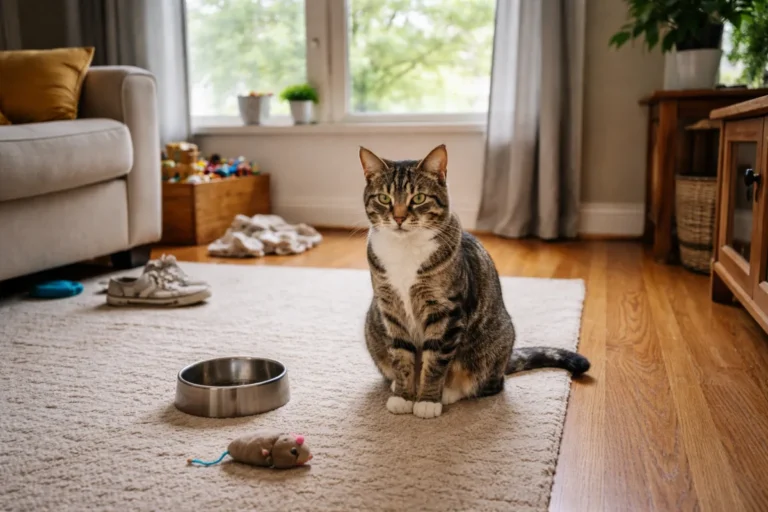
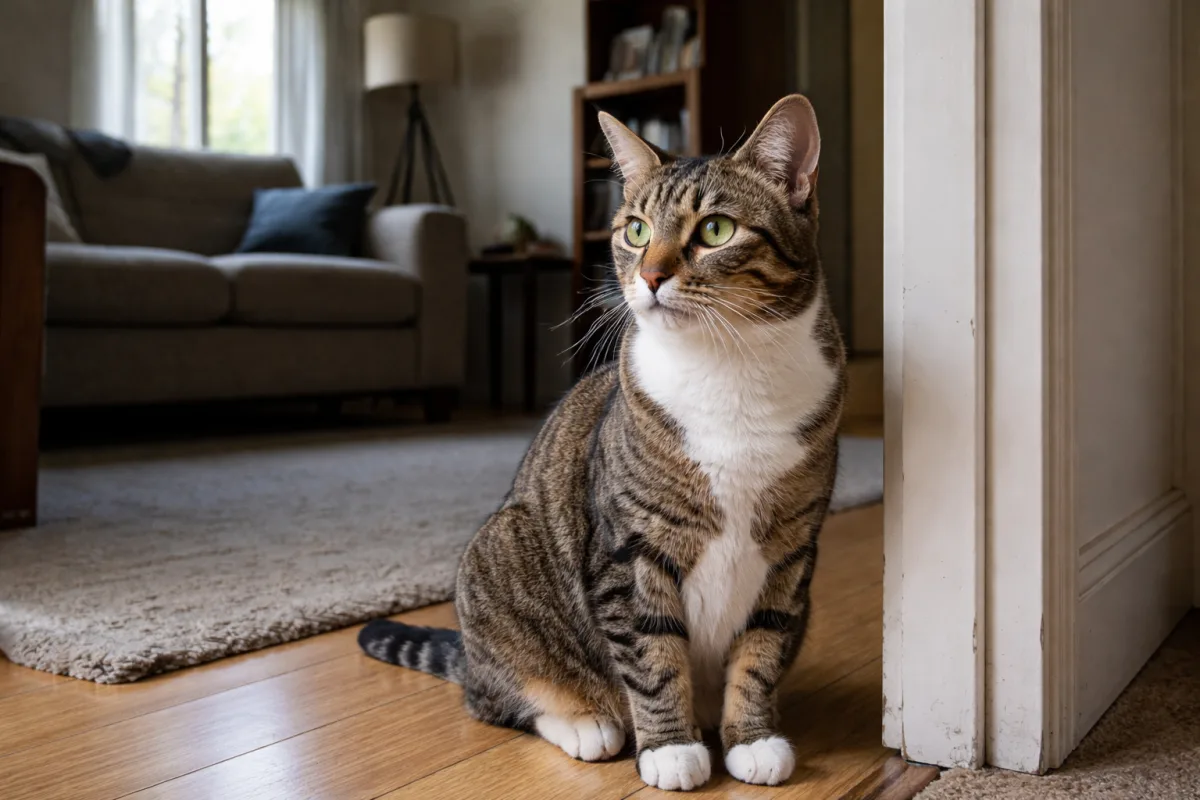
Cats do not always react in the same way. Sometimes the response is dramatic: a sudden head turn, a frozen body, or a quick dash under the table. Other times it is almost invisible. The ears swivel, the whiskers shift forward, and the cat stays still for a few seconds as if checking the air.
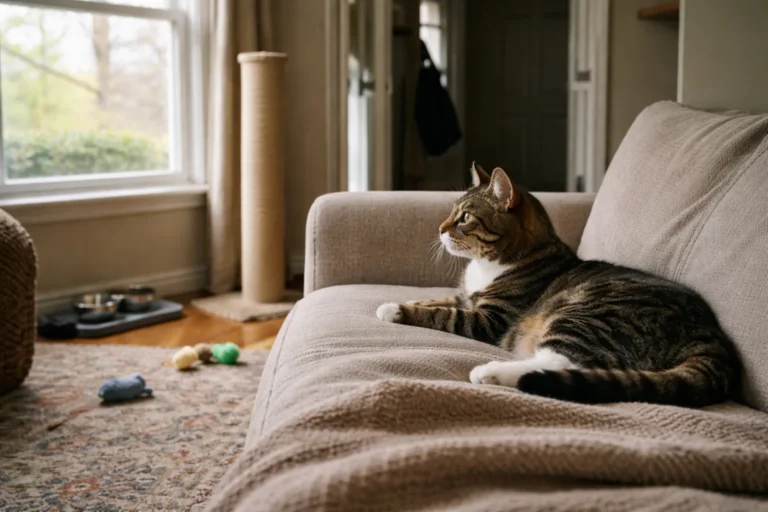
You may notice this most in homes that are usually quiet. A cat resting on the couch can detect a sound in another room long before it becomes obvious to you. The cat may look toward the hallway before you hear a door close, or glance at a ceiling corner before you notice a neighbor’s footsteps above. These moments can feel uncanny, but they are ordinary cat behavior.
Some reactions are more subtle than others. A cat might:
- pause in the middle of grooming
- perk up when a window sound changes
- look toward an appliance before it fully starts
- move from relaxed to alert in one second
- follow a faint sound with only the ears, not the whole body
In a busy home, these reactions may blend into the background. In a quiet home, they stand out more. Either way, the cat is responding to information that seems too small for humans to notice.
Why cats catch sounds so quickly
The most obvious reason is anatomy. Cats have highly mobile ears that can rotate toward a sound source with impressive precision. This helps them locate where a noise is coming from, not just whether it exists. Their ears act like small directional sensors, constantly adjusting to changes in the environment.
Cats are also sensitive to higher-frequency sounds than humans are. Many everyday noises contain components people do not hear clearly, especially small animal movements, device hums, or electronic whines. A sound that seems silent to you may be full of detail to a cat.
But ear structure is only part of the story. Cats are also naturally selective listeners. They do not treat every sound as equal. A rustle near a food cabinet matters more than the same rustle in a place they know is empty. A sound from outside a window may matter more if birds, squirrels, or another cat have been there before.
For a cat, sound is not just noise. It is information about movement, danger, opportunity, and territory.
That is why cats often react so fast. They are not merely hearing; they are interpreting. The reaction happens quickly because the sound has already been sorted through a built-in system that asks, in effect, “Is this important?”
The instinct behind the reaction
Long before cats lived in homes, listening carefully was part of survival. Small predators and small prey both need excellent awareness. A wild cat that missed the sound of moving prey would lose a meal. A cat that failed to notice a larger animal approaching could become a meal itself. Sensitivity to sound had real value, and that old advantage remains in modern cats.
Domestic cats still carry that instinct even though their daily lives are much safer. A kitchen drawer opening, a bag crinkling, or a faint knock can trigger the same alert response because the cat’s brain still treats sound as a possible clue. It does not matter that the noise comes from a dishwasher rather than a rustling bush. The first step is still to check.
This instinct is especially strong in cats that prefer to monitor their surroundings rather than join every activity. Many cats like to know what is happening before they decide whether to move. They are not passive. They are observant. Sound gives them a quick way to confirm what is changing around them.
Why silence can make reactions seem stronger
A quiet room can make even a tiny noise feel important. When there is very little background sound, a cat can detect small shifts that people mentally filter out. Humans are often able to ignore the hum of appliances, the tick of a clock, or the movement of air through vents. Cats are less likely to dismiss these details.
That means the cat may react “early” simply because it noticed something you unconsciously tuned out. The reaction is not random. It is often based on a sound that was there all along, just below your attention.
What a cat’s body language says in the moment
Sound-related reactions are easiest to understand when you watch the whole body, not just the ears. A cat that merely turns its head is usually processing information. A cat that stiffens completely may be deciding whether to stay, hide, or investigate. A cat that crouches low may be reading the sound as a possible warning.
The timing of the reaction matters too. A brief alert posture that ends in a few seconds often suggests curiosity or routine awareness. A longer freeze, a tucked tail, or repeated scanning may suggest unease. The sound itself may be similar, but the cat’s interpretation is different.
Common body signals include:
- ears pointing toward the source
- pupil changes when the sound is surprising or intense
- whiskers moving forward during interest
- a still body during uncertain moments
- tail flicking when the cat is annoyed or overstimulated
These signals help separate simple alertness from stress. A cat can hear a sound and remain calm. It can also hear a sound and decide to leave the room without any obvious fear. Not every fast reaction is a problem.
A quick response does not automatically mean a cat is anxious. Often, it means the cat is paying attention exactly as designed.
How home environment changes the reaction
Not all homes sound the same to a cat. A quiet apartment with a steady routine gives one kind of listening experience. A household with children, multiple pets, music, frequent visitors, and regular appliance noise gives another. Cats adjust, but they do not ignore all of it.
In a lively home, cats may become better at filtering familiar noise and reacting only to unusual changes. A loud blender may not matter after the cat learns it happens every morning. But a different tone in the blender, a sudden bang from a cabinet, or a new sound from the hallway may still pull immediate attention.
In a very quiet home, small sounds can stand out more strongly. Some cats become extra responsive in these settings because there is less background noise to mask changes. A dropped pen, a buzz from a charger, or a distant sound outdoors can feel bigger when the rest of the environment is still.
Outdoor access also shapes how cats respond. Cats that spend time near windows, porches, or enclosed yards often learn to track bird calls, insect movement, wind shifts, and neighborhood noise. Indoor-only cats may focus more on sounds coming from appliances, vents, plumbing, and human movement inside the home. The pattern changes, but the listening remains sharp.
Why cats sometimes react before you even hear the source
Humans and cats do not hear the world in the same way. People often depend on louder, clearer sounds and tend to notice only when a noise crosses a certain threshold. Cats can detect smaller changes earlier, especially if the sound is brief, high-pitched, or unusual in tone.
For example, a cat may react to a vehicle stopping outside before you hear the engine at all. The cat may hear the change in vibration, the soft click of brakes, or the movement of tires on pavement. You may only become aware when the car door closes. To the cat, the event began earlier.
The same can happen with household routines. A cat may recognize the sound of a treat bag from another room, the start of a can opener, or the faint noise of someone reaching for the cat carrier. Many cats learn the acoustic shape of regular events and respond before the event is visible.
That is one reason cat owners sometimes feel their pets are “reading minds.” In truth, the cat is reading patterns. Repeated sounds build strong associations, and the cat notices them fast.
When the reaction is playful, neutral, or defensive
Not every sound response means the same thing. A cat may hear something and simply become interested. Another cat may hear a similar sound and look ready to retreat. The difference lies in context, previous experience, and the cat’s current state.
Playful reactions
A playful reaction often looks light and curious. The cat may twitch its ears, look around, then move toward the sound source with a loose body posture. This often happens with familiar but interesting noises, like toy sounds, crinkling paper, or another pet moving nearby.
Neutral reactions
Neutral reactions are common and easy to miss. The cat may briefly orient toward the sound, confirm it, and continue resting. This is not indifference. It is efficient listening. The cat noticed, evaluated, and decided the sound did not require action.
Defensive reactions
Some sounds trigger a more guarded response. The body may flatten, the tail may tuck, or the cat may move away quickly. This tends to happen with sudden bangs, unfamiliar mechanical noises, or sounds connected to bad experiences, such as vacuum cleaners or loud construction.
| Reaction type | Typical body language | Likely meaning |
|---|---|---|
| Playful | Loose posture, forward ears, approach | Interest, curiosity, possible play |
| Neutral | Brief ear turn, small head movement | Routine check, no concern |
| Defensive | Crouch, freeze, retreat, wide eyes | Uncertainty, stress, or caution |
These reactions can change from one day to the next. A cat that ignores a sound one week may react strongly to it another week if the environment feels different or the cat is already on edge.
How routine trains a cat’s ears
Cats learn sound patterns through repetition. A sound that initially seems strange can become part of the background after enough exposure. The fridge motor, heating system, laundry machine, or a specific person’s footsteps may all become familiar markers in the cat’s daily map of the home.
Once a cat has learned a pattern, it often reacts to the earliest piece of it. The sound of a cabinet opening may mean food. The rustle of a bag may mean movement toward the kitchen. The click of a latch may mean a door is about to open. Cats remember these sound sequences well, and they respond before the full event is obvious.
That learning can also work in reverse. If a sound once appeared before something unpleasant, the cat may react strongly each time it returns. Even a mild noise can carry a memory of stress. The sound itself may not be dangerous, but the association is already there.
Routines make these reactions feel predictable. A cat that knows when meals, playtime, or household quiet hours usually happen will notice deviations quickly. Any break in the expected pattern gets more attention.
What differences in age and personality can add
Age changes how cats respond to sound, but not in a simple way. Kittens often react quickly because they are still learning what different noises mean. Their responses can be sudden, playful, or jumpy. Many kittens investigate more boldly than adult cats, even when a sound surprises them.
Adult cats tend to become more selective. They have already built up a library of familiar sounds and usually waste less energy on routine noise. Some become very calm about household sounds, while others stay highly alert their entire lives. Personality matters a great deal.
Senior cats may react differently again. Some become less responsive because hearing changes with age. Others remain attentive but are slower to move. A cat that used to whip its head around at a tiny noise might now need a louder cue. The basic instinct may remain, but the speed or intensity can shift.
Temperament matters just as much as age. Confident cats often check sounds and keep moving. Sensitive cats may need more time before they relax again. Independent cats may watch quietly from a distance, while social cats may move toward the source if it seems connected to people or activity.
When the behavior changes enough to notice
A cat’s normal sound awareness usually feels steady. The cat listens, responds, and settles back down. What stands out is a sudden change in that pattern. If a cat that was once calm about household noise now becomes jumpy, hides more often, or reacts to nearly every sound, the environment may be affecting it more than before.
Changes in sound sensitivity can happen after a move, a new pet, renovation work, a schedule change, or even a period of illness. Cats often rely on predictability. When familiar sounds change, the whole environment can feel less secure.
It is also possible for a cat to become less reactive than usual, especially if it is tired, unwell, or aging. A cat that ignores sounds it usually notices may not be “better adjusted.” It may simply be less engaged than normal.
What matters most is the pattern over time. A consistent reaction is usually just cat behavior. A sudden shift deserves attention.
Why people notice it more in certain moments
Owners often become aware of this behavior when they are calm and the house is quiet. The contrast makes the cat’s speed seem impressive. A sound that is too faint for human attention becomes obvious only when the cat reacts first.
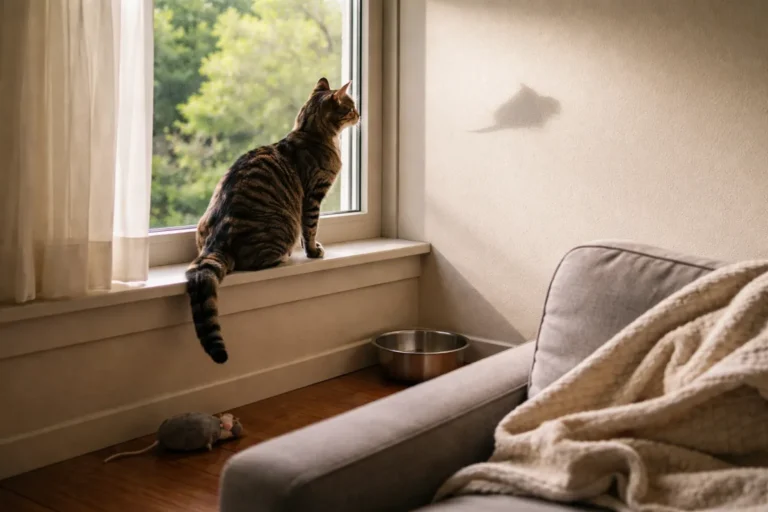
That impression is strongest at night, in still rooms, or when the sound source is outside the room. A cat may be looking at the window before you hear the car, or staring at the hallway before you notice someone approaching the door. These moments highlight the gap between feline and human attention.
It can also feel more noticeable when the cat is otherwise relaxed. A sleeping cat that suddenly lifts its head appears to have detected something important. Often it has. Cats do not waste much energy reacting without reason.
Still, not every reaction carries deep meaning. Sometimes the cat is simply checking the environment, just as people glance up when they hear a distant sound. The difference is that cats do this faster, and with sharper awareness.
How this fits into daily life with a cat
Living with a cat means noticing that they often know about a sound before you do. That can be useful. Cats may alert you to a knock at the door, a strange noise from an appliance, or a sound near a window that deserves a look. They can also remind you that the home has a richer soundscape than people usually realize.
It helps to watch the context instead of focusing only on the reaction. If the cat seems relaxed overall, the quick response is probably just normal alertness. If the cat seems tense, avoids certain rooms, or reacts strongly to everyday noise, then the behavior may reflect stress rather than simple sensitivity.
A cat’s fast response to sound is one of the clearest signs of how differently it experiences a home. The room may feel still to you, but to the cat it is full of signals, changes, and small events. Most of them pass unnoticed by people. The cat notices them first, sorts them quickly, and decides what to do next.