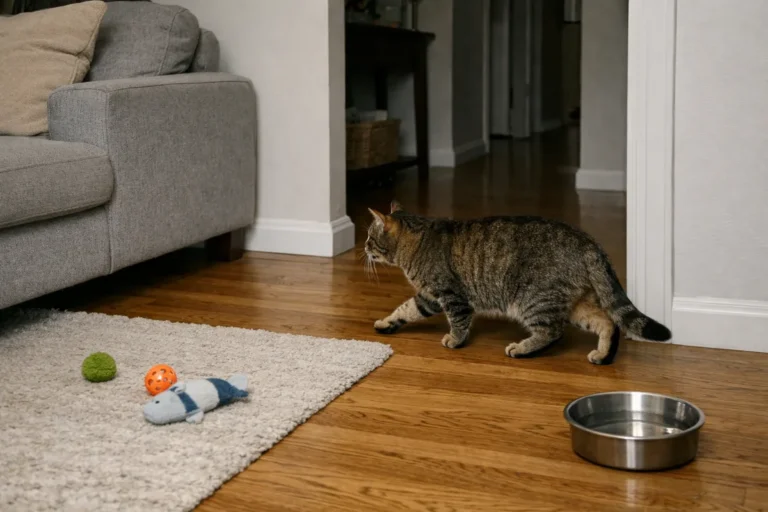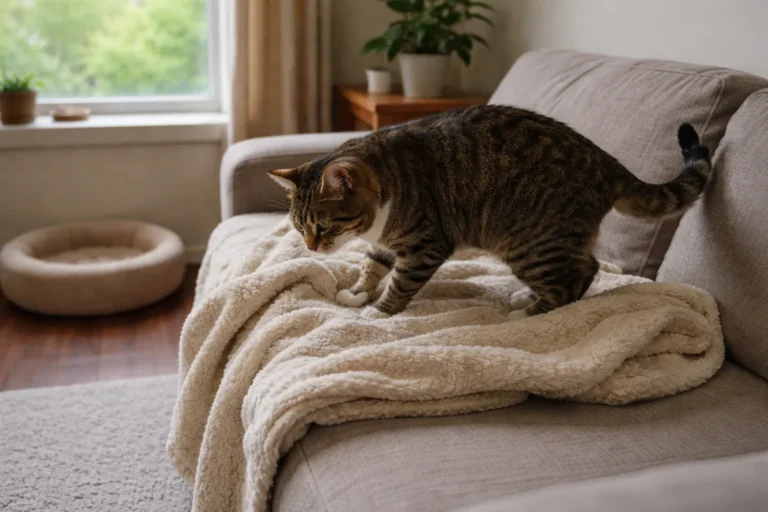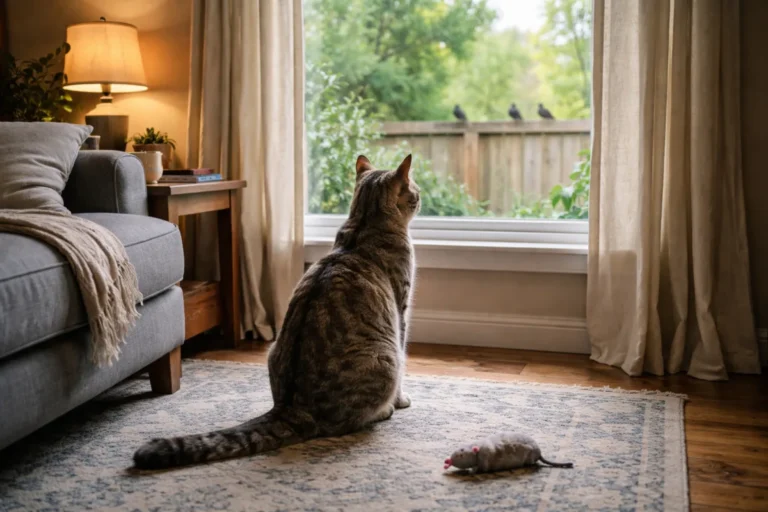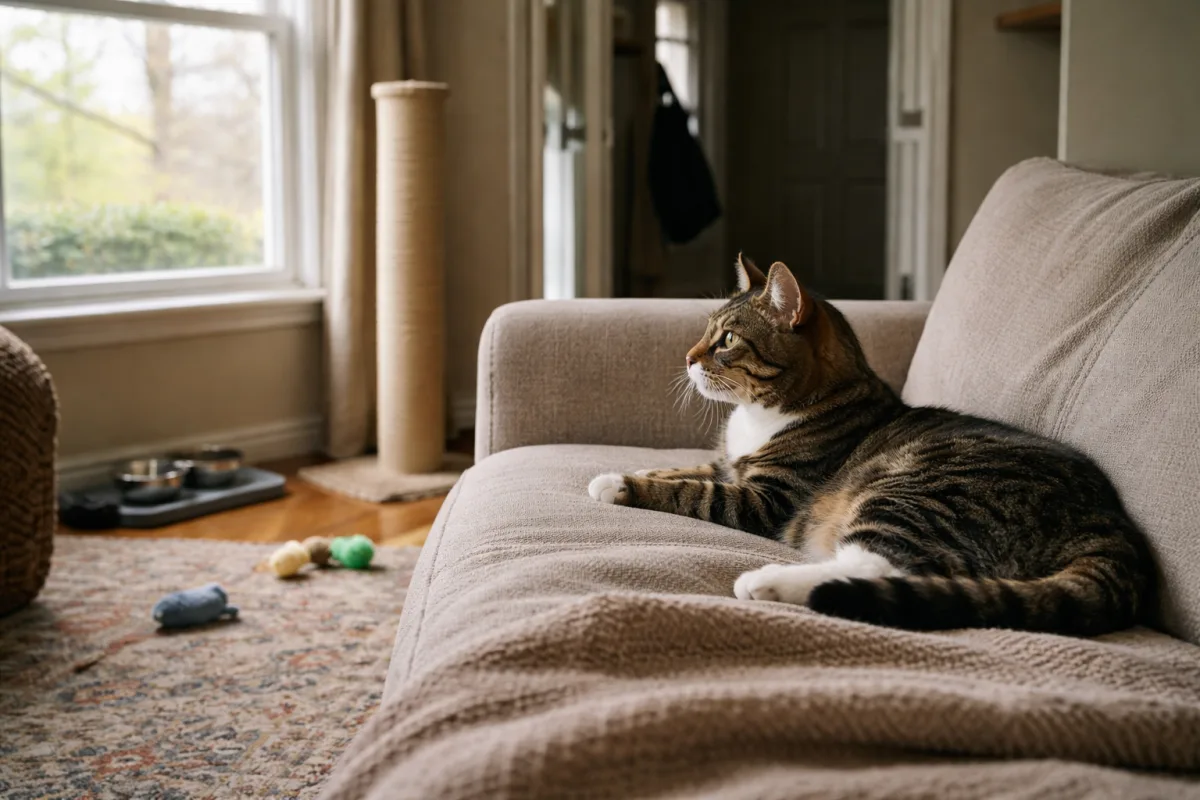
A cat can be stretched out on the sofa, half asleep, and then suddenly lift its head, stare toward the hallway, and spring into motion. A second later, it may lose interest completely and return to grooming. That quick change is part of what makes cats so recognizable. Their attention can shift fast, and the shift is often striking enough to make people wonder what just happened.
Fast attention shifts are not random noise. They are tied to how cats notice the world, sort through information, and decide what matters right now. A cat may move from relaxed to alert because of a sound, a scent, a movement in the corner of the room, or even a change in the human’s behavior. The change can be subtle, but it usually follows a pattern that makes sense once you start paying attention.
In daily life, these quick shifts show up in small moments. A cat may be purring on your lap and then, with no obvious warning, turn its ears toward a window. Another cat may be interested in a toy for three seconds, then pivot to watch a dust speck drift across the floor. The speed of the change is what stands out. The reason behind it is often less dramatic than it looks.
What fast attention shifts look like in everyday life
Most owners see this behavior many times a day without labeling it. The cat pauses mid-step. The ears rotate. The pupils change. The body stays still for a beat, then the cat either investigates or loses interest. It can happen while eating, during play, while resting, or even in the middle of a social interaction.
Some shifts are obvious. A loud noise outside pulls the cat’s focus instantly. Others are almost invisible from the human point of view. The cat may notice a faint smell from the doorway or hear a sound too soft for people to catch. Because cats process their surroundings through multiple senses, the trigger does not always look important to us.
Common moments when attention changes quickly
- A cat hears a bag rustle in the kitchen and suddenly leaves the windowsill.
- A relaxed cat becomes alert when another pet enters the room.
- A playful cat switches from chasing a toy to watching the ceiling.
- A cat in the middle of petting turns its head toward a hallway sound.
- A resting cat wakes instantly when it notices movement near the window.
These shifts do not always mean excitement. A cat can be curious, cautious, protective of space, or simply interested in whether something deserves a closer look. The behavior is often brief because cats are efficient observers. They scan, decide, and move on.
Fast attention shifts in cats are usually a sign of active information gathering, not confusion or moodiness.
Why cats shift attention so quickly
Cats are predators, but they are also prey animals in some situations. That dual role shapes the way they pay attention. A cat that notices changes early has a better chance of catching something interesting or avoiding something risky. In the home, that instinct shows up as rapid scanning and fast changes in focus.
Their brains are built to filter for movement, sound, and novelty. A cat can seem distracted, but it is often doing the opposite. It is sorting the room into “important now” and “not important now.” The process happens quickly because a cat does not need to spend a long time evaluating everything around it.
Another reason is sensory sensitivity. Cats hear higher frequencies than humans and detect subtle shifts in odor and air movement. That means they may react to things people never notice. A door closing in another room, a neighbor’s footsteps on stairs, or the faint sound of an insect can all redirect attention in an instant.
Internal reasons behind the behavior
- Strong instinct to monitor the environment
- High sensitivity to movement and sound
- Need to stay aware of possible threats or opportunities
- Natural curiosity about changes in the environment
- Quick decision-making based on limited information
Personality matters too. Some cats are more watchful by nature. Others are more easily distracted. A calm, steady cat may still shift attention quickly, but it may return to rest just as fast. A more reactive cat may stay alert longer and show a sharper response to the same trigger.
How body language changes during a quick shift
Attention shifts rarely happen in complete silence from the body. The cat often sends small signals first. Ears may angle forward. Whiskers may move slightly ahead. The head may tilt. The body may freeze for one second before the next move. Those details help explain whether the cat is curious, tense, or just briefly interested.
Timing matters as much as the signal itself. A cat that pauses, looks, and then relaxes again is usually processing a minor change. A cat that locks onto one spot, tenses the body, and keeps staring may be responding to a stronger stimulus. The difference can be subtle, but it is often visible if you watch the whole sequence instead of one moment.
When a cat’s attention shifts quickly, the body often tells the story before the paws do.
Soft signals versus stronger signals
| Signal | Often suggests |
|---|---|
| Brief ear movement only | Light curiosity or minor sound |
| Head turn with relaxed body | Interest without stress |
| Still body, wide eyes, fixed stare | Higher alertness |
| Ears flatten, tail swish, crouch | Possible tension or defensive response |
Not every fast shift is meaningful in a deep emotional sense. Sometimes a cat is just noticing a change and choosing whether to care about it. The speed is part of the design. Cats often keep their reactions short unless the situation requires more attention.
How environment shapes the behavior
A cat living in a quiet apartment will shift attention differently from a cat in a busy house with children, other pets, and regular noise. The environment gives the cat more or fewer reasons to react. In a calm home, the shifts may seem rare but very noticeable. In a lively home, they may happen so often that people stop seeing them.
Outdoor access changes the picture as well. An indoor cat may focus intensely on window movement because the outside world is full of sudden signals but not direct access. An outdoor cat may still shift attention quickly, but the triggers are broader and more immediate. Wind, birds, passing animals, distant voices, and changing scents all compete for the cat’s focus.
Routine also plays a role. Cats often learn when things happen. If the food bowl is usually filled at a certain time, the cat may shift attention the moment the human enters the kitchen. If play usually starts after work, the cat may perk up before the toy appears. The shift may be caused less by surprise and more by expectation.
Everyday context that affects quick attention changes
- Household noise level
- Number of pets in the home
- Access to windows and outdoor views
- Predictability of feeding and play times
- Recent changes in furniture, scents, or visitors
Changes in the home can make the behavior more noticeable. Moving furniture, bringing in new items, or changing routines may cause a cat to scan more often. That does not automatically mean distress. Many cats simply spend extra time mapping new information before relaxing again.
When fast shifts are playful, and when they are not
Playful attention shifts are easy to spot once you know the signs. The cat watches a toy, freezes, then darts. It looks, pauses, and re-engages. The body stays loose. The movement feels energized but not strained. These shifts are often short because the cat is testing whether the target is worth chasing.
Neutral shifts look different. The cat notices something, glances, and moves on. There is little muscle tension. The tail stays calm. The cat may return to grooming, resting, or watching another part of the room. This is the most common form of the behavior in everyday settings.
Stress-related shifts tend to be sharper. The cat may keep snapping its attention from one thing to another, especially if the environment feels crowded or unpredictable. There may be more startle responses, more hiding, or more avoidance. In these cases, the cat is not simply curious. It is checking the room for signs that it needs to protect itself.
Different forms of the behavior
- Playful: quick focus, springy movement, relaxed body
- Neutral: brief look, little tension, easy return to rest
- Defensive: rigid posture, cautious scanning, possible retreat
The same fast head turn can mean play, curiosity, or caution. The rest of the body gives the clue.
Owners sometimes misread a fast shift as sudden irritation. That can happen, but it is not the default meaning. Many cats are simply highly responsive. If the cat settles again quickly, keeps eating, resumes grooming, or returns to the lap, the attention shift was probably just a passing check of the surroundings.
What fast attention shifts may signal about a cat’s state
A cat that shifts attention often may be saying several things at once. It may be alert, but not anxious. It may be relaxed, but ready. It may be curious without being committed to action. That layered response is normal for cats. They do not always show one emotion at a time.
In some cases, the behavior reflects a cat that feels comfortable enough to monitor everything lightly. A secure cat does not need to shut down its awareness. It can rest while still noticing changes around it. That is why a cat may nap with half-closed eyes and still snap upright at the sound of a treat bag.
When the shifts become too frequent, too intense, or hard for the cat to settle after, the meaning changes. The cat may be overstimulated, under-slept, bored, or uneasy about something in the environment. The pattern matters more than one single moment. A single quick glance is normal. Repeated scanning with tension tells a different story.
Signs the shift is probably harmless
- The cat relaxes again within seconds
- The body stays loose
- Eating, grooming, or resting continues normally
- No hiding or defensive behavior follows
- The reaction matches a clear sound or movement
Signs to pay closer attention to
- Repeated startled reactions
- Persistent staring with a stiff body
- Hiding after every small noise
- Rapid switching between vigilance and retreat
- Attention shifts paired with reduced appetite or sleep changes
Even then, context remains important. A cat that just experienced a stressful visitor, a loud repair job, or a new animal nearby may watch the room more intensely for a while. That does not automatically mean a long-term issue. It often means the cat is adjusting.
How owners often interpret it versus what it may mean
People sometimes think a cat that changes focus quickly is bored, rude, or ignoring them. In reality, the cat may be processing far more sensory input than a person can see. What looks like inattentiveness may be active monitoring. What looks like indifference may be quiet awareness.
Another common mistake is assuming that every sudden shift is a sign of fear. Cats do react quickly to things that matter, but not every reaction is negative. A bird outside, the crinkle of a wrapper, or the sound of footsteps can all trigger instant attention without stress. The cat is simply updating its mental map.
Owners may also mistake a fast shift during affection for rejection. A cat that turns away during petting is not always saying “stop.” Sometimes it has just noticed something more interesting for the moment. If the cat comes back, nuzzles again, or stays nearby, the relationship is probably intact. The attention just moved.
How daily life influences consistency over time
Some cats are predictable about how they shift attention. They always react to the same sounds, in the same places, with the same level of intensity. Other cats vary more from day to day. Sleep, hunger, temperature, recent activity, and household rhythm all affect how quickly a cat notices changes.
A tired cat may be slower to shift attention unless the trigger is strong. A well-rested cat may react to tiny environmental changes. A hungry cat may stay visually focused on food-related cues. A cat that has spent the morning playing may be less responsive for a while, then become more alert later in the day.
Long-term patterns are useful because they show what is normal for that individual cat. One cat may always be a scanner. Another may be quiet until something moves. Both can be perfectly healthy. The important part is consistency. If the cat’s attention changes suddenly become frantic, flat, or absent compared with its usual behavior, the shift may matter more than the behavior itself.
For most cats, the real question is not whether they shift attention quickly, but whether the pattern matches their usual self.
Natural instincts behind the speed
The speed of attention in cats comes from survival logic. In nature, noticing movement quickly can mean catching prey, avoiding danger, or finding a safe place before trouble arrives. Even in a home, those instincts are still active. A cat does not need to chase birds every day to retain the machinery for noticing birds instantly.
That is why a domestic cat may look calm one moment and intensely focused the next. The behavior is not a contradiction. It is a blend of rest and readiness. Cats are built to conserve energy, then spend it in short, decisive bursts. Their attention works the same way.
This also explains why the behavior is often so clean and efficient. Cats do not usually waste time. They notice, evaluate, and either commit or let it go. The shift itself is part of the decision-making process.
How to read the behavior without overthinking it
Watching a cat closely can make every head turn feel important. Sometimes it is. Sometimes it is just a cat being a cat. The best reading comes from looking at the full picture: body posture, ears, tail, timing, and what happened right before the shift.
If the cat remains comfortable overall, fast attention changes are usually just part of normal feline awareness. If the shifts come with tension, hiding, or repeated unease, the environment may need a closer look. Either way, the behavior is telling you something useful about how the cat is taking in its world.
What matters most is not the speed itself. It is the pattern behind it, the comfort around it, and the way the cat returns to rest, play, or connection after the moment passes.