A cat that suddenly goes quiet can change the mood of a home fast. One day there is meowing, purring, jumping onto counters, and following people from room to room. Then the cat becomes almost silent. It may hide more, move less, or simply watch from a distance.
That shift does not always point to something serious, but it should not be ignored either. Cats are not quiet for the same reason every time. Sometimes the change reflects comfort or focus. Other times it can signal stress, pain, illness, or a response to a change in the household.
The key is to notice the whole picture, not only the silence. A cat’s body language, appetite, grooming, movement, and interaction with people often say more than vocal behavior alone. Quietness can be harmless, but when it appears suddenly, it deserves a closer look.
What sudden quietness looks like in everyday life
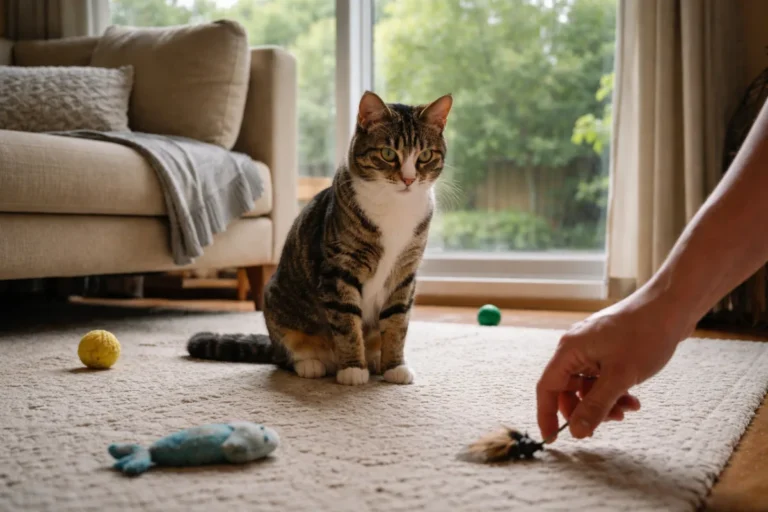
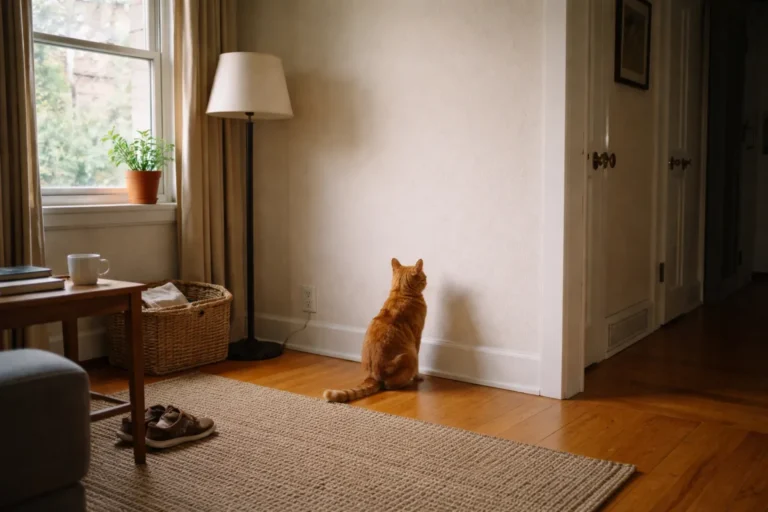
Quietness in cats can show up in many ways. Some cats stop vocalizing almost completely. Others still make small sounds, but less often and with less intensity. A cat that usually greets you at the door may now stay in another room. Another may keep to a favorite hiding place instead of circling the kitchen at feeding time.
It can also look like a cat becoming less responsive. Maybe the cat does not come when called. Maybe it no longer follows normal routines, such as sitting near the family in the evening or asking for attention before meals. In some homes, the change is subtle. In others, it is obvious within a day.
Common signs that often come with quietness
- Less meowing or chirping than usual
- Longer periods of hiding or resting alone
- Reduced interest in play or interaction
- Slower movement or less roaming
- Changed posture, such as a tucked body or lowered head
- Less grooming or, in some cases, unusually frequent grooming
These signs matter because quietness rarely exists by itself. A cat may be silent because it is relaxed and content, but the rest of the behavior usually looks normal. If the silence comes with obvious changes in eating, energy, or posture, the meaning shifts.
Why some cats become quiet without warning
Sudden quietness can begin with something simple. A new guest, a loud noise, rearranged furniture, or a change in routine may make a cat retreat and become less vocal. Cats like predictability. Even small changes can alter how much they talk, move, and seek attention.
Other times, quietness reflects a cat’s internal state. Cats often become less expressive when they feel uncertain or unwell. They may conserve energy, keep to themselves, and avoid situations that demand too much effort. That behavior can look peaceful from the outside while actually masking discomfort.
Age also plays a role. Kittens are usually noisy, curious, and constantly changing direction. Adult cats often settle into more measured behavior. Senior cats may grow quieter as hearing, vision, mobility, and overall energy shift. When quietness appears suddenly rather than gradually, though, the timing matters more than the age alone.
Quietness is most meaningful when it is a change from the cat’s normal pattern. A silent cat is not automatically a sick cat, but a cat that becomes silent overnight deserves attention.
Internal reasons behind the behavior
There are several possible internal reasons a cat may suddenly become quiet. Some are emotional. Some are physical. Many overlap, which is why a single explanation rarely fits every case.
Stress and uncertainty
Cats often grow quieter when they feel exposed or unsure. A new pet, a move, construction noise, visitors, or even conflict with another cat can make them less vocal. Quietness in this case may be part of a larger withdrawal pattern. The cat is not necessarily calm; it may be trying to feel safer by staying small and unnoticed.
A stressed cat may also flatten its ears, keep its tail low, move cautiously, or avoid usual resting spots. Some cats stop asking for food or attention when they are overwhelmed. Others still eat, but in a hurried or guarded way.
Pain or physical discomfort
Pain is one of the most important reasons to take sudden quietness seriously. A cat that hurts may not want to jump, play, or vocalize much. It may stay in one place, sleep more, or seem less engaged with the world. Even mild pain can change a cat’s behavior enough to make it noticeably quieter.
Dental problems, arthritis, stomach upset, urinary issues, injury, fever, and many other conditions can reduce a cat’s usual interaction. Some cats become clingy when they hurt, but others become very still and withdrawn. Silence alone cannot diagnose pain, but sudden silence plus reduced energy is a red flag.
Nausea, fatigue, or illness
Cats with an upset stomach, infection, or other illness may become quiet before other symptoms are obvious. They may stop greeting people, sleep in unusual places, or lose interest in food. The cat may not look dramatic or visibly distressed. Instead, the change can be quiet and gradual inside a short period of time.
Fatigue can do the same thing. A cat that is not getting enough rest, fighting inflammation, or recovering from a minor illness may become subdued. That quietness can be part of the body’s effort to preserve energy.
Age-related changes
Older cats sometimes become less vocal simply because their daily pace changes. They may not feel the need to patrol the house as much, and some naturally talk less as they become more settled. But if a senior cat suddenly becomes very quiet, do not assume it is only age. Hearing loss, cognitive changes, thyroid issues, dental disease, and arthritis can all influence how and when a cat communicates.
How context changes the meaning of quietness
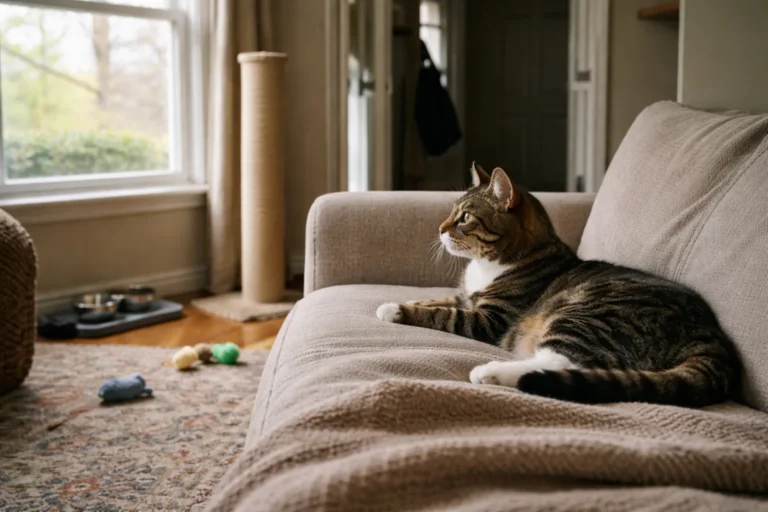
Context is everything. A cat that becomes quiet while sleeping in a warm window spot is doing something different from a cat that becomes quiet after refusing dinner. One is likely resting. The other may be signaling a problem.
Think about what changed before the behavior started. Did the household get louder? Was there a new cat nearby? Did the litter box location change? Did the cat experience a stressful vet visit or a car ride? Did the appetite shift at the same time? These details help narrow down whether the quietness is behavioral, environmental, or physical.
Indoor cats often show quietness in response to routine disruption. Outdoor-access cats may go silent after a stressful encounter or after spending too much time on alert. A cat from a busy home may become quiet simply because it needs a break. In a very calm home, though, a sudden drop in sound can stand out more sharply and may reveal a health issue sooner.
When quietness may be a normal pause
- The cat is resting after active play
- The cat is in a familiar, safe spot and looks relaxed
- Eating, litter box use, and grooming remain normal
- Body posture stays loose rather than tense
- The cat still responds when approached or spoken to
When quietness deserves closer attention
- The change appears suddenly and lasts more than a day
- The cat hides and avoids normal routines
- There is less eating, drinking, or grooming
- The cat seems stiff, hunched, or uncomfortable
- Vocal behavior changes along with energy or mobility
What body language says when the house gets quieter
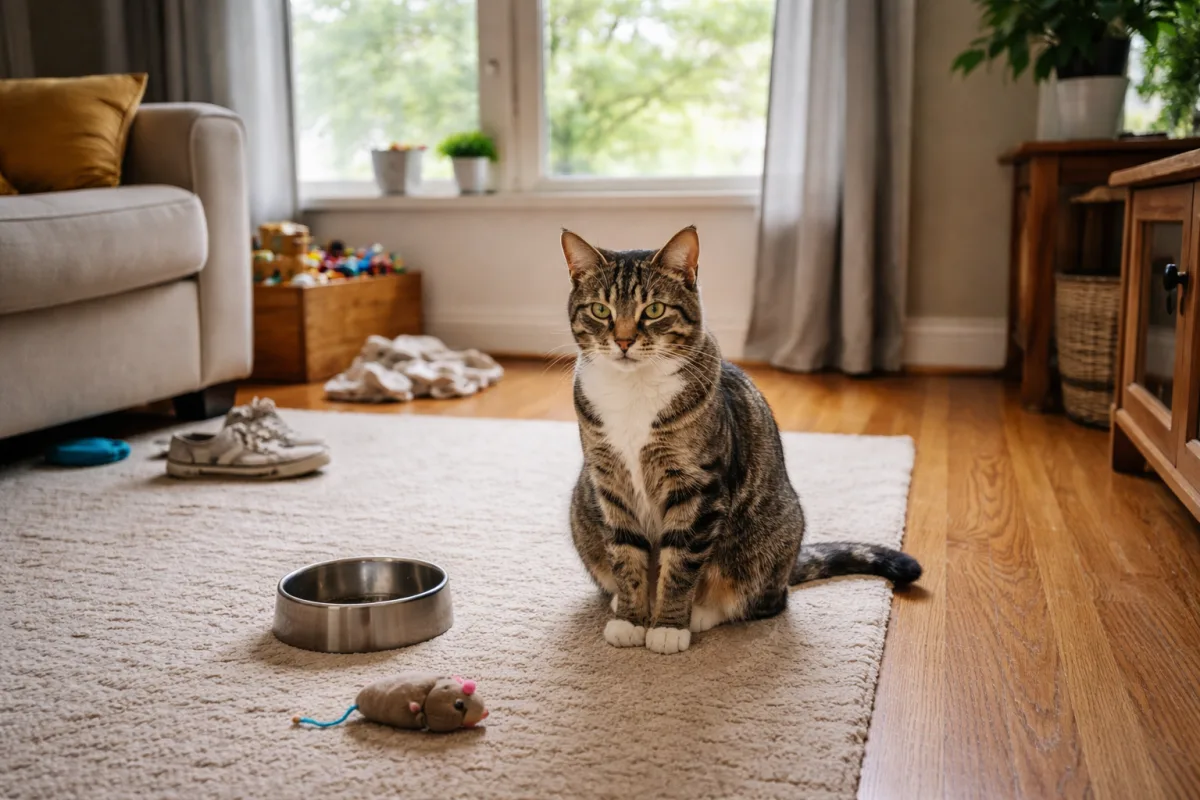
When cats get quiet, body language often fills in the missing information. A relaxed quiet cat may have soft eyes, loose whiskers, and a normal breathing pattern. It may stretch, knead, or shift positions comfortably. Even if it is not vocal, it still appears present and at ease.
A cat that is quiet because of stress or illness often looks different. The body may seem tight or folded inward. The cat may sit with paws tucked underneath and the head lowered. It may avoid eye contact, move little, or keep its tail close to the body. These are not dramatic signals, but they are meaningful.
Some cats also become quieter before showing more obvious signs of distress. They may stop making little sounds, then stop exploring, then stop greeting people. That progression is worth noticing. Cats rarely explain discomfort in a straight line.
If quietness comes with hiding, poor appetite, or unusual posture, treat the change as more than a personality shift.
How owners often misread the silence
It is easy to assume a quiet cat is simply being independent. Cats do enjoy solitude, and many spend long stretches resting without saying much. But independence is not the same as withdrawal. A cat that is comfortable usually still shows interest in its surroundings, even if it is not noisy.
Another common mistake is to think that a cat is “mellowing out” when it has actually become subdued. A quieter cat may look easier to live with, especially in a busy home, but less noise does not always mean more comfort. Sometimes the loss of vocal behavior is one of the first visible signs that something is off.
Owners also sometimes focus on meowing alone and overlook smaller changes. A cat may still meow at feeding time, but less than before. It may still come for pets, but only after hesitation. These mixed signals can be more useful than a dramatic change, because they show the cat is not fully back to normal.
Different patterns of quietness and what they may suggest
| Pattern | What it may look like | Possible meaning |
|---|---|---|
| Gradual quieting | Less vocal over days or weeks | Routine change, aging, or slowly developing health issue |
| Sudden silence | Stops meowing and withdraws quickly | Stress, pain, illness, or strong environmental change |
| Quiet but engaged | Less vocal, still playful and alert | Possible normal mood shift or temporary calm |
| Quiet and hidden | Silent plus hiding and reduced appetite | Higher concern for discomfort or illness |
This kind of pattern view matters because the same behavior can mean different things depending on the rest of the picture. A quiet cat that eats well, uses the litter box normally, and responds to familiar people is different from a quiet cat that refuses food and crouches in one place.
What daily routines can reveal
Daily routine is often where the clearest clues appear. Many cats announce meals, follow people to the kitchen, or vocalize when they hear a treat bag. If those habits disappear, the cat may be feeling unwell, stressed, or simply out of rhythm with the household.
Watch how the cat moves through the day. Does it still seek out favorite sleeping spots? Does it come to the door? Does it groom after waking up? Does it climb furniture the same way? Quietness paired with normal routine is usually less concerning than quietness paired with sluggish or unusual behavior.
It can help to compare one day with the previous three or four rather than trying to judge from memory alone. Cat behavior is easy to normalize in your head, especially if the change happens slowly. A small notebook or quick phone note can reveal whether the quietness is truly sudden or just more noticeable than usual.
When quietness is paired with specific health signs
Some symptoms make sudden quietness more urgent. If a cat is also eating less, vomiting, having diarrhea, straining in the litter box, coughing, limping, or breathing differently, the silence may be part of a larger medical issue. A cat that is quiet and painful may also resist being picked up, flinch when touched, or spend more time lying in one spot.
Drooling, bad breath, head shaking, pawing at the mouth, or chewing on one side can point to dental trouble. A cat that seems quiet and withdrawn after a fall or rough play may have an injury that is not visible right away. Even subtle changes in movement can matter, especially in older cats.
Any sudden quietness combined with not eating, trouble breathing, repeated vomiting, or a litter box change should be treated as urgent.
How environment and emotional state work together
Environment and emotion are tightly linked in cats. A cat that feels secure in a predictable home may handle small disruptions without much fuss. The same cat may go quiet if the litter box is moved, the feeding schedule changes, or another pet begins guarding hallways or doorways.
Some cats are naturally more reserved and spend more time observing than announcing themselves. These cats may be quiet by temperament, but their quietness usually has a steady pattern. Sudden change is what matters most. A normally talkative cat becoming silent is often easier to notice, but a naturally quiet cat can become even more withdrawn when something is wrong.
The cat–human relationship also shapes the signal. Some cats talk more when they want attention, food, or play. If that cat becomes silent, it may be refusing interaction because it feels overwhelmed or unwell. A shift in communication style is often more telling than the amount of sound alone.
What to watch over the next day or two
When a cat suddenly goes quiet, a short period of observation can be useful. Look at whether the cat is eating at normal times, using the litter box, moving around the house, and showing interest in familiar things. Notice whether it still blinks at you, follows sounds, or reacts to routine cues like opening a can or shaking a toy bag.
Pay attention to the pace of change. A cat that becomes quiet and then returns to normal by the next morning may have just been startled, tired, or mildly unsettled. A cat that stays quiet, hides more, or loses appetite is telling a different story.
It can be helpful to keep the surroundings steady during this time. Avoid introducing more noise or handling than necessary. Give the cat access to water, food, and a clean litter box, and let it choose whether to come closer. If the behavior does not improve or if other signs appear, a veterinary check is the safer path.
A quiet cat is still communicating
Silence in cats is not empty. It is part of how they adjust to comfort, fear, pain, and change. A sudden drop in vocalization can mean the cat is resting more deeply, settling into a new routine, or simply taking a break from interaction. It can also mean the cat is trying to cope with a problem that is harder to see than hear.
The most useful response is not to guess from the quietness alone. Look at the whole cat. Notice posture, appetite, movement, litter box habits, and willingness to engage. Those details make the silence easier to read, and they often point to whether the cat is simply having a calm phase or needs help soon.