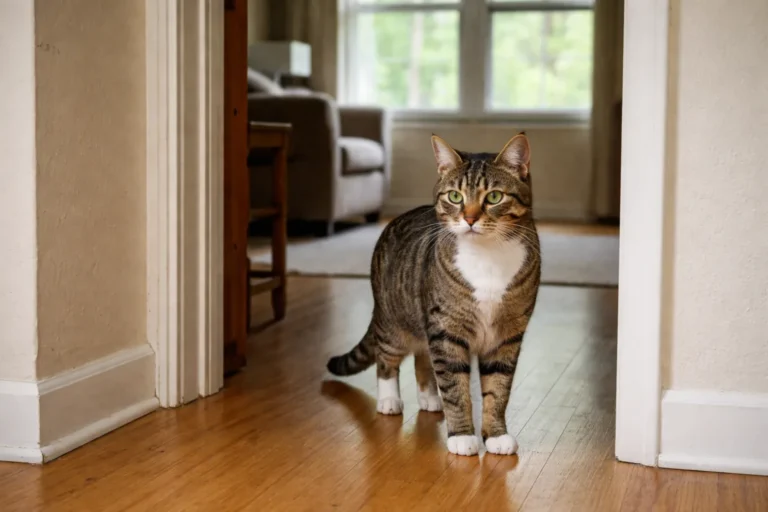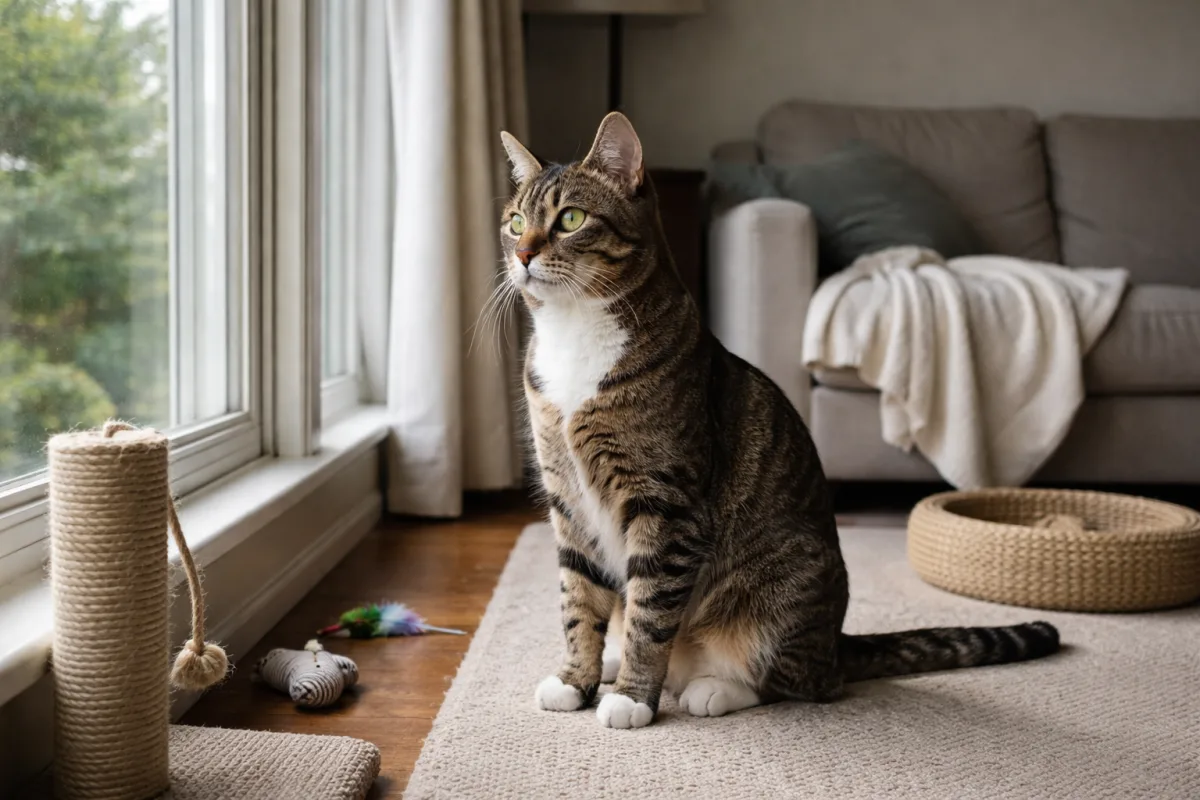
Some cats seem to rest only halfway. Their eyes stay open longer than you expect. Their ears turn toward every sound. Even while lying down, they look prepared to spring up at any moment.
That kind of constant alertness can be normal, especially in cats that are naturally cautious, highly observant, or living in a busy environment. Cats are built to notice changes quickly. A shift in a sound, a smell, or a routine can be enough to keep them on edge for a while.
At the same time, alertness is not always just a personality trait. It can also reflect stress, insecurity, discomfort, or a home setup that does not give the cat enough predictability. The context matters. A cat watching the front door every afternoon may be very different from one that never seems able to relax.
Understanding why a cat stays so watchful starts with looking at the behavior in small everyday moments, not only at the big obvious signs.
What constant alertness looks like in daily life
Alert cats often seem to be scanning the room, even when nothing appears to be happening. They may stop mid-groom to listen. They may sit in doorways rather than settling into a deep nap. Some cats choose high perches, corners, or spots where they can see multiple parts of the home at once.
The behavior can be subtle. A cat may seem calm on the outside but still react instantly to a footstep, a bag rustling, or a dish being moved. Other cats show it more clearly by pacing, darting from room to room, or keeping their body tense even during quiet moments.
Common signs include:
- quick head turns toward small noises
- ears that rotate often and stay highly responsive
- sleeping in light, easily interrupted bursts
- choosing open vantage points instead of hidden resting spots
- startling more easily than usual
- watching people or other pets closely before moving
These behaviors do not all mean the same thing. A cat that notices everything may simply be very aware. Another cat that never seems to settle may be feeling unsafe. The difference is often in how relaxed the cat looks between reactions.
Why cats are wired to stay watchful
Cats are both predators and prey animals. That combination shapes a lot of everyday behavior. Even a well-fed indoor cat still carries instincts that reward quick observation and fast responses. In the wild, noticing movement early could mean a successful hunt or avoiding danger.
Because of that background, vigilance is not unusual in cats. In fact, many cats feel more comfortable when they can monitor their surroundings. They like to know where the exits are, where the people are, and whether anything unexpected is approaching.
Some cats are naturally more alert than others. Temperament plays a big role. A cat with a cautious personality may need more time to settle in new places, while a bold cat may relax faster but still react sharply to specific triggers. Breed tendencies can also influence how watchful a cat seems, though individual personality usually matters more than any label.
Constant alertness is often a normal part of feline behavior, but it becomes more meaningful when it looks tense, frequent, or difficult for the cat to turn off.
Internal reasons a cat may seem constantly on guard
Not every alert cat is worried. Some are simply more sensitive to what is happening around them. Their brains notice small changes quickly, and they respond before other cats would. That sensitivity can make them appear perpetually awake, even when they are resting.
1. A naturally cautious temperament
Some cats are born with a slower trust process. They observe first and act later. These cats often prefer routine, familiar faces, and predictable movement. They may take a long time to relax after visitors arrive or after furniture is moved.
That kind of caution is not a problem on its own. It becomes part of the cat’s personality. A cautious cat may still enjoy affection and play, but only after checking that the environment feels safe.
2. High sensitivity to sound and movement
Cats hear better than people, and many react to sounds humans barely notice. A refrigerator hum, a distant dog barking, or pipes clicking in the wall can be enough to keep them attentive. Cats with strong sound sensitivity may seem restless in homes that feel noisy to them, even if the noise does not bother the humans living there.
Some cats are also highly responsive to movement. A passing shadow, a curtain shifting, or another pet crossing the room can snap their attention instantly. This can make them look perpetually engaged with the environment.
3. Uncertainty about safety
When a cat does not fully trust a space, alertness becomes more intense. The cat may not know when to relax because the environment feels unpredictable. This can happen after a move, the arrival of a new pet, a change in household schedule, or a recent stressful event.
In these situations, the cat is not being dramatic. It is using vigilance as a coping strategy. The more uncertain the environment feels, the harder it is for the cat to drop its guard.
4. Discomfort or physical unease
Sometimes a cat that seems “on edge” is actually uncomfortable. Pain, digestive upset, dental issues, or skin irritation can make rest harder. A cat that cannot settle may stay watchful because it feels vulnerable while lying down.
This is one reason to pay attention to changes rather than habits alone. If alertness is new, intensifying, or paired with other behavior changes, the body may be involved.
How the home environment shapes alertness
Environment can either soften a cat’s watchfulness or keep it switched on all day. A quiet home with stable routines often helps a cat relax. A busy home with frequent visitors, loud appliances, unpredictable movement, or multiple animals can keep a cat monitoring everything.
Indoor cats may be especially sensitive to household patterns because the home is their entire territory. If every sound matters, every change in furniture placement matters, and every new smell feels important, the cat may never feel fully off duty. Even a harmless change like a vacuum cleaner appearing in a new hallway can shift the cat into a more guarded state.
Multi-pet homes can add another layer. A cat may remain alert because it is keeping track of another cat’s approach, a dog’s movement, or an unpredictable relationship in the household. Even when there is no open conflict, the cat may still feel it needs to monitor the situation closely.
Common environmental triggers
- loud or inconsistent noises
- frequent visitors or unfamiliar smells
- lack of hiding spots or elevated resting places
- crowded living spaces with little quiet time
- rough play or repeated interruptions during rest
- conflict with other pets
A cat does not need a “bad” environment to stay alert. Sometimes it just needs too much stimulation for its personality. What feels normal to one cat may feel exhausting to another.
Body language that shows the difference between awareness and stress
Alertness can look similar whether a cat is simply attentive or truly unsettled. The details matter. A calm but watchful cat usually has a loose body, even if the head is active and the ears are moving. A stressed cat tends to carry tension through the entire body.
Look at the tail, whiskers, posture, and breathing. A cat that is curious or observant may shift its attention often but still return to relaxed behavior. A cat under stress may never fully release that tension.
| Observation | Often suggests |
|---|---|
| Loose body, normal appetite, regular play | Healthy alertness or cautious personality |
| Frequent hiding, tense posture, reduced appetite | Stress or feeling unsafe |
| Startling easily but recovering quickly | Sensitivity without major distress |
| Unable to sleep deeply, pacing, scanning constantly | Possible anxiety or discomfort |
The key question is not whether the cat is alert. Most cats are. The real question is whether the alertness comes with ease or with strain.
A cat that watches everything but still eats, plays, and rests is often simply observant. A cat that never seems to drop its guard may need a closer look at stress, pain, or environmental pressure.
When alertness appears during specific situations
Timing often reveals a lot. A cat may become more watchful at dusk, when outdoor sounds increase and the house changes activity level. Another cat may only become alert when guests arrive, when children come home, or when the family begins moving around before bedtime.
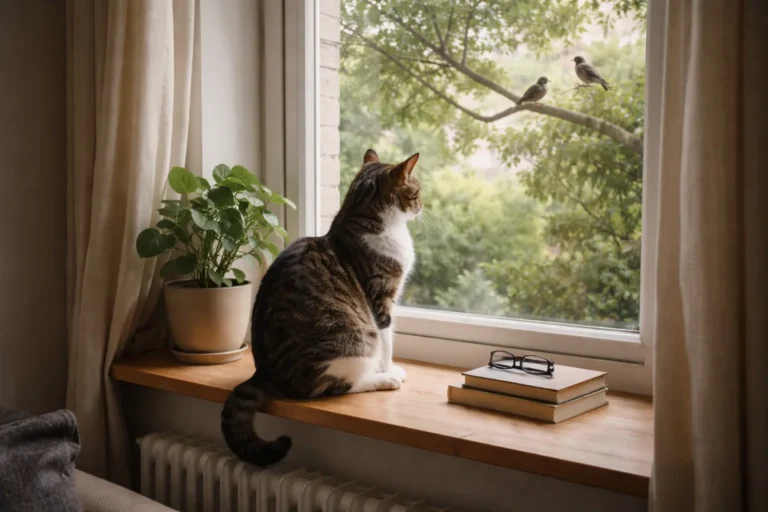
Some cats are most vigilant near windows and doors. That can be tied to territory. The cat is tracking what enters and leaves its space. Cats that see wildlife, neighborhood cats, or frequent street movement may spend long periods watching outside activity. What looks like “constant alertness” may be targeted vigilance focused on a specific area.
Other cats grow more alert around feeding time or routine transitions. They learn patterns quickly. If the food bowl, the sound of a treat container, or a certain time of day is always connected to activity, the cat may sit ready long before anything happens.
Alertness that fits the moment
This kind of behavior often looks purposeful. The cat is focused, not frantic. It may pause, listen, and then return to resting once the situation passes. That pattern usually points to normal awareness.
Alertness that seems constant
If the cat stays on high watch even in quiet settings, the behavior deserves more attention. A cat that cannot relax in any room, at any hour, may be living with ongoing stress or discomfort rather than simple attentiveness.
How routine affects a cat’s ability to relax
Cats rely heavily on predictability. Repeated routines help them understand what happens next, which lowers the need to monitor everything so closely. Feeding at regular times, gentle handling, and consistent rest periods can all support a calmer state.
When routines are inconsistent, alertness often rises. A cat may stay watchful because it cannot predict when the next sound, person, or event will happen. Even changes that seem small to humans can matter, such as shifting meal times, moving a litter box, or changing work schedules in the home.
That does not mean every routine must be rigid. Cats adapt. But they tend to do better when the overall rhythm of the home is steady enough that they can relax between events.
Helpful routine features
- predictable feeding times
- quiet resting zones
- regular play sessions
- safe access to windows, shelves, or beds
- limited sudden disruption during naps
Routine does not erase alertness. It gives the cat fewer reasons to maintain it all day.
How kittens and adult cats may differ
Kittens often appear alert because they are learning everything at once. New sounds, surfaces, people, and objects keep their attention moving constantly. Their vigilance may look like curiosity mixed with caution. One moment they are exploring, and the next they freeze and listen.
As cats mature, many become more settled in familiar environments. Adult cats usually know their home territory better and may not react as strongly to every small change. Still, a cautious adult cat can remain highly watchful for years. Some simply never become fully relaxed sleepers.
Older cats may also appear more alert for different reasons. Changes in vision, hearing, arthritis, or general comfort can make resting less easy. If an older cat looks unusually vigilant, it is worth considering whether age-related discomfort is making it harder to settle.
How owners often misread the behavior
People sometimes assume an alert cat is bored, stubborn, or dramatic. In reality, the cat may be responding to something very specific. It could be the sound of another animal outside, a subtle household routine, or a feeling that the environment is not fully predictable.
Another common mistake is assuming all hyperawareness is behavioral only. Some cats that seem “always on” are actually having trouble getting comfortable. They may sleep lightly because they feel tense, not because they are naturally watchful. Watching for changes in appetite, social behavior, litter box use, and grooming can help separate personality from a possible issue.
It is also easy to overlook the role of human behavior. Quick movements, sudden petting, constant noise, or repeated attempts to pick up a cat that prefers to observe can keep it in a guarded mode. A cat that is allowed to approach on its own terms often relaxes more over time.
What looks like “just a nervous cat” can sometimes be a cat trying to manage a home that feels too busy, too unpredictable, or physically uncomfortable.
What to watch over time
One day of vigilance is not meaningful on its own. The pattern over weeks matters more. A cat that has always preferred high shelves and quiet corners is different from a cat that suddenly starts checking every sound, avoiding sleep, and staying tense for long periods.
Long-term observation should focus on consistency. Is the cat alert in one room but relaxed in another? Does it settle after visitors leave? Does it watch the hallway and then nap soundly? These details help show whether the cat is naturally observant or reacting to something ongoing.
Changes that deserve attention include:
- new startle responses
- less deep sleep than usual
- hiding more often than before
- reduced interest in food or play
- stiff posture or difficulty settling
- sudden sensitivity to sounds or movement
If alertness appears suddenly or grows stronger without an obvious reason, the cause may not be behavioral alone. Cats are skilled at hiding discomfort, so new vigilance can sometimes be one of the first noticeable signs that something is off.
When constant alertness is part of a cat’s personality
Some cats are simply more watchful than others. They may prefer a strategic sleeping spot, a clear line of sight, and plenty of information about what is happening around them. They can still be affectionate, playful, and content. They just do best when they can keep an eye on everything.
These cats often relax in layers. First they watch. Then they assess. Then they settle. That process may take longer than it does for other cats, but it does not automatically mean something is wrong.
What matters is whether the cat has moments of genuine ease. A cat that keeps checking the room but also stretches out, grooms, eats normally, and plays may be living in a way that fits its temperament. A cat that never seems to reach that ease may be asking for a quieter, safer, or more predictable setting.
Final thoughts on why cats stay so alert
Constant alertness in cats usually comes from a mix of instinct, personality, and environment. Cats are built to notice details, and many enjoy staying informed about their surroundings. For some, that watchfulness is simply part of who they are.
But when a cat seems unable to turn off its vigilance, the reason is often more practical than mysterious. Noise, routine changes, conflict with other pets, discomfort, or a lack of secure resting spaces can all make a cat feel as if it needs to stay ready. Watching the pattern closely is often more useful than focusing on the label.
A cat that is alert is not always anxious. A cat that is anxious is not always easy to identify at first glance. The difference lives in the details: how it rests, how it eats, how it reacts, and whether it ever seems fully at ease in its own space.