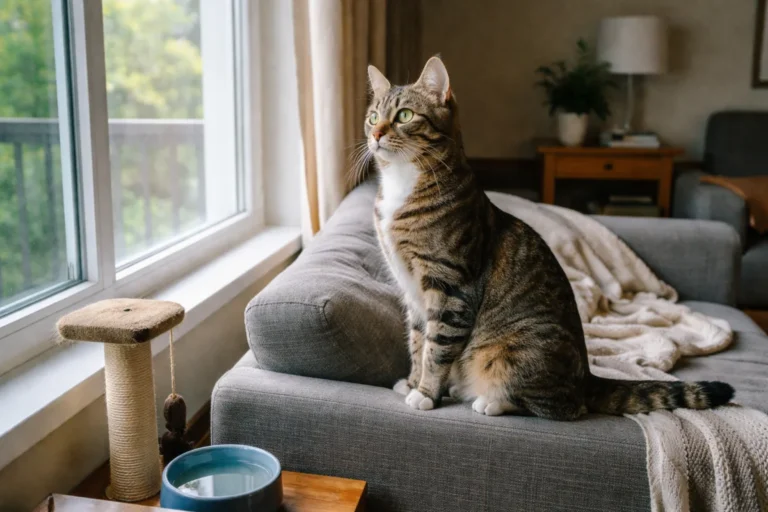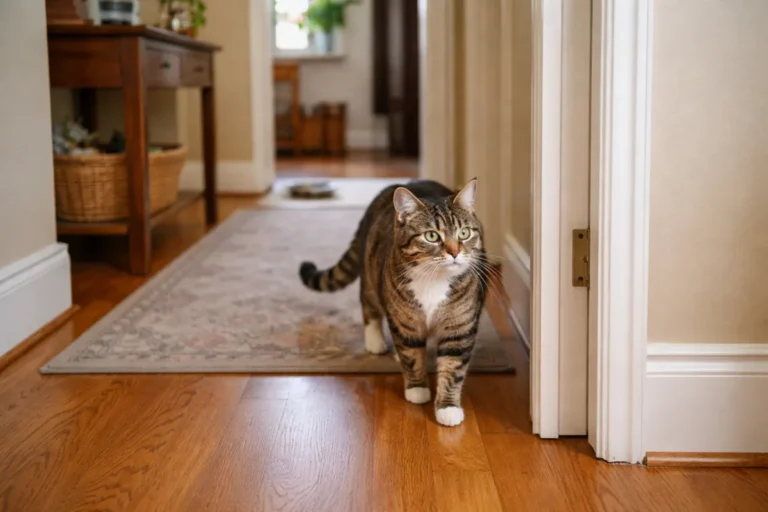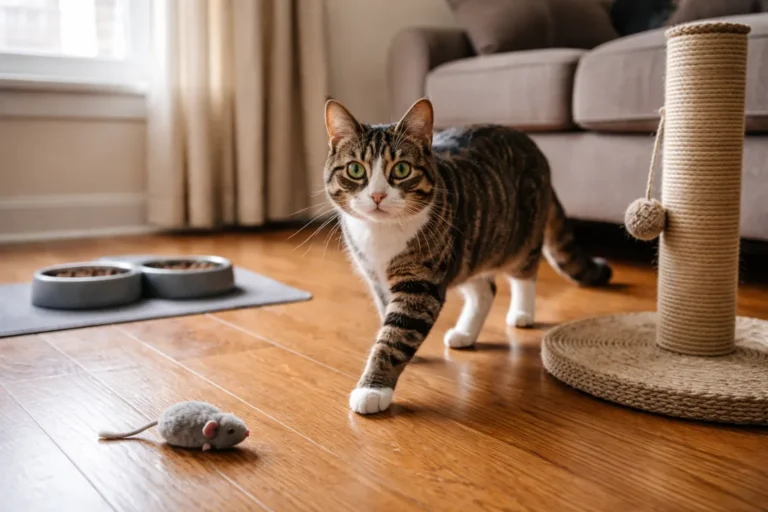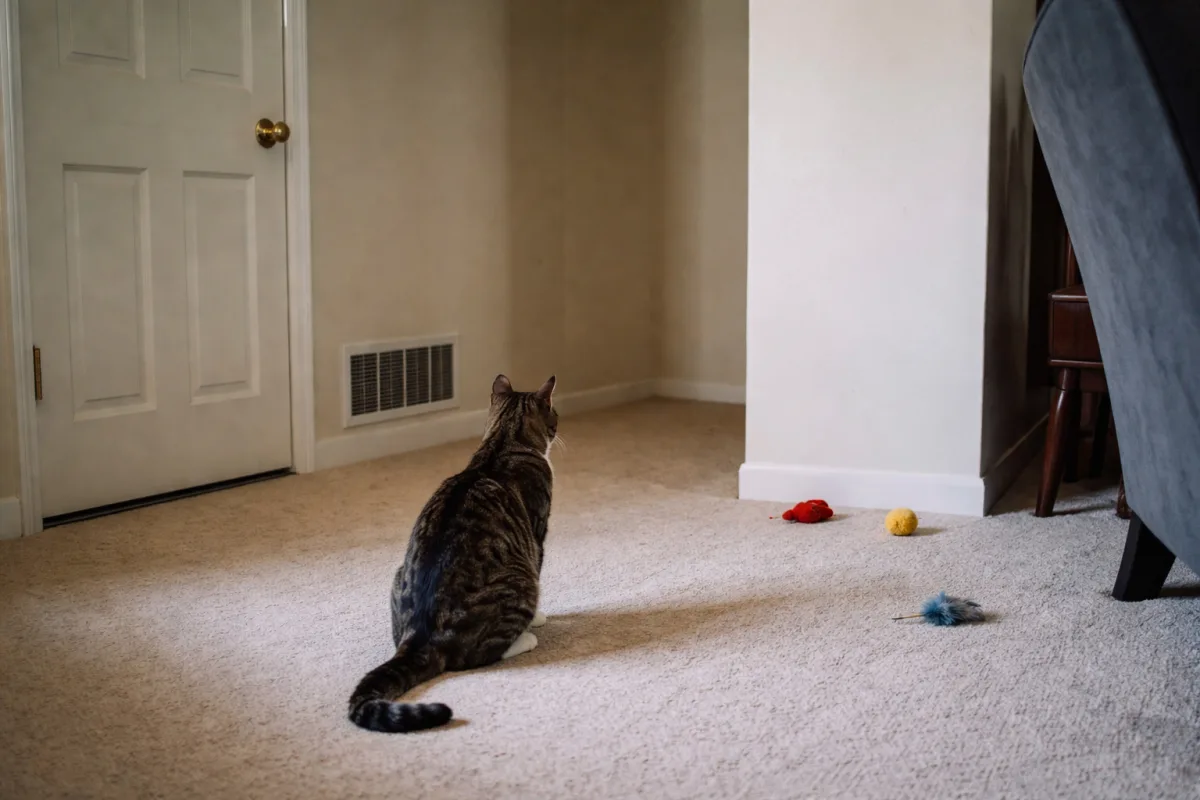
Cats often seem to notice something that no one else can see. A sudden stare at an empty corner, a quick leap away from the hallway, or a slow head turn toward a quiet room can make it look as if they are reacting to invisible stimuli. That can feel mysterious, but in many cases the behavior has ordinary explanations.
What looks like a cat sensing the unseen is usually a mix of sharp hearing, strong scent awareness, body language, memory, and instinct. Cats collect information in ways people often overlook. A tiny sound inside a wall, a faint movement from a vent, or a smell left behind hours earlier can be enough to trigger attention.
Some reactions are playful. Others are alert, cautious, or tied to stress. The same gesture can mean very different things depending on the cat, the room, and the moment. Understanding the pattern helps separate normal feline curiosity from signs that deserve more attention.
What Cats Seem to React To in Daily Life
The most common “invisible” triggers are not truly invisible to a cat. They may be too subtle for a person to notice. A cat’s senses can pick up details that are easy to miss in a busy home.
In everyday life, this can look like a cat freezing mid-walk, tracking an empty space with its eyes, or suddenly batting at nothing. Some cats stare at a wall or doorway for a few seconds, then move on as if the moment never happened. Others become more animated and start pouncing at a spot on the floor.
Typical situations owners notice
- A cat looks toward a ceiling corner after a soft sound from the attic or pipes.
- A cat jumps from a chair when a vent clicks on.
- A cat stares at a closed door after catching a scent trail.
- A cat swats at empty air during play because it detected movement from a toy, bug, or dust particle.
- A cat rushes out of a room after hearing a noise too quiet for people.
These moments often happen quickly. To a person, the cat appears to be reacting to nothing. To the cat, there is usually some clue, even if it is brief or impossible to identify.
When a cat seems to react to an empty space, the most likely explanation is not mystery but sensitivity. The trigger may be sound, smell, vibration, memory, or a mix of all four.
Why Cats Respond So Strongly to Small Triggers
Cats evolved as both hunters and prey animals. That background shaped a nervous system built to notice small changes fast. A slight shift in sound, a movement at the edge of vision, or an unfamiliar odor can matter a great deal.
This sensitivity is useful. It helps cats detect prey, avoid danger, and stay aware of their territory. Indoors, the same instinct can create behavior that seems strange from a human point of view. A refrigerator hum, a pipe knock, or a draft from a vent may be enough to catch attention.
Body position also matters. Cats often react before they move. Their ears turn first, then the eyes lock in, and only afterward does the rest of the body follow. That sequence can make the cat look as if it is responding to a thought rather than a stimulus.
Senses that often drive the reaction
- Hearing: Cats hear higher frequencies than people and notice faint mechanical sounds.
- Smell: They may detect animals, food, cleaning products, or changes in the environment.
- Vision: Peripheral motion, reflections, and tiny moving objects are highly noticeable.
- Touch and vibration: Floors, furniture, or walls may transmit movement the cat can feel.
Because these senses overlap, the response may seem sudden and intense. A cat is not only “seeing” something. It may be assembling clues from several directions at once.
How the Behavior Looks in Calm, Playful, and Alert States
Not every reaction to an unseen trigger means the same thing. The cat’s posture, timing, and persistence offer important context. A relaxed cat that briefly glances at a sound is behaving differently from a cat that keeps returning to the same spot with tense muscles and a low crouch.
Playful reactions are usually loose and quick. The cat may pounce once, dart away, then come back with ears forward and tail active. The behavior often ends as soon as the cat loses interest or the “target” stops moving.
Alert reactions tend to be quieter. The cat may hold still, stare, and listen. The body stays tense but controlled. This kind of response usually reflects caution more than fear.
Defensive or stressed reactions are stronger. The cat may puff up, flatten the ears, retreat, or hiss. In those moments the “invisible stimulus” may not be harmless at all. It could be a noise, scent, or situation the cat finds unsettling.
| Type of reaction | What it often looks like | Common meaning |
|---|---|---|
| Playful | Pouncing, batting, quick chases | Curiosity or hunting play |
| Alert | Freezing, staring, ear turning | Noticing a subtle change |
| Stress-related | Hiding, tail flicking, startle response | Unease or overstimulation |
Subtle Signals That Often Accompany the Reaction
Owners usually notice the obvious part first: the stare, jump, or swat. The quieter signs come earlier and tell more of the story. A cat’s ears, whiskers, tail, and breathing often change before any large movement happens.
For example, ears that rotate sharply toward one direction suggest the cat is listening. Dilated pupils can mean excitement, concern, or focused attention, depending on the setting. A twitching tail may show tension even when the rest of the cat looks still.
Some cats also show tiny changes in posture. They may lower the body, shift weight onto the back feet, or slowly raise one paw. Those details often reveal whether the cat is preparing to play, investigate, or retreat.
Body language clues to watch
- Head movement: Slow tracking usually means focus; sudden jerks may mean surprise.
- Ears: Forward ears suggest interest; flattened ears suggest discomfort.
- Tail: A loose tail often means calm curiosity; a stiff tail can indicate tension.
- Whiskers: Forward whiskers often appear during interest or hunting behavior.
- Breathing: Fast breathing during a reaction can mean stress or strong excitement.
One short stare is often harmless. Repeated freezing, hiding, or frantic reactions tell a different story and deserve closer observation.
How the Home Environment Changes the Behavior
The same cat may react very differently in a quiet apartment, a busy household, or a space with outdoor views. Environment shapes how often “invisible” triggers show up and how intense they feel. A cat living near windows, vents, thin walls, or active appliances may encounter more hidden stimuli every day.
Indoor cats often react to household patterns. Air conditioners, heating systems, water pipes, and distant footsteps can all become meaningful. Outdoor cats or cats with access to porches may react to birds, insects, neighboring animals, and shifting smells on the breeze.
Noise level matters too. In a calm home, a tiny sound stands out more. In a lively home, the cat may become used to background activity and react only to unusual changes. Some cats are naturally more sensitive and will always seem tuned in to the smallest detail.
Routine also plays a part. Cats notice where objects usually are, who walks through a room, and when certain sounds happen. When something changes, even slightly, they may react before a person understands why.
Common environmental triggers
- Air vents, heating systems, and HVAC noise
- Plumbing sounds inside walls or under floors
- Reflections from glass, screens, or polished surfaces
- Small insects or dust moving in sunlight
- New smells from guests, packages, or cleaning products
- Outdoor movement heard through windows or doors
What the Reaction May Signal About the Cat’s State
When a cat reacts to something unseen, the meaning depends on repetition and context. A one-time event during play is not the same as frequent staring at corners accompanied by tension or withdrawal. The reaction can point to curiosity, mild vigilance, overstimulation, or a temporary startle.
Some cats simply have a highly tuned “notice first, decide later” style. They investigate everything. Others are more cautious and respond strongly to even small changes in their surroundings. That difference can be part of personality.
Sometimes the behavior reflects a need for space. A cat that has been overstimulated may appear jumpy and more reactive to sounds or movement. In that case, the invisible trigger may only be the final straw after too much activity, noise, or handling.
In rare cases, repeated odd reactions can be linked to medical or neurological concerns. If a cat starts staring into space for long periods, seems disoriented, or reacts in a way that is new and difficult to explain, the pattern deserves attention from a veterinarian.
If the behavior is new, frequent, intense, or paired with other changes such as hiding, reduced appetite, or confusion, it should not be brushed off as quirky cat behavior.
How Owners Often Misread the Behavior
It is easy to assume the cat is seeing ghosts, acting dramatic, or inventing a reason to be difficult. Those interpretations are understandable, but they miss how cats actually process their world. Most of the time, the cat is responding to something concrete, even if people cannot identify it.
Another common mistake is reading every stare as fear. Cats stare for many reasons. They may be listening, planning a jump, checking a familiar sound, or simply resting their eyes while remaining aware. The context matters more than the stare itself.
Owners sometimes also overlook how often the same reaction happens in the same place. A cat that repeatedly watches one vent or corner may be reacting to recurring airflow, vibration, or outside activity. Pattern recognition is useful here. If the reaction always occurs after the same appliance turns on or the same person enters the room, the cause is likely environmental.
It helps to notice the full picture rather than the most dramatic moment. What happened right before the cat reacted? Was there a sound, a smell, a sudden movement, or a change in routine? Small clues usually explain more than the cat’s expression alone.
Daily Patterns and What Makes the Behavior More Noticeable
Many cats react to invisible stimuli more strongly during certain times of day. Early morning and evening are common because homes change in small ways during those periods. Windows open, appliances start, outdoor animals become active, and household routines shift.
Tired cats can also react differently. A cat waking from a nap may stare at a sound longer than usual or seem startled by something that would normally be ignored. Hunger, boredom, and pent-up energy can heighten attention as well.
In multi-cat homes, social tension may increase sensitivity. A cat that is already watching another cat closely may react more strongly to minor sounds or movement. The invisible trigger is not always the main issue. Sometimes the cat is already in a heightened state of awareness.
Seasonal changes can matter too. Heating systems, open windows, insects, and shifts in outdoor activity all change the sensory background of a home. A cat that seems to “suddenly” become reactive may simply be responding to a new pattern in the environment.
Moments when reactions often increase
- After waking from sleep
- During feeding anticipation
- When outdoor animals are active near windows
- After household cleaning or rearranging
- When appliances switch on or off
- During periods of stress or change in routine
When the Same Reaction Means Different Things
A cat looking at an empty spot can mean curiosity one day and discomfort the next. What changes the meaning is not the movement alone but the whole situation around it. A relaxed cat in a bright room may simply be tracking dust or light. A tense cat in a quiet hallway may be listening for something that feels wrong.
It also matters how long the reaction lasts. Brief interest is usually ordinary. Repeated fixation, especially if paired with pawing at the air, backing away, or vocalizing, deserves a closer look. Cats do not explain themselves, so the pattern becomes the message.
Long-term consistency is useful. If a cat always reacts to the same location, it is worth checking for drafts, insects, mice, hidden electronics, or outdoor wildlife activity. If the behavior appears in many different places without a clear trigger, the explanation may be more about the cat’s temperament or state of arousal.
Some cats are simply more observant. They notice everything. Others are more cautious. Both can look like they are sensing things no one else can see. Usually, though, the environment gives away the answer if you watch closely enough.
What Stays Stable Over Time and What Changes
Some cats keep the same response style throughout life. A highly alert cat at two years old may still be highly alert at ten. Other cats become calmer with age and stop reacting so intensely to small movements or sounds. Life stage, health, and confidence all influence the pattern.
Kittens often react with quick bursts of energy. Their responses are playful, exaggerated, and short-lived. Adult cats tend to show more control, even when they are curious. Older cats may react less often, though they can become more sensitive if hearing or vision changes.
That means the same cat may move through several phases. A young cat may pounce at every shadow. A middle-aged cat may stare more and waste less energy. An older cat may react mainly to sounds or touch rather than movement.
The important question is not whether the cat reacts, but whether the reaction fits the cat’s usual pattern. A change from the norm tells more than the behavior by itself.
What matters most is the shift from the cat’s normal baseline. A new pattern is more important than a familiar quirk.
Practical Ways to Read the Moment
When a cat appears to react to something unseen, a calm check of the environment usually answers at least part of the question. Listen for vents, pipes, appliances, and distant sounds. Look for windows, insects, mirrors, or reflections. Notice whether the cat is near a place that carries odor, airflow, or vibration.
It also helps to look at timing. Did the reaction happen after another pet passed by? After a bag was opened? After someone walked down a hall? Cats often respond to sequences, not single events.
Sometimes the answer is simple and harmless. Other times the cat is telling you that a room feels off, noisy, or too busy. Paying attention to the pattern helps you make a better call without overreacting.
- Check for obvious sounds or movement nearby.
- Notice whether the cat repeats the same reaction in the same location.
- Watch for stress signals such as hiding, flattening, or reduced activity.
- Compare the reaction with the cat’s usual behavior.
- Track whether the trigger appears at certain times of day.
A cat that glances at nothing, then settles down, is usually just being a cat. A cat that keeps returning to the same invisible point is giving you a clue worth following.
Calm Final Thought
What looks like a cat reacting to invisible stimuli is often a sign of how much information cats gather from the world around them. They hear more, smell more, and notice small changes faster than people do. A stare into empty space is usually not empty to the cat.
The behavior becomes clearer when you read the whole scene: the room, the timing, the body language, and the cat’s usual habits. Once those details come into view, the “mystery” often turns into a simple everyday explanation. Sometimes the cat is curious. Sometimes cautious. Sometimes overstimulated. The difference is in the context, and the context is usually there if you know where to look.