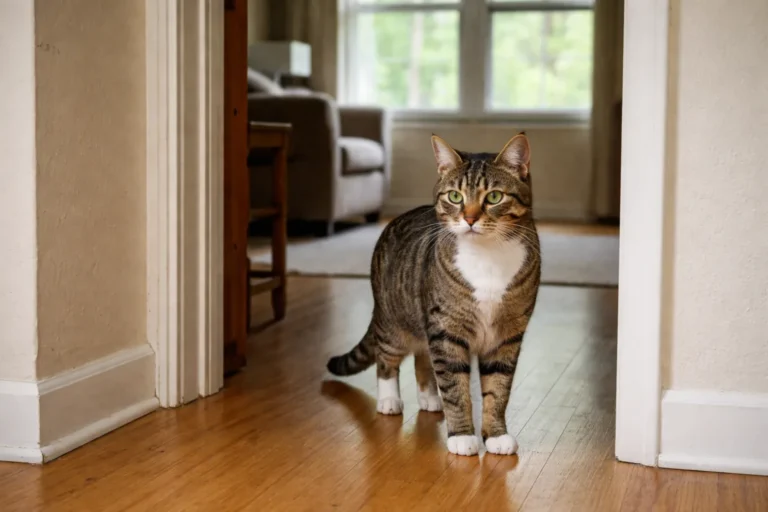
Cats have a way of stopping at things most people never notice. A loose thread on a blanket, the tiny movement of dust in a sunbeam, the edge of a cabinet door that is just slightly open. They lean in, stare, twitch an ear, and seem to make a whole decision around something smaller than a fingernail.
That habit can look mysterious, but it is usually a very normal part of cat behavior. Cats live by fine details. Their eyes, whiskers, hearing, and sense of touch are built to catch changes that happen quickly and quietly. What seems random to a person may feel important to a cat because it signals movement, texture, sound, or a possible change in the environment.
When a cat focuses on tiny details, it is often showing alertness, curiosity, or a need to inspect something carefully. Sometimes the reason is playful. Sometimes it is instinctive. And sometimes it reflects how the cat is feeling in that moment, especially if the focus seems unusually intense or comes with tension in the body.
What Cats Look Like When They Focus on Tiny Details
This behavior usually appears as a cat narrowing its attention to one small point. The object may not look meaningful at all to a person. It might be a speck on the floor, a crack in the wall, the movement of a cord, or a tiny sound behind a door.
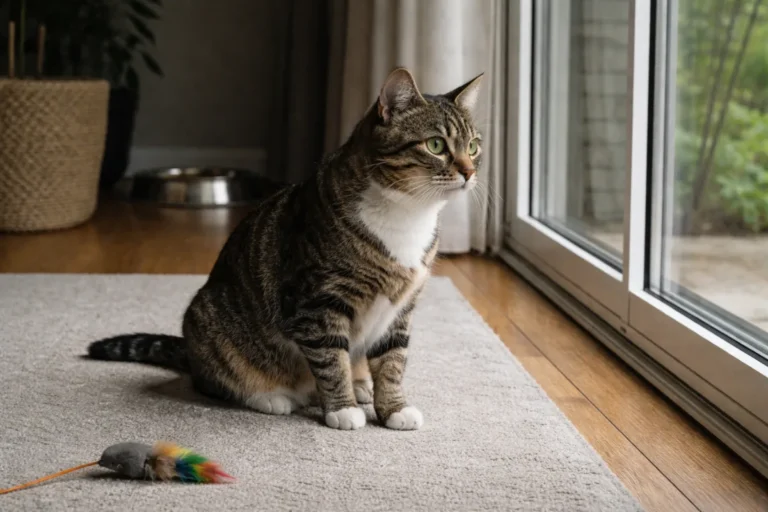
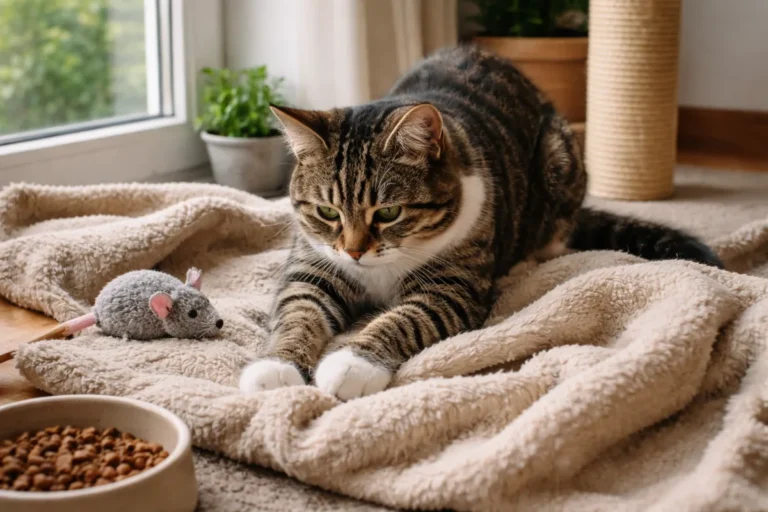
In everyday life, this can look like a cat freezing mid-step and staring at one corner of the room. Or it may sit on a windowsill and track the smallest movement outside, such as a leaf shifting or an insect crossing the glass. Some cats bend close to inspect the seam in a blanket or follow the edge of a table with their eyes and nose.
The behavior can be quiet and calm, but it can also look intense. A cat may hold still for a long time, whiskers forward, ears rotating, body low, and eyes fixed. Another cat might investigate in a more active way, pawing at the object, sniffing it, or making little hopping movements toward it.
Common everyday examples
- Watching a dust particle drift in the air
- Staring at a tiny sound source, such as a ticking appliance
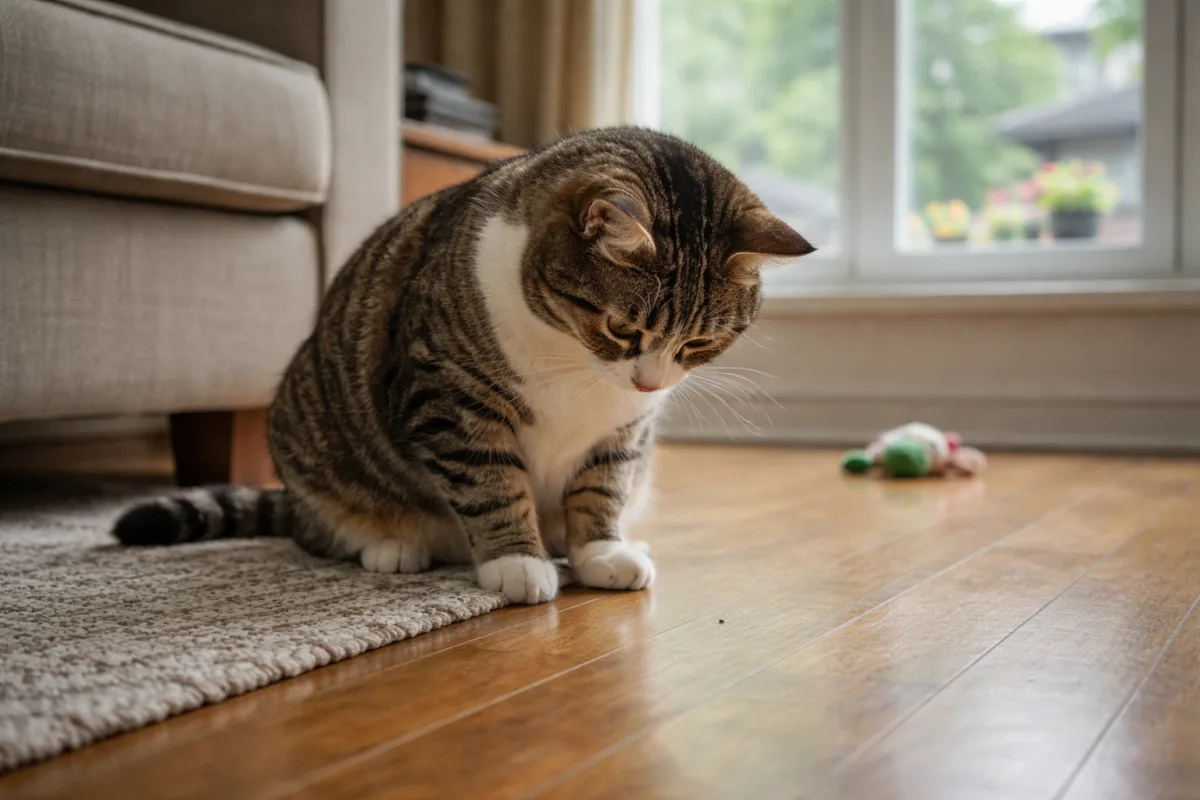
- Inspecting a food crumb or speck on the floor
- Following a hair tie, thread, or string with precision
- Studying a crack, seam, or narrow opening
- Tracking movement behind a curtain or under furniture
These moments may seem small, but they tell you a lot about how a cat processes the world. Details are not background noise to a cat. They are often the main event.
Why Cats Pay Such Close Attention
Cats are natural observers. Long before they became household companions, their survival depended on noticing subtle movement and quiet shifts in their surroundings. A small sound could mean prey. A tiny change in posture could mean danger. That old wiring still shows up in daily life.
Even in a comfortable home, a cat may still behave like a careful hunter and scanner. The habit is not always about hunting in the obvious sense. More often, it is about checking. Cats check spaces, objects, routines, and small changes because that is how they stay oriented and secure.
For a cat, tiny details can carry big meaning: movement, texture, rhythm, scent, and change all matter more than size alone.
Some cats are naturally more detail-focused than others. That difference can come from personality, past experiences, age, energy level, and how stimulating the home environment is. A quieter cat may spend more time studying small features in the room. A more playful cat may notice details because they seem like an invitation to chase or bat.
Possible internal reasons behind the behavior
- Curiosity about a new or changed object
- Instinct to monitor movement and sound
- Interest in hunting-like patterns
- Need for control in a changing environment
- Simple sensory pleasure from watching or inspecting
Sometimes a cat focuses on tiny details just because the details are satisfying. The act of watching, tracking, and investigating is mentally engaging. It gives the cat something to do without requiring a big effort or a lot of noise.
What the Behavior Can Signal About Mood
Not every detailed stare means the same thing. A relaxed cat may focus closely while still looking soft in the body. A stressed cat may also fixate on small things, but the overall picture will usually feel different.
Body language matters. A calm cat often has a loose posture, slow blinks, relaxed whiskers, and normal breathing. A cat that is tense may have a stiff back, flattened ears, tight mouth, a tail that flicks sharply, or pupils that stay wide for longer than expected.
When focus is paired with playful energy, the cat may look bright, quick, and ready to move. When focus is paired with anxiety, the cat may seem hyper-alert, unable to settle, or overly reactive to tiny sounds and movements. The same stare can mean very different things depending on the rest of the scene.
Context changes the meaning. A cat calmly watching a fly is not the same as a cat staring hard at a corner while appearing tense and jumpy.
Soft signals versus stronger signals
| Calm focus | Tense or alert focus |
|---|---|
| Loose body, steady breathing | Rigid body, shallow breathing |
| Slow, deliberate movement | Sudden freezes or jerky motion |
| Curious sniffing or quiet watching | Wide eyes, rapid scanning |
| May look away and return later | Hard to distract or redirect |
A cat that keeps returning to tiny details over and over may simply be highly observant. But if the behavior seems new, constant, or paired with agitation, it is worth watching the broader pattern instead of the single moment.
Play, Instinct, and the Joy of Precision
One of the easiest ways to understand this behavior is to think about play. Cats often play with small things because small things resemble prey. A dot of light, the end of a ribbon, a bug on a screen, or a moving finger under a blanket can trigger a strong response because it is unpredictable and compact.
Precision matters in play. Cats are not usually interested in a big, obvious object in the same way they are drawn to a tiny movement with changing rhythm. The little details create the challenge. They demand tracking, patience, and a quick reaction at just the right moment.
That is why some cats look almost serious when they focus on a tiny object. They are not being dramatic. They are using deeply wired skills. Their attention sharpens because the object gives their brain a task that fits their instincts.
Playful signs often include
- Tail movement that stays loose or rhythmic
- Brief crouching, then quick movement
- Occasional pounces or paw taps
- Soft ears and engaged eyes
- Returning to the object after a pause
These moments can be useful, too. A cat that enjoys small details may do well with toys that move in subtle ways. Feather toys, small balls, crinkly objects, and puzzle feeders often hold attention better than oversized or noisy toys.
When Tiny Details Feel Important in a Cat’s Environment
A cat’s focus often changes with the space around them. In a quiet home, a tiny sound might become more noticeable because there is less background activity. In a lively home, a cat may still zero in on small details, but the trigger could shift from a sound to a movement or scent.
Outdoor access also shapes the behavior. Cats that watch birds, insects, leaves, and passing people often become especially skilled at detecting micro-movements. Indoor cats may direct that same attention toward household objects, window activity, or small changes in routine.
New objects can matter a lot. A moved chair, a fresh bag on the floor, a repaired appliance, or a changed scent from cleaning products can all draw a cat’s attention. The detail may seem tiny, but to a cat it may signal that something in the environment is different and needs review.
When a cat notices small changes in a room, it is often doing exactly what cats are designed to do: check what is new, what is safe, and what deserves attention.
Environment factors that can increase detail-focused behavior
- Quiet rooms with little background stimulation
- Window access with outdoor movement
- Limited play opportunities
- Recent changes in furniture or scent
- Highly familiar spaces where tiny changes stand out
Some cats become especially fixated when they are under-stimulated. Others become more detail-focused when they feel uncertain and want to assess the room carefully. The behavior itself is not automatically a problem, but the setting can change its intensity.
How Age and Personality Shape the Behavior
Kittens often focus on tiny details because everything is new. They notice specks, threads, crumbs, and moving shadows with intense concentration. Their attention is short, lively, and easily redirected. A kitten may inspect a crumb, then chase a dust mote, then suddenly lose interest and run off to something else.
Adult cats usually show the behavior with more purpose. They may spend longer on a single point, especially if the detail seems to connect with hunting, safety, or curiosity. Their reactions are often more measured, though some adults remain highly playful and reactive.
Older cats may still inspect small things carefully, but their pace can slow down. They may sit and watch rather than pounce. If a senior cat seems newly obsessed with tiny details, it is important to look at the full picture, including changes in hearing, eyesight, movement, or comfort.
Personality differences often show up as
- Explorers: quick to inspect new small objects and spaces
- Watchers: prefer sitting still and studying tiny changes
- Chasers: react strongly to motion and move immediately
- Careful cats: approach slowly and reassess often
These traits can stay fairly stable over time, but they are shaped by experience. A cat that has learned a home is safe may inspect details with more ease. A cat that has been startled often may study tiny things more cautiously.
When Detail Focus Turns Into Repetition
There is a difference between healthy curiosity and repeated, hard-to-break fixation. A cat that notices tiny things from time to time is showing normal attention. A cat that seems unable to stop may be responding to stress, boredom, discomfort, or sensory changes.
Repeated staring at empty corners, tracking invisible movement very often, or staying locked on one spot for long periods can happen for several reasons. The explanation is not always serious, but it does deserve attention if it becomes a pattern rather than an occasional moment.
Sometimes the cat is reacting to a real stimulus that humans miss, such as a faint sound behind a wall or a tiny insect. Sometimes the cat is unsettled and looking for information in the environment. If the cat also changes appetite, sleep, grooming, or activity level, the meaning may go beyond simple curiosity.
If the focus on tiny details becomes constant, hard to interrupt, or paired with other changes in behavior, the pattern matters more than the single act of staring.
Signs the behavior may need closer attention
- Repeated staring at the same spot with no obvious trigger
- Restlessness or inability to settle after focusing
- Sudden increase in startle responses
- Changes in eating, grooming, or sleep
- Fixation that seems more anxious than curious
In those cases, it helps to observe when the behavior happens, what was happening before it started, and whether the cat looks relaxed or tense. Pattern matters more than guesswork.
How Owners Often Read the Behavior
People often assume a cat that stares at tiny details is either being silly or seeing something supernatural. In reality, the behavior is usually much more practical. Cats are built to notice the small and the subtle, and they often respond to things humans simply miss.
Owners sometimes overlook the body language that comes with the focus. A cat may be looking at a tiny thing, but the real message may be in the tail, ears, shoulders, or pace of movement. That is why the same behavior can be easy to misunderstand when seen out of context.
For example, a cat staring at a floor seam while relaxed may just be exploring texture or movement. Another cat staring at the same seam while tense, licking the lips, or twitching the tail may be showing uncertainty or agitation. The external action looks similar, but the inner state may not be.
Simple questions that help with interpretation
- Did the cat seem relaxed before the focus started?
- Is there a real movement, sound, or scent nearby?
- Can the cat be redirected easily?
- Does the behavior happen in one location or many?
- Has anything else changed in the cat’s routine?
Those questions can reveal whether the cat is just deeply interested or whether something else is shaping the response. Observation works best when it stays practical and specific.
Living With a Cat That Notices Everything
A cat focused on tiny details can be a very attentive companion. The behavior often means the cat is engaged with the environment and taking in information constantly. That can be charming, useful, and occasionally puzzling.
It also means the home is worth seeing through a cat’s eyes. Small changes in routine, sound, scent, and layout matter more than many people realize. A cat that pays close attention to fine details is not overreacting by default. In many cases, it is simply behaving like a cat.
When the focus is calm, it often reflects curiosity and confidence. When it is intense, it may point to stress, overstimulation, or a need for more environmental clarity. The context tells the story. The detail itself is only the starting point.
Watching how a cat responds to small things can make the whole house feel more legible. A thread on the rug, a bird at the window, a faint scrape behind the wall, a new scent by the door. To a cat, these are not minor events. They are clues worth reading carefully, one tiny detail at a time.