Some cats seem perfectly happy being nearby but not being touched. They may follow you from room to room, settle at the edge of the sofa, and even sleep in the same space, yet move away the moment a hand reaches out. This can feel confusing if you expect affection to look a certain way. In reality, avoiding contact is often a normal part of how a cat manages comfort, control, and safety.
That behavior does not always mean a cat dislikes people. It can reflect personality, past experiences, current mood, or even a simple preference for being close without being handled. Cats are selective about touch. For many of them, contact is something they accept only under the right conditions, and not as a constant expectation.
Understanding that difference changes how the behavior looks in daily life. Instead of seeing a cat as distant, it helps to notice the signals leading up to the retreat. The timing, the setting, and the cat’s body language all matter. A cat that avoids contact is often communicating more than it seems at first glance.
What Avoiding Contact Looks Like in Everyday Life
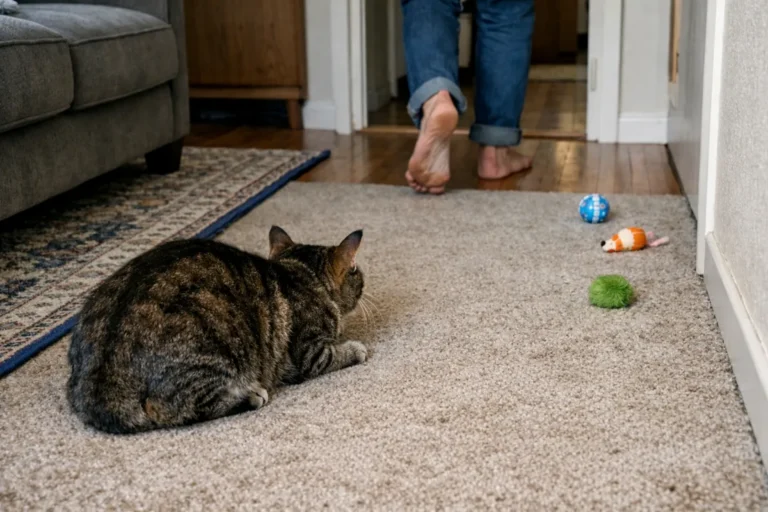
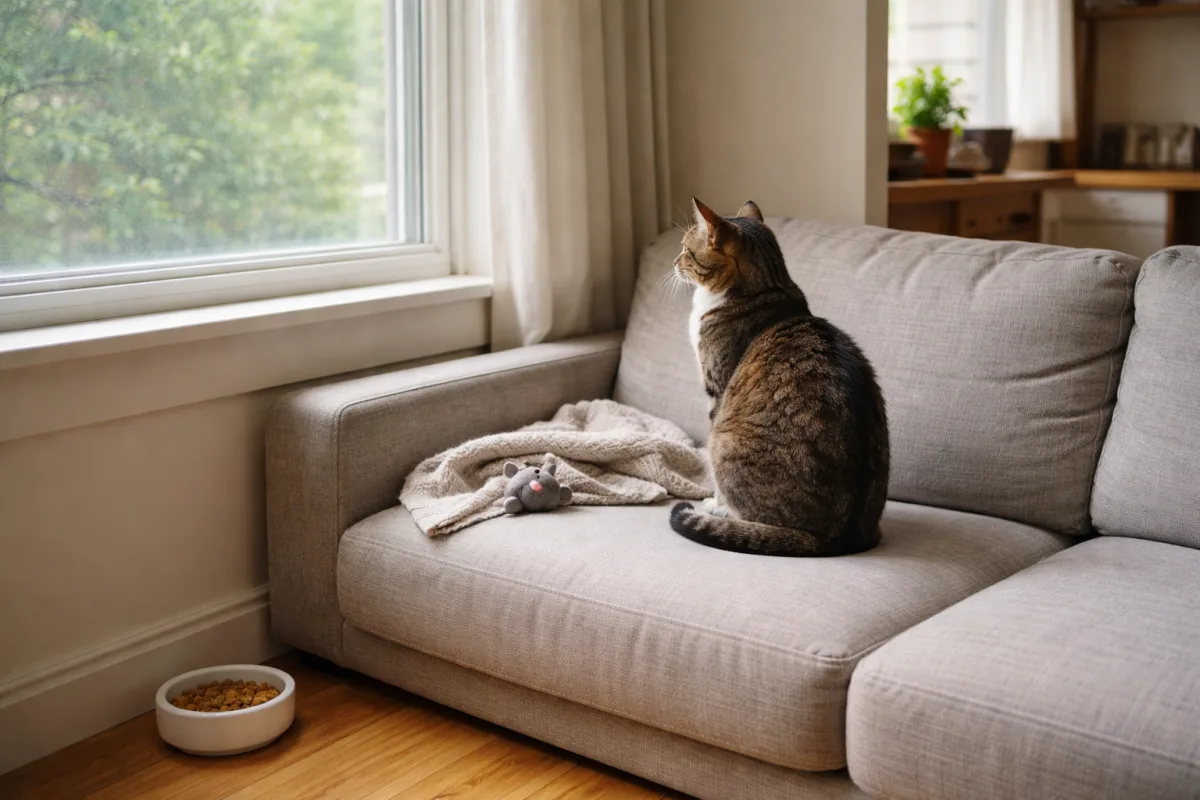
Contact avoidance can appear in many small ways. Some cats step away when a hand comes toward their head. Others tolerate a few seconds of petting before turning their face, flattening their ears slightly, or shifting their weight to leave. A cat may sit close to a person on purpose, then move if the person tries to pick it up or stroke its back.
There are also quieter versions of the same behavior. A cat may choose to stay just out of arm’s reach. It may come when called, rub briefly against a leg, then leave before much touching happens. Even cats that enjoy interaction sometimes set a limit quickly and clearly.
In homes with children or multiple adults, avoidance can become more obvious. The cat may prefer one person over another, or it may accept contact only in specific places, like on the floor rather than on a lap. Some cats dislike being handled only at certain times of day, such as when they are waking up, eating, or alert to noises in the home.
Contact avoidance is not always rejection. Often it is a cat choosing the type, timing, and length of interaction it can tolerate comfortably.
Common everyday signs include
- Moving away when approached too quickly
- Accepting brief petting but not prolonged touching
- Preferring to sit nearby instead of on a lap
- Leaving when picked up or restrained
- Turning the head, ears, or body away from a hand
- Choosing high perches, corners, or separate rooms for rest
Why Some Cats Prefer Distance
One of the most important reasons is temperament. Cats vary widely in how they experience touch. Some are naturally social and enjoy frequent physical contact. Others are more reserved and prefer to observe rather than engage closely. That difference can appear early in life and remain stable for years.
Another factor is sensitivity. Cats rely heavily on touch, scent, and body position to assess their surroundings. A hand reaching over the head may feel intrusive. Being held can remove their sense of control. Even a well-meaning pet owner can accidentally create discomfort by touching a cat in ways it does not enjoy.
Past experience also matters. A cat that was handled roughly, moved often, or separated early from comfort may be slower to trust contact. Shelter cats, street-born cats, and cats that have experienced unstable environments may need more time before they feel safe with touch. Some never become highly tactile, and that can still be a healthy outcome.
Age can play a role too. Older cats may avoid contact because of stiffness, joint pain, or a lower tolerance for handling. Kittens often change as they grow. A kitten that tolerated everything may become more selective once it matures and gains confidence in setting boundaries.
Internal reasons behind the behavior often include
- Natural preference for independence
- Low tolerance for being restrained
- Heightened sensitivity to movement or touch
- Stress from past handling or unstable routines
- Pain or physical discomfort
- Need for more control over interaction
What a Cat’s Body Language Reveals
When cats avoid contact, the body often gives the first clear clue. A cat that is simply uninterested may stay calm, move slowly, and choose to leave without drama. A cat that feels uneasy may show tighter muscles, quicker movement, or small protective changes in posture.
Look at the ears, tail, eyes, and shoulders together. Ears turned slightly back, a twitching tail, a tense back, or a sudden pause before moving away can all mean the cat is preparing to increase distance. A cat that lowers its head or crouches before you touch it may already be expecting something unpleasant.
By contrast, some cats give softer signals. They may lean away a little, keep their body angled sideways, or stay still but not relax into the touch. These signs can be easy to miss because the cat is not hissing or fleeing. Still, they often mean the same thing: the cat is trying to manage contact before it becomes too much.
A cat that tolerates contact is not the same as a cat that welcomes it. Quiet resistance is still resistance.
Subtle body language signs
- Turning the head away from a hand
- Stiffening the shoulders or back
- Tail flicking in short, sharp motions
- Ears rotating backward or outward
- Brief freezing before moving off
- Skin twitching during petting
How Context Changes the Behavior
The same cat may accept contact in one moment and avoid it in another. Context matters more than many people expect. A cat that loves being petted on the couch in the evening may not want to be touched after hearing a doorbell, a vacuum, or another pet moving nearby. Stress lowers tolerance fast.
Routine has a strong effect as well. Cats often prefer touch when their environment feels predictable. If meals are late, visitors arrive unexpectedly, or furniture changes disturb familiar pathways, the cat may become more cautious. Avoiding contact can be part of how it protects itself until the environment feels settled again.
Some cats avoid contact most when they are busy with another need. Eating, grooming, hunting a toy, or using the litter box can all create a “do not interrupt” feeling. Other cats want contact only when they initiate it. They may choose the moment, the distance, and the duration. That independence is not a flaw. It is often how they stay comfortable.
Environmental factors that can increase avoidance
- Noise, sudden movement, or frequent visitors
- Limited hiding places or resting spots
- Competition with other pets
- Handling during sleep, rest, or mealtime
- New smells, new furniture, or changed routines
- Overly enthusiastic petting or repeated attempts to pick up the cat
Independence Is Not the Same as Dislike
People often assume that a cat avoiding contact means it is aloof or unfriendly. That is not always true. Many cats are affectionate in ways that do not involve long petting sessions. They may sit nearby, blink slowly, bring toys, or rub against furniture and people without wanting more physical attention afterward.
This is where cat behavior can be easy to misread. A cat may enjoy your company but still dislike being held. It may trust you enough to sleep in the same room but still prefer not to be petted on the belly or paws. Trust and touch are related, but they are not identical.
Some cats show a clear pattern: they want connection on their own terms. They may initiate contact, then end it quickly. That kind of interaction is often a sign of confidence, not coldness. The cat knows how to use distance when it wants to.
In homes where people expect constant physical affection, this can create tension. But forcing contact usually does not make a cat warmer. It often does the opposite. Respecting a cat’s limits tends to make interaction smoother over time because the cat learns that approaching people does not lead to being trapped or overwhelmed.
When Avoidance May Point to Discomfort
Not every contact-avoidant cat is simply reserved. Sometimes the behavior is a clue that something is wrong. A cat that suddenly starts pulling away from touch after having enjoyed it before may be experiencing pain. Arthritis, dental issues, skin irritation, abdominal discomfort, and injuries can all make touch unpleasant.
Changes in behavior matter here. If a cat reacts strongly when touched in one area, flinches when jumping, or refuses to be picked up when that used to be normal, it is worth paying attention. A cat may also groom a sore area more often, move more slowly, hide, or become less active overall.
Behavior changes that come on quickly deserve extra attention. A gradual preference for less touch can reflect maturity or personality. A sudden change can mean stress or illness. The difference is important. Cats rarely explain discomfort directly, but their relationship with touch often changes early enough to notice if you are watching closely.
If a cat that once enjoyed contact begins avoiding it more than usual, pain or illness should be considered before assuming it has simply become less affectionate.
Signs that deserve a closer look
- New sensitivity when touching the head, back, or belly
- Flattening ears or hissing during usual grooming
- Reluctance to jump, climb, or be held
- Hiding more than normal
- Reduced appetite or energy
- Unexpected aggression around touch
How Owners Often Misread the Behavior
Many people assume a cat that avoids contact is being rude, stubborn, or ungrateful. That interpretation is usually too simple. Cats do not think of touch in the same social way humans do. A cat that steps away is often making a practical decision based on comfort, not sending a moral message.
Another common mistake is trying to “win” the cat over by increasing contact. Reaching repeatedly, lifting the cat when it is moving away, or petting through resistance tends to make things worse. The cat learns that distance is safer than staying close. Over time, it may start avoiding people sooner and more consistently.
It also helps to separate brief affection from deep social preference. A cat that does not enjoy being stroked may still be strongly attached to a person. It may greet that person at the door, sleep nearby, or stay in the same room for hours. The bond can be real even when the contact is limited.
When a cat avoids touch, the best response is usually to notice where the limit is and stop before the cat has to escalate. That leaves room for trust to grow on the cat’s terms.
Building a Better Relationship Without Forcing Contact
Improving comfort does not mean turning every cat into a lap cat. It means making interaction feel safe and predictable. Many cats become more relaxed when they know they can leave at any time. Choosing to approach is very different from being cornered or held still.
Start with small, low-pressure interactions. Sit nearby without reaching. Let the cat sniff a hand if it wants to. Offer treats, play, or gentle conversation without expecting touch afterward. Cats often connect positive experiences with a person long before they accept petting.
Touch preferences can also be respected more clearly by using the areas a cat usually likes. Many cats prefer cheek rubs, chin scratches, or brief strokes along the head and sides. Others dislike the belly, legs, tail, or back entirely. Learning those preferences takes time, but the cat usually makes them obvious if you watch closely.
Practical ways to reduce avoidance
- Approach slowly and from the side, not overhead
- Let the cat initiate closer contact
- Stop petting before the cat pulls away
- Avoid picking up a cat that clearly resists being held
- Keep routines calm and predictable
- Provide high resting spots and hiding places
Different Cats, Different Limits
There is no single reason cats avoid contact, and no single fix. Some cats need more space because of temperament. Others need help recovering from stress or illness. A few simply prefer a quieter style of affection. All of these can be normal.
What matters most is consistency. A cat that avoids contact in the same situations, with the same people, or at the same times of day is revealing its preferences. Those preferences can guide how you interact. They also help separate personality from discomfort, which is useful when deciding whether to give the cat space or call a veterinarian.
Many cats remain affectionate while still being selective. They greet, follow, watch, and settle close by. They just do not want every form of physical closeness. Once that is understood, the behavior feels less like rejection and more like a clear boundary. That boundary is part of the cat’s normal language, and it often becomes easier to respect than to challenge.
Over time, the most peaceful relationships with cats are usually built around observation. A cat that avoids contact is often telling you where comfort begins and ends. Listening to that message makes daily life calmer for both sides.