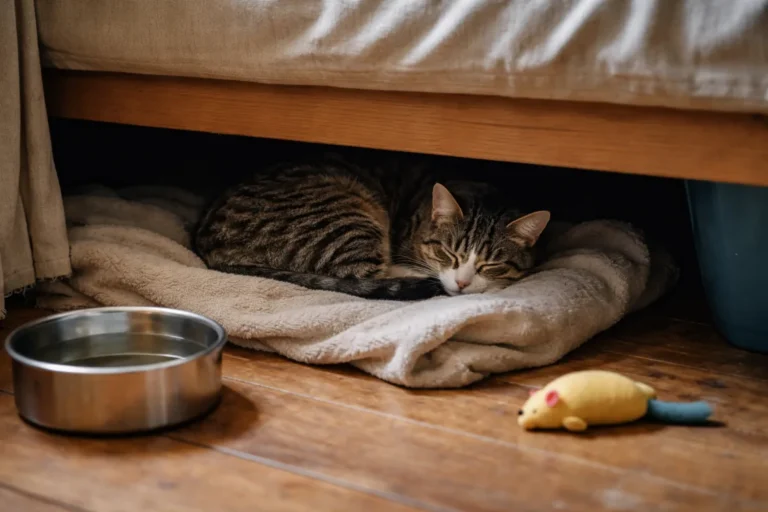
A cat that wakes you up once in a while is easy to understand. A cat that does it over and over, at the same time every night or every morning, feels different. It can seem random at first, but repeated wake-ups usually follow a pattern.
Most cats are not trying to be difficult for the sake of it. They are responding to hunger, routine, boredom, light, sound, temperature, or a learned habit that has worked before. Sometimes the reason is simple. Sometimes it is a mix of small things that add up until your sleep becomes part of the cat’s daily schedule.
Repeated wake-up behavior often becomes more noticeable in quiet homes, during seasonal changes, or when a cat’s energy does not match the household rhythm. A cat may paw at your face, sit on your chest, meow at the bedroom door, knock something off a nightstand, or start pacing before sunrise. The behavior can look playful one night and urgent the next, which is why it is easy to misread.
Understanding what is driving it matters because the same action can mean very different things. A cat climbing onto the bed at 5 a.m. may want food, attention, warmth, or activity. Another cat may simply be awake and looking for something to do because the house is quiet and your room is the most interesting place available.
What repeated wake-ups look like in daily life
In real homes, this behavior rarely appears in one perfect form. It often shows up in small, consistent ways that gradually wear down sleep. A cat might tap your arm, purr loudly in your ear, or walk across your pillow at the same hour every morning. Some cats wait until they hear movement, then increase the pressure until you respond.
Other cats are more subtle. They may sit near your face and stare, knead the blanket, or make small chirps that become louder if ignored. The behavior can seem polite at first, then become persistent when the cat learns that a few extra nudges get results.
Night and early morning are the most common times because the house is calm and the cat’s senses are alert. Even a tiny change, like a door opening, a digital clock glow, or a phone alarm, can become part of the pattern.
Repeated wake-ups usually make more sense when you look at the whole routine, not just the moment the cat interrupts your sleep.
Why cats keep doing it
The strongest reason is often learning. Cats notice quickly when a certain action leads to food, petting, play, or a person getting out of bed. If waking you once produced breakfast, then waking you again may seem worth trying. The habit can grow stronger when the response is predictable.
Some cats wake people because they are hungry, especially if the last meal comes many hours before morning. Others wake their owners because they have energy to burn and no outlet for it. Indoor cats in particular may build up restlessness overnight if their day is too quiet.
There is also the simple fact that cats do not always share human sleep patterns. They are naturally active at dawn and dusk. That does not mean every cat must be noisy before sunrise, but it helps explain why many cats become alert when people are trying to stay asleep.
Emotional needs can also play a role. A cat that feels lonely, under-stimulated, or uncertain about access to resources may seek contact more often. In some cases, waking behavior is less about demanding something specific and more about asking for reassurance through routine interaction.
Common internal reasons behind the behavior
Hunger and meal timing
Food is one of the clearest triggers. If your cat expects breakfast at a certain hour, they may begin waking you earlier and earlier in hopes of speeding things up. Cats are quick to connect your movement with feeding, even if the meal is still a long time away.
Free-feeding can still lead to wake-ups if the cat prefers fresh food, is used to being fed by hand, or has learned that people are more likely to respond in the morning. On the other hand, a cat who eats a large meal too early in the evening may simply be ready for another round by dawn.
Boredom and pent-up energy
A cat that spends the day sleeping and the night looking for activity may turn your bed into the most available source of stimulation. Repeated wake-ups often happen when the cat’s daily play needs are not fully met. This is especially common in younger cats and very indoor-focused cats.
Even a cat that seems calm during the day may be under-exercised. One short play session is not always enough. Some cats need more structured activity spread across the day to reduce nighttime restlessness.
Attention and habit
Attention can become a powerful reward. If your cat wakes you and gets talking, petting, or even a frustrated reaction, they may count that as success. The behavior does not need to be deliberate in a human sense to be reinforced.
Once a habit forms, cats often repeat it because it is familiar. The action becomes part of the household rhythm. That is why repeated wake-ups can continue even after the original reason changes.
Comfort, temperature, and sensory triggers
A cat may wake you because they want warmth, a different sleeping spot, or access to a more comfortable place in the house. Small environmental details matter. A drafty room, a closed door, a noisy hallway, or another pet nearby can all influence the behavior.
Light and sound can also shift a cat’s level of alertness. Early morning sunlight, distant traffic, birds outside the window, or a neighbor’s schedule may all nudge the cat into a more active state.
How the home environment shapes the pattern
The same cat can act very differently in two homes. A busy household with kids, noise, and frequent movement may keep a cat more engaged during the day, which sometimes reduces nighttime wake-ups. A quiet home may do the opposite if the cat has plenty of rest and too few interesting events.
Indoor cats usually have more control over their environment, but they also depend more heavily on people for stimulation. When that stimulation is inconsistent, the cat may try to create it on their own, often when the house is asleep.
Multi-cat homes can add another layer. One cat may wake you because another cat blocks access to a resource, or because competition over food or attention makes bedtime feel less stable. Even if the cats seem peaceful during the day, subtle tension can still affect nighttime behavior.
Seasonal changes matter too. Longer daylight hours can increase early-morning activity. In colder months, cats may climb into bed more often simply because they want warmth. A room that felt fine in summer may become the most attractive sleeping spot in winter.
If the wake-ups happen at the same time every day, look closely at the household routine. Cats often sync themselves to predictable human habits.
What the behavior may signal about the cat’s state
Not every repeated wake-up is a sign of a problem, but the pattern can reveal how the cat is feeling. A cat who wakes you in a calm, steady way may simply be following a learned routine. A cat who becomes more intense, vocal, or restless may be dealing with unmet needs or discomfort.
Pay attention to the cat’s body language. A relaxed cat may have soft eyes, a neutral tail, and gentle movement. A more anxious cat might pace, vocalize sharply, or seem unable to settle even after being fed or petted.
Changes matter. If a cat who never used to wake you starts doing it suddenly, the cause may be physical, environmental, or behavioral. A shift in appetite, litter box use, grooming, or overall energy should not be ignored. Repeated wake-ups can sometimes be one piece of a larger change.
A cat who wakes you only when you are deeply asleep may be seeking attention, but a cat who interrupts sleep repeatedly throughout the night may be struggling to settle. That difference is useful. It helps separate a learned habit from a broader pattern of restlessness.
How owners often interpret it vs what it may actually mean
It is easy to assume the cat is being stubborn or trying to control the household. In practice, the behavior is usually more practical than personal. The cat has learned that waking you changes something. That is the core of it.
Sometimes owners interpret every wake-up as hunger when the cat may really want interaction. Other times they assume it is attention-seeking when the cat is actually waking because of an uncomfortable room, an empty water bowl, or a litter box issue.
This is why context is important. What happened before bedtime? When was the last meal? Has the cat been active enough? Has anything in the home changed? Small details often explain more than the wake-up itself.
It also helps to notice whether the cat settles again after being ignored, redirected, or given a small change in routine. A cat that calms quickly may be looking for a simple cue. A cat that escalates may be trying to solve a need that has not been met.
Different forms of repeated wake-ups
| Behavior | Common meaning | What to observe |
|---|---|---|
| Gentle pawing or nuzzling | Attention, comfort, routine | Does the cat stop after brief contact? |
| Loud meowing near dawn | Hunger, habit, alertness | Does it happen before breakfast time? |
| Walking across your body | Access, play, impatience | Is the cat seeking movement or response? |
| Pacing and repeated vocalizing | Restlessness, stress, unmet needs | Does the cat seem unable to settle? |
| Knocking objects over | Attention-seeking or stimulation | Does it happen when the cat is ignored? |
When daily routine makes it worse
Routine can quietly train a cat to wake you. If breakfast always follows the first sign of movement, the cat learns to start the day for you. If petting always follows a nose bump, the cat learns that repeated contact works better than waiting.
Consistency is powerful, and not always in the way owners want. A cat who wakes you at 5:30 a.m. every day is often following a pattern that has been strengthened over time. Even a few accidental rewards can keep the pattern alive.
Late evenings can also matter. A cat that does not get enough activity before bed may be ready to move when you are trying to sleep. A predictable quiet house can make that mismatch more obvious.
Some cats also respond to household transitions. If people get ready for work, open doors, or start breakfast at a regular time, the cat may build its own schedule around those cues. The wake-up behavior then becomes part of the larger daily loop.
Long-term patterns and stability
Repeated wake-ups can stay stable for a long time if the underlying triggers remain the same. A cat that has learned to wake a person for breakfast may keep doing it for years if nothing changes. That does not mean the behavior is fixed forever, but it does mean it may not fade on its own.
Some cats are more flexible than others. A young cat with high energy may improve when play and feeding routines become more structured. An older cat may continue the same pattern because habit is deeply ingrained, even if the original reason has softened.
Long-term observation helps separate personality from circumstance. A cat that only wakes people in one room, one season, or one household setup is likely reacting to context. A cat that repeats the same pattern in many settings may have a stronger internal rhythm that simply needs adjustment.
When a behavior stays the same for months, the question is often not “Why now?” but “What is this pattern still rewarding?”
What to watch for in the details
The timing of the wake-up can be a clue. Very early morning activity often points to energy, hunger, or light sensitivity. Nighttime interruptions in the middle of sleep may point more toward attention, anxiety, or discomfort.
Intensity matters too. A cat that briefly checks in and leaves is different from one that refuses to stop. Short, quiet interruptions often reflect a simple request. Repeated escalation usually means the cat is not satisfied with the current response.
It also helps to notice whether the cat seeks the same person every time. Cats often target the person who responds most reliably, or the one whose sleep is easiest to interrupt. That choice is practical, not emotional in the human sense.
Look for repeatable conditions:
- same time of day
- same room or bed location
- same pre-wake events, like birds, alarms, or light
- same response from the owner
- same level of hunger or playfulness
How the behavior fits typical cat traits
Cats are observant animals. They notice routines, sounds, and openings in human behavior quickly. That sensitivity makes repeated wake-ups more understandable. The cat is not acting without reason; it is responding to a well-learned pattern in the home.
The behavior also reflects independence. Cats do not always wait for a convenient moment. If they want something, they may ask when it occurs to them, not when it fits your schedule. That can be frustrating, but it is a very cat-like way of interacting.
At the same time, many cats are more socially tuned in than people expect. Waking you can be a way of checking the household, reconnecting after the quiet of the night, or prompting a familiar interaction that helps them feel secure.
Why the same behavior can mean different things
One cat wakes a person because breakfast is late. Another does it because the bedroom door is closed. Another is simply bored at 4:45 a.m. The action may look nearly identical, yet the reason behind it can change completely.
That is why repeated wake-ups should be read as behavior, not a single diagnosis. The cat may be mixing motivations. Hunger and habit, or boredom and attention, often overlap. A cat can want food and company at the same time, then repeat the behavior because both needs are being met in small ways.
Sometimes the meaning shifts from week to week. A cat that woke you for attention during a quiet winter may start waking you for play when daylight returns. Another cat may become more insistent after a household schedule changes. The pattern is worth watching in context rather than treating it as one fixed message.
Closing thoughts on the pattern
Repeated wake-ups usually come from a combination of timing, habit, and unmet needs. The behavior can be simple or layered, and it often makes the most sense when you look at what happens before and after the cat interrupts sleep. A cat that wakes you once may be asking for something specific. A cat that does it every morning has likely learned that the interruption works.
The pattern becomes easier to read when you pay attention to food timing, activity level, room setup, and your own responses. Cats are excellent at linking cause and effect. If waking you changes the morning, they will remember that.
That is why the behavior can persist even when it seems unnecessary. It is part instinct, part routine, and part the quiet negotiation that happens in many homes every day before sunrise.