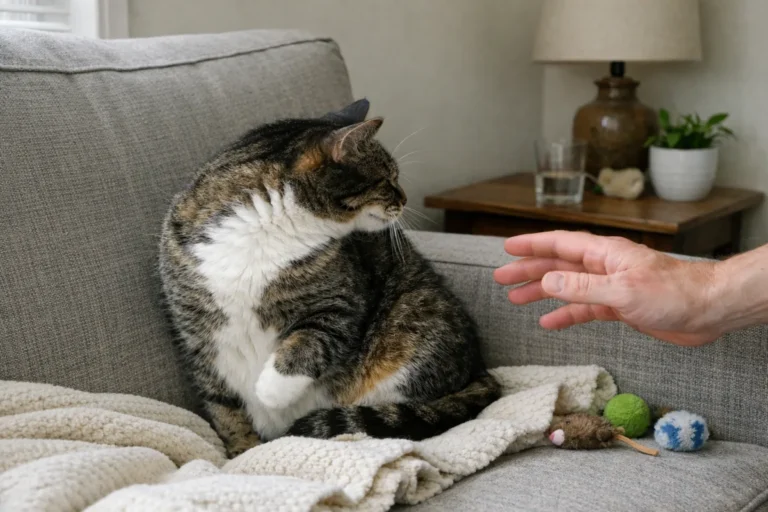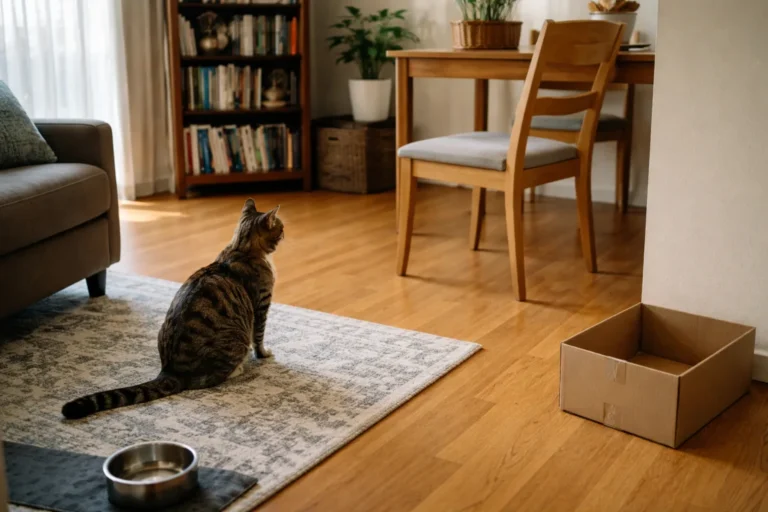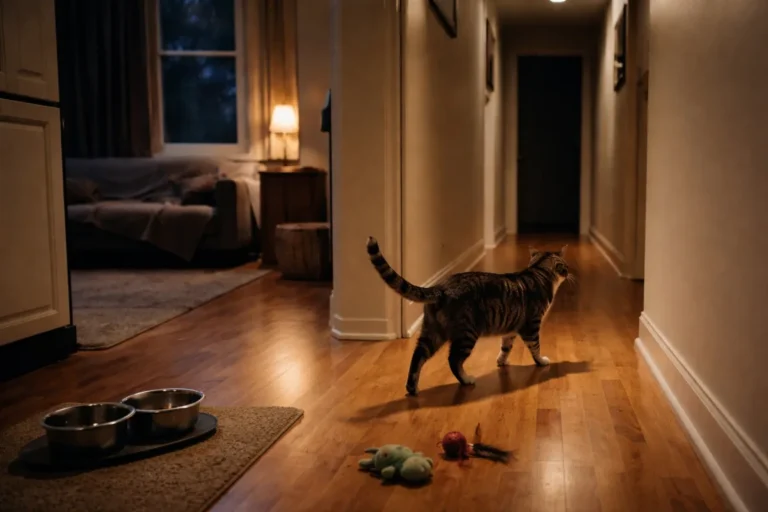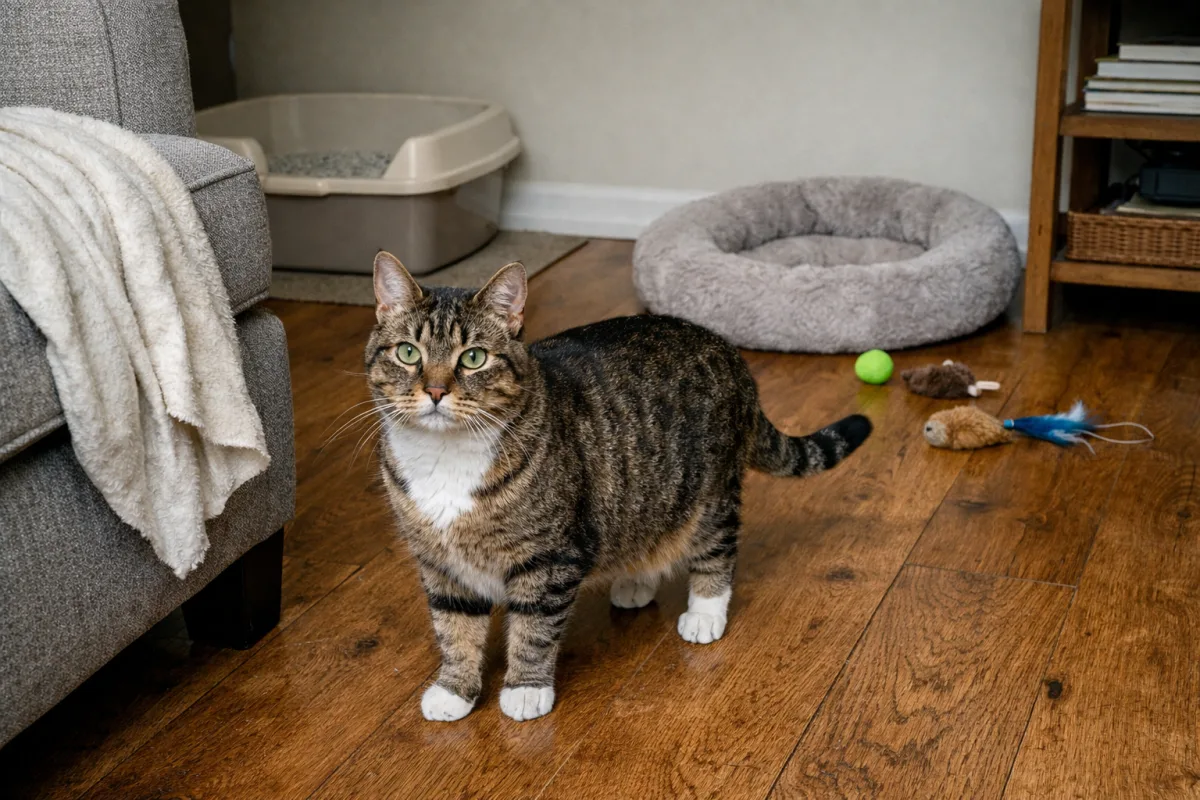
When a cat pees on furniture, it can feel frustrating, confusing, and a little personal. A sofa, bed, or chair is part of daily life, so finding urine there often brings the same question: why this spot, and why now?
The short answer is that furniture can become a target for several different reasons. Sometimes the issue is medical. Sometimes it is stress, territory, litter box trouble, or a change in routine. The behavior usually has a cause, even when it seems random.
It also helps to know that cats do not think in the same way people do. A cat is not trying to be spiteful. In most cases, the cat is responding to comfort, insecurity, scent, pain, or habit. Once you look at the behavior through that lens, the pattern often becomes easier to understand.
What Peeing on Furniture Often Looks Like
Furniture accidents can appear in a few different ways. Some cats leave a full puddle on a bed or couch. Others spray a small amount against a vertical surface like the side of a chair, wall, or cushion edge. Those are not always the same behavior, and the difference matters.
When a cat urinates on soft furniture, the texture can feel safer or more attractive than a litter box that seems dirty, exposed, or unpleasant. Beds and couches also hold strong scent, so a cat may return to the same area if the smell remains. Once a spot is used once, it can become a repeated choice.
Timing can tell you a lot. Some cats do it when no one is watching. Others choose moments after a household change, a loud event, or a conflict with another pet. The pattern can be subtle at first, then suddenly become a habit.
Common signs you may notice
- Repeated urine spots on the same couch cushion or blanket
- A strong smell in one room, even after cleaning
- Cat lingering near the furniture before urinating
- Increased scratching, hiding, or tension around the same time
- Using the litter box less often than usual
Any sudden change in urination deserves attention. Even when the cat seems otherwise normal, the cause may be physical rather than behavioral.
Medical Reasons Can Come First
Before looking at behavior, it is important to rule out health problems. Urinary tract infections, bladder inflammation, kidney disease, diabetes, and pain can all change how a cat uses the litter box. A cat that feels urgency may not make it to the box in time. A cat with pain may start associating the litter box with discomfort.
Older cats can also develop mobility issues that make furniture more appealing than a box with high sides or a hard-to-reach location. Kittens and senior cats are especially prone to accidents when the box setup does not match their needs. A cat may not be avoiding the litter box on purpose; it may simply be unable to use it comfortably.
Watch for other signs such as frequent trips to the box, straining, vocalizing, licking the genital area, blood in the urine, or drinking more water than usual. Those signs can point to a medical issue that needs prompt veterinary care.
If a cat is peeing outside the litter box suddenly, or if the urine pattern changes quickly, a veterinary check should come before any behavior fixes.
Litter Box Problems Are a Major Trigger
One of the most common reasons cats pee on furniture is that the litter box has become inconvenient, unpleasant, or stressful. Cats are often particular about where they eliminate, and small details matter more than many owners expect.
A dirty box is an obvious issue, but cleanliness is only part of it. Some cats dislike covered boxes because they trap odor or make them feel cornered. Others refuse boxes with strong-smelling litter, a new litter brand, or a box that is too small for their body.
Location matters too. A box placed near a noisy washer, a barking dog, or a busy hallway may feel unsafe. If another pet blocks access, guards the area, or ambushes the cat nearby, the furniture elsewhere in the house may feel like the better option.
Litter box factors that often lead to accidents
- Too few boxes for the number of cats in the home
- Boxes not scooped often enough
- Litter box placed in a loud or exposed area
- Box with high sides that are hard to enter
- Strong air fresheners or cleaning products near the box
- Sudden litter or box changes
Many cats prefer a simple setup: a clean box, low stress, and easy access. When that balance breaks, the cat may choose the nearest soft surface.
Stress and Territory Can Show Up on Furniture
Cats are sensitive to changes in their surroundings. A move, a new pet, a baby, construction noise, visitors, or even a shift in the owner’s schedule can affect where a cat feels safe. Peeing on furniture can become a way of coping with that stress.
Furniture holds scent for a long time. That makes it meaningful to a cat. In a home with multiple animals, urine on a couch or bed can be a territorial signal, especially if the cat feels pressure from another cat. It is not always aggression. Sometimes it is insecurity dressed up as marking.
Changes in routine can matter just as much as changes in the environment. Cats like predictable patterns. If feeding time, playtime, or litter box cleaning becomes inconsistent, some cats become unsettled and begin showing that discomfort in their bathroom habits.
Stress-related urination is often connected to the whole household, not just one event. The behavior can reflect a cat that feels less secure in its own space.
Why Furniture, Specifically?
Furniture offers a mix of softness, height, and scent that can appeal to cats for different reasons. Beds and couches are often warm and quiet. They also smell strongly of the people who use them, which may make them emotionally significant to the cat.
From a cat’s perspective, a bed may feel like a protected, familiar place. A couch cushion may be easier to access than a box hidden behind a door. A laundry pile or blanket can also resemble the loose texture some cats prefer for elimination, especially if the litter box texture is not appealing.
In some homes, furniture sits in a central, socially important location. That can make it a target for marking. The cat may be trying to blend its own scent with the home’s strongest scent zones. Or it may simply be selecting the most comfortable place available.
How Daily Life Influences the Behavior
The same cat may use furniture one week and the litter box the next, depending on what is happening around the house. Daily rhythm matters. A cat that feels calm and predictable during the day may still start peeing on furniture when the evening becomes noisy or when the owner is away longer than usual.
Indoor cats often show this behavior more clearly because their environment is smaller and more controlled. They cannot leave and reset in the way outdoor cats might. That means a minor stressor inside the home can have a larger effect than it would in a more spacious environment.
Multi-cat homes also add complexity. A cat that is being watched, chased, or blocked from a favorite route may use furniture simply because the litter box no longer feels available. This can happen even when the conflict looks mild to a person.
Routine changes that can influence urination
- Feeding at different times
- Moving the litter box
- Guests staying over
- Travel or schedule changes
- New furniture or home rearrangement
- Changes in another pet’s behavior
What the Behavior May Be Signaling
Furniture urination can signal different things depending on the cat and the situation. Sometimes it means the cat is avoiding a litter box that feels wrong. Sometimes it means the cat is anxious. Sometimes it is a medical urgency. The same action can come from very different causes.
Body language helps separate them. A cat that is anxious may pace, hide, flatten its ears, or become jumpy near the box. A cat that is in pain may cry, lick itself excessively, or seem restless. A cat that is marking territory may use a smaller amount of urine and direct it at vertical surfaces.
There is also a difference between one-off accidents and a pattern. A single event after a loud renovation may not mean much on its own. Repeated incidents on the same chair, especially with no medical explanation, point more strongly to an environmental or behavioral issue.
The key question is not just where the cat urinated, but what changed before the behavior started.
How Owners Often Misread It
Many people assume a cat is acting out, being jealous, or getting back at them. That interpretation is understandable, but it usually misses the real cause. Cats do not connect urine on furniture with moral judgment or revenge. They connect it with comfort, access, stress, scent, or pain.
Another common mistake is cleaning the area with products that leave behind a smell the cat can still detect. If the scent remains, the cat may return to the same place. Ordinary cleaners often remove what people notice, not what a cat’s nose still catches.
Some owners also overlook small litter box issues because the box seems acceptable to them. A cat may disagree strongly. A slightly dirty box, a narrow entrance, or a noisy placement can be enough to push a sensitive cat toward a couch or bed.
What to Check First at Home
When a cat pees on furniture, start with the basics. First, make sure the cat is healthy. Then look at litter box setup, household changes, and possible stressors. The goal is to find what makes the furniture more appealing than the box.
It often helps to simplify the environment for a while. Add an extra litter box in a quiet, open area. Scoop more often. Keep the box easy to enter. Avoid sudden litter changes. If there are multiple cats, make sure one cat cannot block the other from reaching the box.
It also helps to clean accidents thoroughly with an enzyme cleaner made for pet urine. That reduces lingering scent and lowers the chance of repeat marking. Washing fabrics alone is often not enough.
Practical home adjustments
- Place litter boxes in quiet, easy-to-reach spots
- Use enough boxes for the number of cats
- Scoop daily, or more often if needed
- Keep furniture covers washable during the problem period
- Reduce conflict between pets around bathrooms and feeding areas
- Track when and where accidents happen
Patterns That Suggest a Deeper Cause
Some cats pee on furniture only during stress. Others do it repeatedly, even after the obvious trigger is gone. When a pattern becomes stable, there may be more than one factor involved. A cat with mild pain and a messy litter box, for example, may start using the couch and keep doing it because the habit has been reinforced.
Repeated accidents in the same place are especially important. That often means the location has become part of the cat’s routine. Once that happens, the scent can keep drawing the cat back, even if the original cause was temporary.
Long-term patterns also matter because they can reveal what the cat values most. A cat that only urinates on the owner’s bed might be responding to scent, closeness, stress, or separation. A cat that targets a hallway chair may be reacting to traffic or access. The location is often a clue.
When the Behavior Is More Noticeable
Furniture peeing tends to become more obvious during transitions. Moving to a new home, introducing a new pet, recovering from surgery, or changing work schedules can all shift the cat’s sense of safety. A cat that has always been a bit sensitive may suddenly start showing it through urination.
Some cats are also more likely to act this way at night or when the home is quiet. In those hours, they may be more aware of scents, sounds, and movement. If the litter box is in a darker or less familiar place, furniture may feel easier to access.
Female and male cats can both do it, and neutering does not eliminate the behavior in every case. It may reduce some marking, but medical and environmental reasons still remain possible. That is why the same issue can appear in different cats for different reasons.
What to Remember About Cat Behavior
Furniture urination is rarely about one simple cause. It often sits at the intersection of comfort, health, environment, and routine. A cat may be telling you that something in its daily setup no longer feels right.
Once the cause is clearer, the next steps are usually practical rather than dramatic. Improve the litter box setup. Reduce stress where possible. Clean the soiled area properly. Watch for signs of pain or illness. Then give the cat time to settle back into a predictable pattern.
Not every cat responds the same way, and not every home has the same trigger. But the behavior usually follows a logic the cat understands, even if people do not see it right away. Looking closely at the setting, the timing, and the cat’s health often reveals the answer.