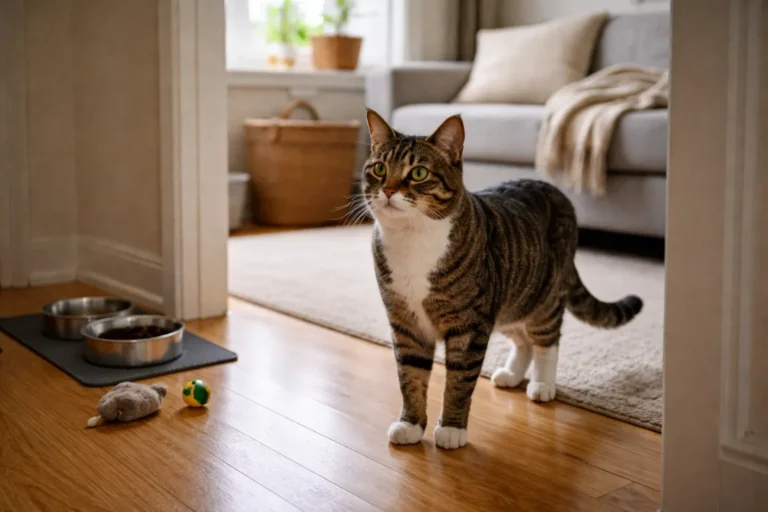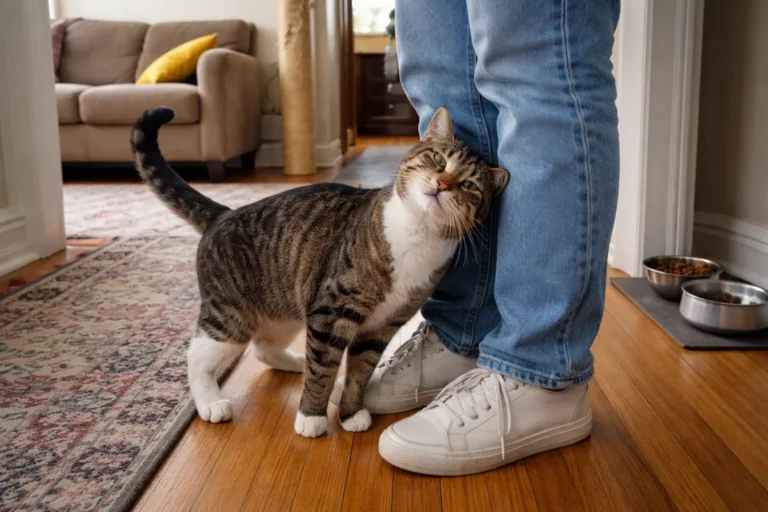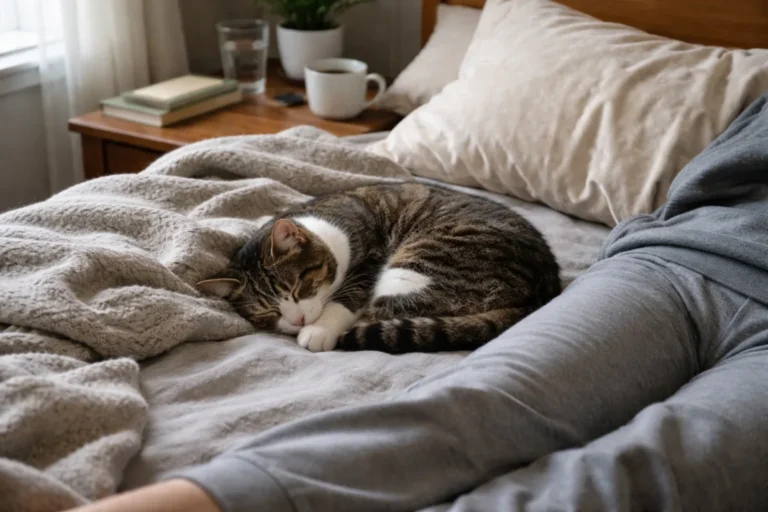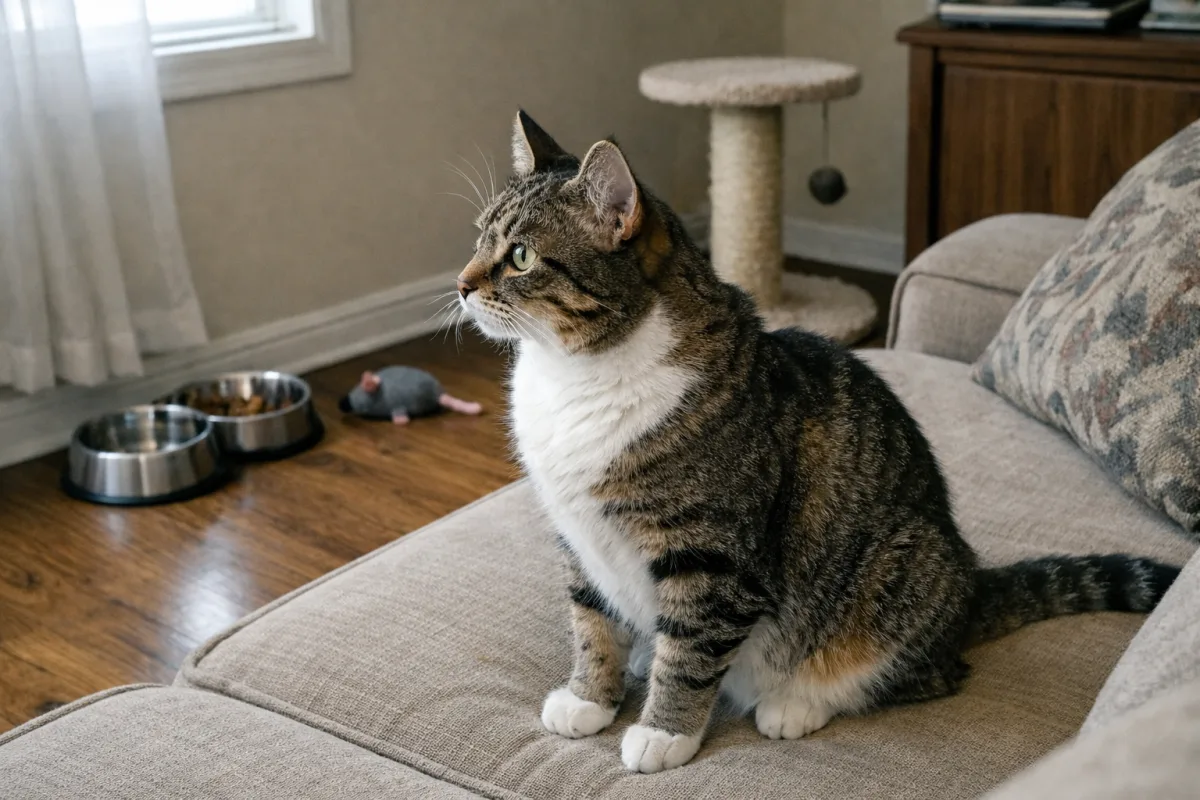
Say a few words to a cat and, more often than not, something happens. The ears swivel. The eyes narrow or widen. A tail gives a small flick. Sometimes the cat walks over. Sometimes it stays put and answers with a meow, a chirp, or a stare that feels strangely specific.
That reaction is not random. Cats notice human voices closely, and many of them treat speech as part of the daily environment they live in. A familiar voice can mean food, attention, play, a routine check-in, or simply the sound of someone they have learned to read.
What looks like a simple moment often involves memory, body language, sound recognition, and a cat’s own comfort level. Some cats react with excitement. Others seem reserved but still clearly track every word. And some appear indifferent until you notice how quickly they change position when their person speaks in a certain tone.
Why Cats React to Human Voices at All
Cats do not respond to spoken language the way people do. They are not decoding full sentences or following grammar. What they are good at is recognizing patterns: the rhythm of your voice, the volume, the tone, and the emotional tone that comes with it.
Over time, a cat learns that human speech often predicts something relevant. Your voice may precede dinner, opening a door, being picked up, petting, or a visitor arriving. That makes spoken words worth paying attention to, even if the cat does not understand the words themselves.
Many cats also react because they are highly tuned to sound in general. Their hearing is sharp, and the human voice sits in a range they can detect easily. A cat that seems uninterested may still be fully aware that you are speaking and may simply choose not to move unless the message sounds important.
A cat’s reaction to your voice is often less about language and more about recognition, association, and trust.
What This Looks Like in Everyday Life
In a home, the reaction can appear in small, easy-to-miss ways. A cat may be lying on the couch and turn its head when you start talking. It may blink slowly, twitch an ear, or shift its body so it can watch you more closely. Some cats answer with a brief meow, especially if the voice comes from their person rather than from a stranger.
Other cats become more active. They may trot toward the kitchen when they hear a familiar “Are you hungry?” even before the food bag appears. Some follow their owner from room to room once a conversation begins, as if speech itself is a cue that something is about to happen.
There are also quieter reactions. A cat may hold eye contact longer when spoken to softly. It may relax its shoulders, lower its tail, or settle into a better resting position. These are subtle signs, but they still show that the cat is processing your presence.
Common everyday reactions
- Turning the head or ears toward the speaker
- Walking closer when the voice sounds familiar
- Meowing, chirping, trilling, or purring
- Pausing activity to listen
- Flicking the tail or blinking slowly
- Leaving the room if the tone feels too intense
The Role of Tone, Not Just Words
Cats are often more sensitive to tone than to the content of speech. A calm, gentle voice may invite a cat to come closer. The same cat might ignore the exact same words if they are said loudly, sharply, or with sudden excitement.
This is one reason cats can seem to “understand” certain phrases. In many cases, they understand the pattern around the phrase. If your voice changes every time you reach for treats, your cat will remember that combination quickly. If you say the same phrase in a different mood, the reaction may change because the tone no longer matches the familiar cue.
Volume matters too. Loud voices can be startling, even when no one means harm. A cat that reacts by hiding, flattening its ears, or staring from a distance is not being dramatic. It may simply be responding to a sound that feels too strong or too unpredictable.
Possible Internal Reasons Behind the Reaction
Cats react to speech for several reasons, and the reason can change from moment to moment. Sometimes it is curiosity. Sometimes it is anticipation. Sometimes it is caution. A cat that hears you speaking may be asking itself a quick question: Is this about me? Is something coming? Do I need to move?
Memory plays a big part. Cats are good at forming associations between sounds and outcomes. If your voice often comes before feeding time, your cat may begin to listen for the same cues every day. If you tend to speak softly before petting, the cat may learn that your voice means comfort and safety.
Individual personality matters too. Some cats are naturally social and vocal, so they answer human speech with confidence. Others are watchful and restrained. They still react, but the reaction may be brief: a tiny ear swivel, a slow glance, a change in posture. That can be just as meaningful as a loud meow.
Not every reaction means excitement. A cat may respond to your voice because it is alert, cautious, curious, or simply accustomed to tracking your routines.
How Context Shapes the Reaction
The same cat may respond very differently depending on the situation. A voice heard during breakfast time is not the same as a voice heard after a thunderstorm, while a vacuum runs nearby, or when a visitor is standing in the room. Cats read context constantly.
In a quiet, predictable home, a cat may react more openly to speech because the environment feels safe. In a busy house, the reaction may be more selective. A cat in the middle of grooming may ignore you until you say something in a tone that usually leads to food or play.
Stress also changes the response. When a cat feels uneasy, its attention narrows. It may still hear you, but it may not want interaction. That can show up as a stiff body, flattened ears, a tucked tail, or a quick retreat to a higher perch or hidden space.
Environmental factors that change the reaction
- Noise level in the home
- Presence of unfamiliar people or animals
- Time of day and daily routine
- Whether the cat feels hungry, sleepy, playful, or on alert
- Past experiences linked to human voices
What the Reaction May Signal About the Cat’s State
A cat’s response to talking can reveal a lot about how it feels in that moment. A loose body, forward ears, and soft eyes usually point to comfort or interest. A cat may be listening closely and deciding whether to approach.
If the cat responds with an immediate meow, it may be highly engaged. Some cats vocalize because they are social and enjoy back-and-forth communication. Others do it because they want something specific and have learned that meowing is part of the exchange.
On the other hand, a stiff or frozen reaction suggests something different. If the cat becomes still and watches from a distance, it may be uncertain. If it moves away, the voice may have been too intense, or the cat may simply not want contact right now. This is not disobedience; it is information.
Helpful body-language clues
- Relaxed interest: upright ears, soft eyes, loose body, slow movement
- Excited engagement: quick approach, vocal response, tail up, active scanning
- Uncertainty: partial ear turn, stillness, cautious steps, brief eye contact
- Discomfort: flattened ears, retreat, tail flicking, tense body, avoidance
Why Some Cats Answer Back
Many owners notice that certain cats seem to “talk” back. This can sound like a meow, trill, chirp, or a short series of sounds. It is one of the clearest signs that the cat is treating the interaction as meaningful.
Adult cats use vocalization with people more than with other cats in many situations. Over time, they learn which sounds get attention. If you tend to respond when they meow, the cat may repeat the behavior because it works. But even without a direct reward, some cats vocalize simply because they are socially expressive.
The exact sound can matter. A small chirp may signal greeting or interest. A longer meow can suggest a request. A repetitive vocalization may mean impatience or excitement, especially around mealtimes. The sound itself is only part of the message; the rest comes from timing and body language.
How Cats Learn the Sound of Their Person
Cats can distinguish between familiar and unfamiliar voices. They may not understand every speaker in the same way. A cat often reacts differently to its main caregiver than to a guest, even if the words are identical.
That difference is built through repetition. The cat hears the same voice during routine care, feeding, play, and quiet attention. It builds a mental map of what that voice usually means. In a home with more than one person, cats often learn each person’s style and adjust their response accordingly.
Some cats react most strongly to the voice they hear when they are relaxed. Others become more responsive to the person who feeds them or plays with them regularly. A cat’s preference may shift over time, especially if routines change. The reaction is flexible, not fixed.
Different Reactions in Different Cat Temperaments
Not all cats are equally talkative or responsive. A confident, social cat may sprint toward you when you speak. A cautious cat may watch from a safe distance but still clearly orient toward your voice. A very independent cat may appear hard to impress, though it may still react in subtle ways.
Kittens often react with quick curiosity because they are still learning what sounds predict. As they grow, many cats become more selective. They may no longer respond to every human word, but they often react strongly to the sounds that matter most in their daily life.
Older cats can also become more deliberate. They may move more slowly, but they still notice voice changes. If hearing declines with age, the reaction may look smaller or slower rather than absent. In that case, visual cues and routine become even more important.
Temperament and likely response
| Temperament | Common reaction to talking |
|---|---|
| Social and outgoing | Approaches quickly, vocalizes, seeks attention |
| Quiet and observant | Looks over, listens, reacts with small body changes |
| Cautious or sensitive | Needs softer tone, may retreat from loud speech |
| Highly routine-driven | Responds strongly to predictable phrases or times |
When the Reaction Becomes More Noticeable
Most cats react more clearly when the voice is linked to something they care about. Feeding time is the obvious example. So is play. If you speak in the same upbeat tone before bringing out a wand toy, many cats will learn that the sound matters.
Greeting routines also create strong responses. Some cats barely react in the middle of the day but light up when their person comes home and says hello. The voice is part of the reunion pattern. Even a short phrase can trigger movement, rubbing, meowing, or direct eye contact.
Another common moment is bedtime. In a quiet house, a cat may react strongly to soft conversation because other sounds have faded. The same cat that seemed aloof at noon may become much more responsive when the day slows down and your voice is one of the few things breaking the silence.
Cats often react most strongly when your voice is connected to routine, comfort, or an expected outcome.
Mixed Signals and Why They Happen
Sometimes a cat seems to want attention and avoid it at the same time. It may approach when you speak, then stop halfway and sit down. It may answer with a meow but keep its distance. It may rub against your leg, then leave the room a minute later.
That kind of mixed response is normal. Cats balance interest with caution. They may like the sound of your voice but not want to be picked up. They may enjoy being near you but only on their own terms. The reaction is often a compromise between curiosity and control.
Paying attention to timing helps. If the cat reacts warmly when you speak softly but withdraws when you lean in too fast, the issue may not be your voice at all. It may be proximity, pace, or previous experiences that shape the choice to stay or move away.
What Owners Often Misread
A strong reaction can be mistaken for affection alone. Sometimes it is affection, but sometimes it is anticipation. A cat that rushes over when called may be eager for food rather than petting. A cat that stares silently may be interested, annoyed, or simply evaluating the situation.
Another common misunderstanding is assuming that a lack of response means the cat did not hear. Many cats hear perfectly well and just choose not to move. Cats conserve energy and avoid unnecessary action. Silence can be a sign of comfort, not indifference.
It is also easy to assume that all vocal responses are the same. In practice, a short answering meow, a single chirp, and a drawn-out complaint can mean very different things. The cat’s posture, ears, tail, and distance from you help complete the message.
The Deeper Cat-Human Exchange
When a cat reacts to talking, it is participating in a shared system of cues. Humans speak. Cats observe. Cats answer in their own way. Over time, both sides shape the exchange. The cat learns which sounds matter, and the person learns which reactions mean “come closer,” “wait,” or “not now.”
This is one reason living with cats feels so specific. A cat does not need to understand every word to understand that communication is happening. It notices tone, rhythm, and pattern with impressive consistency. The reaction can be small, but it is rarely meaningless.
Some days the reaction will be strong and obvious. Other days it will barely register. That variation is part of normal feline behavior. A cat listening from across the room is still engaged in its own way, even when it does not cross the floor to meet you.
Natural Reasons Behind the Behavior
At the root of the reaction is a cat’s nature: watchful, selective, and sensitive to the environment. In the wild, listening carefully matters. Even in a home, that instinct remains. Human voices become part of the landscape the cat must interpret.
Independence does not mean a cat ignores everything. It means the cat decides what deserves a response. Speech is one of those things, especially when it is tied to familiar routines. A cat may choose to stay still, but the ears are still tracking, and the mind is still sorting the sound into a known category.
That is why talking to a cat often feels like a real exchange. Not because the cat understands language in the human sense, but because it has learned that your voice matters. And once a cat decides a sound matters, it tends to notice it every time.
In a home full of repeated routines, that attention becomes part of daily life. A cat that reacts to your voice is showing how closely it has learned the rhythm of the household. Sometimes the response is bold. Sometimes it is barely visible. Either way, it is part of the way cats keep track of the people they live with.