A cat sitting outside a closed door can look mysterious, stubborn, or a little bit dramatic. One moment the cat is quiet. The next, it is planted right at the threshold, as if that door matters more than anything else in the house.
This behavior is common in homes with cats, and it often has more than one explanation. A cat waiting outside the door may want access, attention, routine, information, or simply a sense of control over what is happening behind that barrier.
Sometimes the behavior is mild and casual. Other times it is persistent, vocal, and hard to ignore. The difference usually depends on what the cat is feeling, what is on the other side of the door, and what that doorway represents in daily life.
What cat waiting outside the door looks like in everyday life
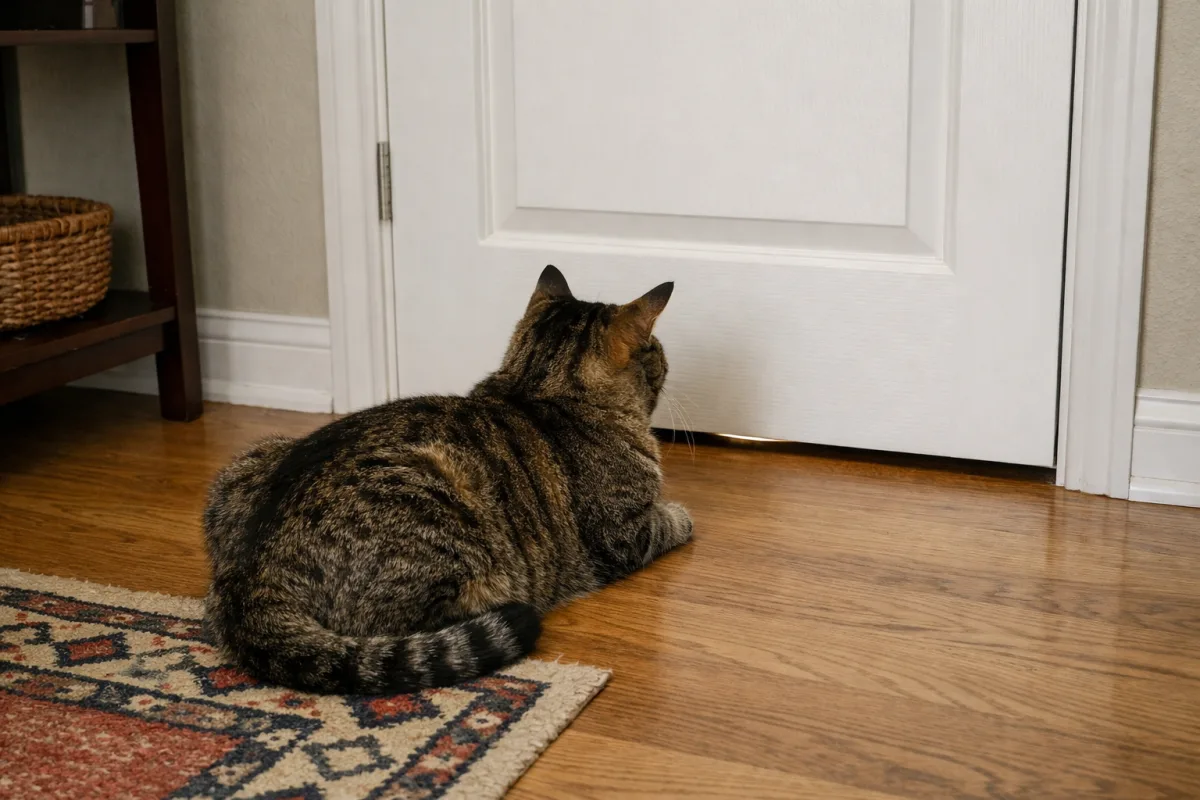
Not every cat behaves the same way at a door. Some sit quietly with their tail wrapped around their paws. Others pace, paw at the frame, or meow every few seconds. A few may stay nearby without making noise, then dart away and return again.
The timing often gives clues. A cat may wait outside a bedroom door in the morning, outside a bathroom door at night, or outside a home office door during work hours. In many homes, the behavior appears right after someone closes a door, which suggests the cat notices the separation immediately.
Common signs include:
- Sitting or lying directly beside the door
- Watching the handle or gap under the door
- Vocalizing when the door moves
- Pawing, scratching, or tapping at the bottom edge
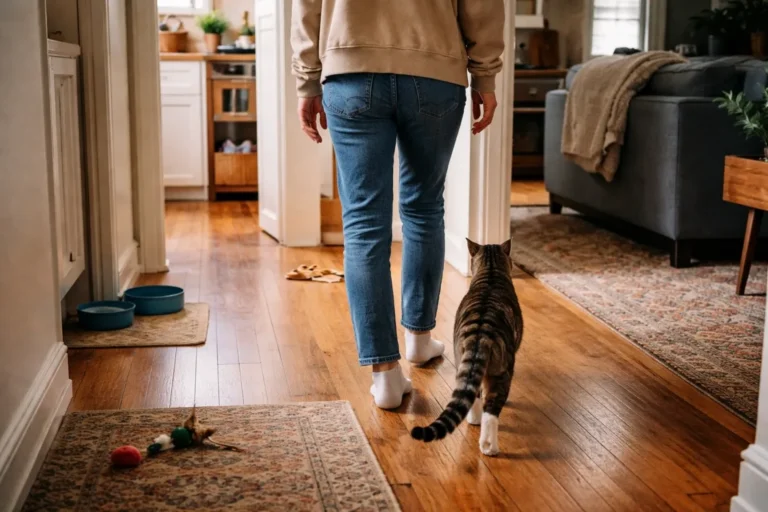
- Following a person to the door and staying there
- Leaving and returning repeatedly
Some cats wait outside doors without seeming distressed. Others look tense, alert, or frustrated. That difference matters, because the same behavior can come from curiosity, habit, attachment, or discomfort.
Why cats show this behavior in general
Closed doors are unnatural from a cat’s point of view. Cats like to monitor spaces, check changes, and choose where they want to be. A closed door removes access and also blocks information, which can make a cat more interested in what is happening beyond it.
Part of the behavior is simple curiosity. Cats are observant animals. If something important happens behind a door, whether it is a person, a food dish, a litter box, or a favorite resting place, the cat learns to pay attention to that location.
Another factor is social connection. Many cats do not like being separated from their people, especially if they have learned that doors mean missed opportunities. Waiting outside the door can be a way of staying close, keeping watch, or hoping the door will open soon.
A closed door can signal three things to a cat at once: blocked access, missing information, and a chance to regain control. That combination makes the doorway especially interesting.
Possible internal reasons behind the behavior
One common reason is attachment. Cats often form strong routines around the people they live with. If a cat expects company, feeding, play, or a normal daily check-in, it may wait by the door because that is where the interaction usually begins or ends.
Another reason is anticipation. A cat may associate a specific door with something rewarding. For example, a bedroom door may open before breakfast. A bathroom door may open before a morning routine that includes attention. A pantry door may lead to food. Cats remember these patterns well.
Stress or uncertainty can also play a role. If a cat feels uneasy about being separated, waiting outside the door may be a response to that discomfort. The cat may not be demanding access in a spoiled or stubborn way. It may simply be trying to reduce uncertainty by staying close to the barrier.
In some cases, a cat waits because it feels safer near a known person or place. If the house is noisy, busy, or unfamiliar, a doorway can become a point of security. The cat knows that when the door opens, familiar territory returns.
Attention-seeking versus genuine need
People often assume a waiting cat is only trying to get attention. Sometimes that is true. Cats do learn which behaviors make humans respond. But attention is not always the whole story.
A cat may wait outside the door because it wants to be near someone it trusts, because it is bored, because it expects a regular event, or because the closed door interrupts its sense of flow in the home. The motivation can be mixed.
It helps to look at the pattern, not just the moment. A cat that only waits before meals may be driven by routine. A cat that waits every time a person disappears may be more socially attached. A cat that waits at a closed door in a new environment may be reacting to unease.
How context and environment influence it
The home environment has a strong effect on how often a cat waits outside doors. In a small apartment, a closed door may feel more significant because the cat has fewer other rooms to explore. In a larger home, the behavior may happen around specific high-value spaces such as the kitchen, bathroom, or the room where the family gathers.
Indoor cats often notice doors more because the house is their entire territory. A closed door divides that territory into pieces. Outdoor cats or cats with access to secure outdoor spaces may still show the same behavior, but their interest may be less intense if they have more places to move between.
Routine matters as much as space. If the household closes doors often, the cat learns to respond. If doors stay open most of the time and then suddenly close, the change can attract attention. Cats dislike sudden shifts in access, especially when they happen around familiar people or important daily events.
Noise, guests, other pets, and household activity can all influence the behavior too. A cat may wait outside a door because it wants quiet, because another pet is on the other side, or because the room beyond the door is the one place where its routine is disrupted.
Common situations that trigger door waiting
| Situation | What the cat may be responding to |
|---|---|
| Bedroom door closed at night | Desire for closeness, routine, or access to a preferred person |
| Bathroom door closed | Curiosity, attachment, or dislike of being separated briefly |
| Kitchen door or pantry closed | Food expectation and learned timing |
| Home office door closed | Need for attention or reaction to changed daily patterns |
| Door closed after another pet enters | Territorial interest or social tension |
What the behavior may signal about the cat’s state
The way a cat waits can reveal a lot. A relaxed cat often looks settled, with loose posture, soft eyes, and quiet breathing. A cat in this state may simply be near the door because it wants to be nearby and is content to wait.
A more alert cat may stare at the gap under the door, flick its tail, or shift position often. That can suggest curiosity or expectation. The cat is interested and ready for something to happen, but it may not be upset.
Signs of frustration or stress are different. Repeated meowing, scratching, pacing, and agitation can mean the cat is having a harder time with the barrier. If the behavior seems intense and frequent, it may reflect a stronger emotional response than simple curiosity.
Waiting outside a door is not one single behavior. Calm waiting, excited waiting, and stressed waiting can look similar at first glance, but the body language is usually different.
Body language that helps interpret the meaning
- Loose body and stillness: Often calm waiting or quiet companionship
- Tail twitching or swishing: Rising interest, irritation, or impatience
- Slow blinking and relaxed ears: Comfort and low tension
- Repeated pacing: Anticipation or frustration
- Scratching or yowling at the door: Strong desire for access or distress about separation
- Leaving and returning often: Mixed motivation, boredom, or uncertainty
How owners often interpret it versus what it may mean
It is easy to assume a cat waiting outside the door is being needy, demanding, or intentionally difficult. In reality, the behavior is usually more practical than personal. Cats respond to patterns, and doors interrupt patterns in a way that matters to them.
Sometimes owners think the cat is asking to go into the room when it may actually be asking for contact. Other times the cat is not trying to enter at all. It just wants to remain near the person on the other side and avoid being left out of the moment.
The behavior can also be misread as pure habit when it has become a sign of stress. A cat that waits obsessively at a door every day may be showing that the current routine is not comfortable. Repeated door focus is worth noticing when it comes with changes in appetite, sleep, litter box use, or overall activity.
When waiting is ordinary and when it deserves attention
Ordinary door waiting is usually short-lived, predictable, and paired with calm body language. The cat may sit there for a few minutes, then move on when nothing happens. It may also appear at the same times each day and disappear once the routine changes.
Door waiting becomes more concerning when the cat seems unable to settle, scratches the door constantly, vocalizes for long periods, or acts distressed whenever a person is behind a closed door. That kind of pattern can point to separation discomfort, territorial tension, or a need for more environmental stability.
It is also worth paying attention if the behavior appears suddenly in a cat that never did it before. A new habit can reflect a change in household dynamics, a new pet, a shift in schedule, or a medical issue that makes the cat less comfortable being alone.
Deeper context of cat-human interaction
Doors create a small but meaningful social problem for cats. Humans use doors casually. Cats often experience them as interruptions in access and communication. That difference is why a simple closed door can become a recurring point of interest in a cat’s life.
Many cats build a strong map of where people go, when they return, and which rooms matter most. When a person disappears behind a door, the cat may wait because it wants to confirm the person will come back. That is especially common in cats that follow their owners from room to room during the day.
Some cats have learned that waiting pays off. A door opens, a lap becomes available, or a familiar activity begins. Once a cat sees that pattern enough times, it will repeat the behavior without needing much encouragement.
At the same time, a cat’s choice to wait outside a door can be a quiet form of companionship. Not every cat wants constant touching. Some prefer presence. Being near the boundary may be the cat’s way of staying involved without entering the room.
Small changes that can affect the habit
- Keeping some doors open more often when possible
- Creating predictable routines around meals and attention
- Offering resting spots near the rooms the cat waits by most
- Adding play before times when the cat becomes restless
- Watching for signs that the behavior is driven by stress rather than simple interest
When the behavior is rooted in routine, it often remains stable. When it is tied to a change in household life, it may increase or fade as the cat adjusts. Either way, the doorway is telling you something about how the cat experiences the home.
Long-term patterns and stability
Some cats always wait outside the same door. Others only do it during specific periods, such as early morning or late evening. The pattern may stay steady for years if the cat finds the routine reassuring.
In other cats, the behavior changes with age. Kittens may wait outside doors because they dislike being separated from activity and because everything in the house feels important. Adult cats may become more selective and focus on the rooms that matter most to their daily rhythm. Older cats may wait less if they become less active, or more if they become attached to quieter routines and familiar people.
If the behavior strengthens over time, it is useful to think about what has changed. A cat may be responding to a new schedule, more time alone, less predictable attention, or a shift in household traffic. The door itself is not the whole story. It is often a marker for something else in the cat’s world.
When a cat repeatedly waits outside the same door, the pattern often reflects what that room means to the cat: food, safety, company, access, or certainty.
Closing perspective
A cat waiting outside the door is usually not trying to be difficult. It is responding to boundaries, routines, and the social meaning of the space beyond the threshold. The behavior may be mild curiosity, learned expectation, attachment, or a sign that the cat wants more stability.
What matters most is the pattern around the waiting. A calm cat near a door is often simply keeping company. A restless cat may be showing frustration, anticipation, or discomfort. Once the clues are read in context, the door becomes less of a mystery and more of a useful signal about what the cat expects from the day.